Safety Analysis

NTSB Reports: October 2017

The aircraft broke up in flight then impacted the ground after an uncontrolled descent at about 0153 Central time. The commercial pilot and five passengers sustained fatal injuries; the airplane was destroyed. Dark night visual conditions prevailed. An IFR flight plan was in effect.The airplane was in cruise at 10,000 feet msl when its pilot queried ATC about nearby weather conditions. Radar data then showed the airplane climb slightly and turn left.
Read More »

Timing Is Everything

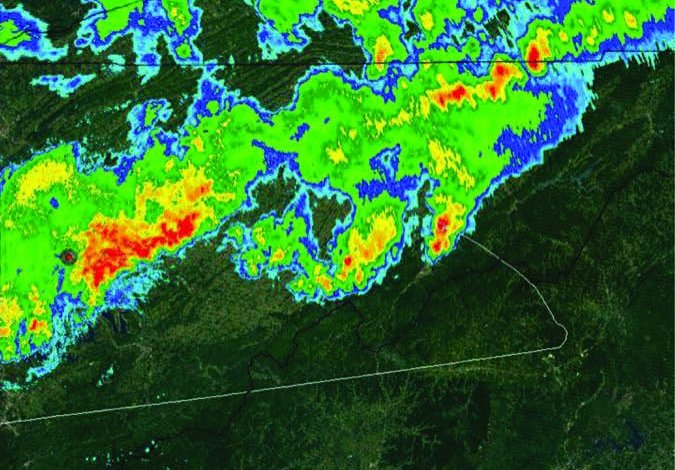
When I first started flying what I consider to be serious cross-countries, there was no such thing as in-cockpit weather radar. Even when flying the best-equipped singles, it was rare to have an sferic device like a Stormscope or Strike Finder. When my route was filled with a line of thunderstorms, I either went around them or landed and found a hotel for the evening. These days, we have near-real-time Nexrad weather radar from a variety of sources, and even ATC is better at pointing out storms and helping us around them.

Read More »

Ground Handling 101

it’s ideal to have at least two sets of eyes monitoring the activity. A wing-walker or other observer can help the tug’s diver with depth perception and likely see potential obstacles invisible from the driver’s seat.üThis Cessna 177 Cardinal appears to be well-secured. The cabin cover fits well and its straps are snug. The tiedown ropes are knotted close to the rings and it appears a control lock is installed.”

Read More »

Touch-And-Goes

The approach and landing phase should be conducted in accordance with whatever specific procedure is being practiced: normal, engine-out, short/soft-field, high density altitude. Simply because youre not planning to slow down and exit the runway doesnt mean you should do anything different on the approach and landing. After all, the reason youre doing touch-and-goes is to practice, and you cant engage in valuable practice if you dont simulate realistic conditions and procedures.

Read More »

NTSB Reports

The airplane was destroyed when it impacted terrain at 1159 Eastern time. The solo private pilot was fatally injured. Visual conditions prevailed. The pilot had recently purchased the airplane and was relocating it to a private airstrip near his home. Witness observations were consistent with the airplane flying at low altitude and maneuvering erratically before it impacted. Each witness reported the engine was running prior to impact. The accident…

Read More »

Download The Full August 2017 Issue PDF

On the off chance youve forgotten, heres a helpful reminder: ATC privatization is still a thing. Its baked into a bill being considered in the U.S. House of Representatives to reauthorize the FAA. The legislation-or something like it that continues the agencys programs-needs to be enacted by September 30, 2017. Current U.S. Senate legislation to accomplish the same basic task doesnt have ATC privatization in it at this writing.

Read More »

Just Trying To Help

We all know the hazardous attitudes the FAA wants us to understand. Concepts like anti-authority, impulsivity and invincibility have no real place in the cockpit. Now, Im going to add one more: the desire to be helpful, or the motivation to please others. One of my big motivations in life is to be helpful to others. I enjoy writing for this magazine, for example, because it is helpful to other pilots. I also get great pleasure in being a solution to other peoples problems.

Read More »

Fuel Follies

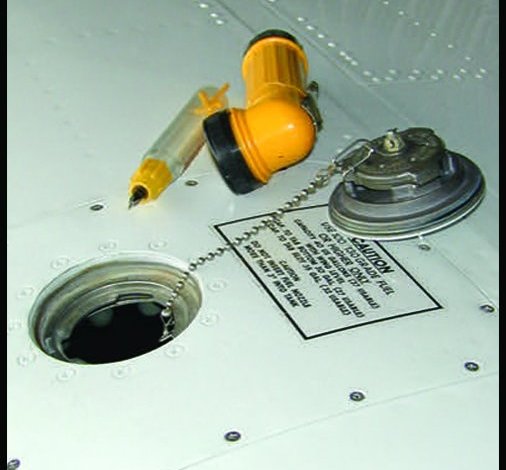
Youre alone in your Lancair Evolution single-engine turboprop. You have just refueled at Chicagos Midway Airport and are headed to Denver, which your computer says is 788 nm away. The weather is good. The flight planning youve accomplished says it will take 3+15 and 121 gallons of the 170 available with the tanks filled. On startup, you reset your fuel totalizer to 170 gallons.

Read More »

Window Of Opportunity

Engine-out training teaches us to maneuver the airplane to a position from which a more-or-less normal landing can be made on an open surface. Among the elements to this training are that theres a finite amount of time and energy, in the form of altitude, available to get the airplane to the landing area. Maneuver the airplane to a key position abeam the runway at a certain altitude and airspeed, and it will have enough energy to glide to the runway as the pilot manages airspeed and turns.

Read More »

More On Pireps

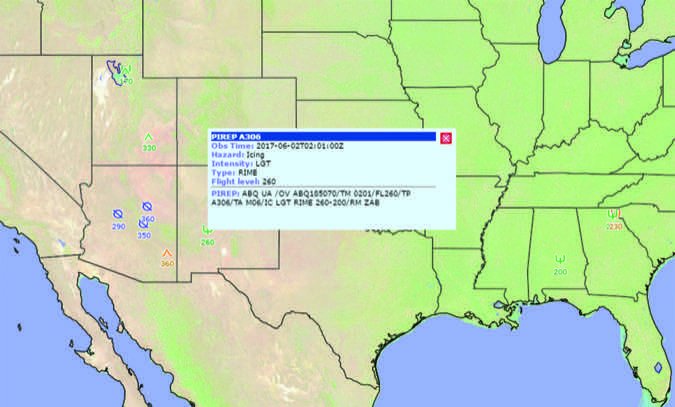
Last month in this space, we reported on a Special Investigative Report (SIR-17/02) from the NTSB, Improving Pilot Weather Report Submission and Dissemination to Benefit Safety in the National Airspace System. Its a 68-page collection of everything thats wrong with the Pireps system. We also highlighted as most interesting one of the NTSBs recommendations: for the FAA to provide a reliable means of electronically accepting pilot weather reports directly from all users.

Read More »
Pilot in aircraft
Sign-up for newsletters & special offers!

Get the latest stories & special offers delivered directly to your inbox.

SUBSCRIBE