Safety Analysis

Safety Pilot Concerns

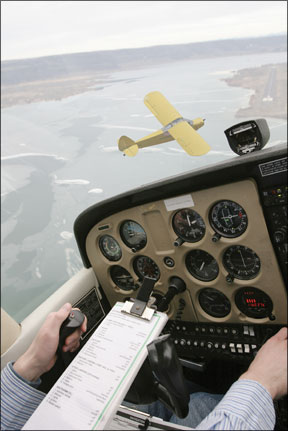
Staying current for IFR—with six approaches, some holding and course interceptions within the preceding six months—isn’t that hard for the active instrument pilot. When you enter engine replacements in your logbook instead of hours, you probably don’t need much in the way of practice. But the guy or gal who’s lucky to get their wings wet in some actual once or twice a year has a different challenge. Somewhere in the middle between the two extremes is where most instrument-rated pilots find themselves, of course. Regardless, even the ace of the base needs to go out occasionally and practice a few things, if for no other reason than to get through the next check ride.

Read More »

Overwater Gear

On December 4, 2010, a Piper Malibu, re-engined with a PT-6 turboprop under a supplemental type certificate, took off from Cozumel, Mexico, heading north. It never made it. Instead, according to press reports, more than two hours after takeoff and while in cruise at FL260, the turbine engine stopped producing power, turning the pressurized single into a glider. It took about 25 minutes for the Piper to glide down to the Gulf of Mexico, where it was successfully ditched close to an oil rig. The ditching site was some 170 miles south of New Orleans, the planes destination.

Read More »

Is See-And-Avoid Dead?

In August 8, 2009, a Piper PA-32R-300 Lance and a Eurocopter AS350BA collided over the Hudson River between New Jersey and Manhattan. The pilot and two passengers aboard the airplane, and the pilot and five passengers aboard the air-tour helicopter were killed. Both aircraft were substantially damaged. On September 14, 2010, the National Transportation Safety Board (NTSB) held a public hearing to approve its probable cause finding. The NTSB determined “the inherent limitations of the see-and-avoid concept…made it difficult for the airplane pilot to see the helicopter until the final seconds before the collision.” The NTSB also found fault with a Teterboro Airport (TEB) tower controller, who was on a personal telephone call as the Piper departed the facility.

Read More »

Follow The Yellow-Brick Road

Before we can get to the runway-or the FBO-we have to taxi. Its easy to conceive of the taxi portion of our flight operations to be akin to driving a car, but the only things they have in common is their two-dimensional nature. Instead, taxiing is an operation requiring a skill and experience level similar to landings. Especially since were often closer to other objects than at any other time. How to taxi depends on several variables, including time of day, visibility, aircraft type, the pavement (or lack of it) and its condition, plus surface traffic, among others. But if we focus on a few elements of the taxi operation and pay attention, we should be fine.

Read More »

Which ELT Is Best For You?

New motorcyclists often ask how much they should spend for a helmet. The flippant answer is, “How much is your head worth?” While not very satisfying, its true to a great extent: The helmets offering the best protection and comfort are typically the most expensive. This is largely true for ELTs; the solution most likely to enable a timely rescue under adverse conditions is probably going to cost a lot. As pilots, we constantly balance cost, risk, safety, practicality and utility. There are always trade-offs to weigh in making just about any decision. Now, we can add ELTs to the list of items whose cost we must balance against the risks well encounter and the degree of safety we want to achieve.

Read More »

Is 100LLs End Near?

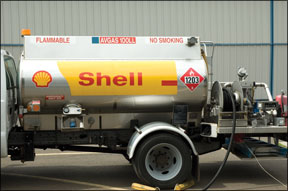
Its no secret that 100LL aviation gasoline is one of, if not the, last leaded fuel in regular use in the U.S. Its also no secret-or at least it shouldnt be-that no other fuel offers the same capabilities throughout the general aviation piston fleet. Despite years of attempts to develop a substitute for tetraethyl lead (TEL, an additive helping boost fuel octane, preventing knock and valve-seat recession) or 100LL itself, nothing is FAA-approved as a replacement. Yes, promising research is being conducted into a substitute fuel or additive-especially over the last year or so. As those paying attention to environmental issues associated with aviation fuels know, the lead content of 100LL has long been an issue. The element is responsible for several long-lasting health issues, including neurocognitive, neurobehavioral, sensory, and motor-function effects in children exhibiting relatively miniscule blood lead levels.

Read More »

NTSB: Glass Hasnt Made Us Safer

A year-long study by the National Transportation Safety Board (NTSB) concludes the last decades glass-cockpit revolution has not resulted in enhanced safety. In making its March 9, 2010, announcement, the Board said its results found single-engine airplanes manufactured between 2002 and 2006 and equipped with glass cockpits had a higher fatal accident rate than similar aircraft with conventional instruments. The NTSB blamed complexity and lack of standardization among different aircraft and their glass panels, which has resulted in pilots failing to “understand the unique operational and functional details of the primary flight instruments in their airplanes.”

Read More »

Pre-Heating You Engine Increases Flight Reliability

Its been several years now since I inflicted this on the poor thing, but somewhere out there is a Piper Archer II it once took me and a friend several tries to get started one cold, wintry day outside Washington, D.C. A lineguy came by, aimed a torpedo heater into the engine cooling inlets for a couple of minutes apiece, charged us a bunch of money and left. After a few more tries, wed managed to frost the plugs, so we decamped to the FBO for hot coffee. Thirty or so minutes later, we tried again and finally got a start. Based on what I know now-I knew very little about engine or aircraft pre-heating back then-none of what we did could have been good for that engine.

Read More »

Cockpit Fatigue During Long Flights

Editors Note: Last month in this space, we promised to bring you a podcast-based discussion of landing on roads in an emergency. Unfortunately, due to illness, travel and conflicting schedules, weve been unable to complete that project. As this issues deadline approaches, were redoubling our efforts to schedule and record that discussion, which should be available by the time you read this. If you looked for that podcast only to come up short, please accept our sincerest apologies, as well as our thanks for your patience.

Read More »

Is It Airworthy?

The question comes up time and again in the FBOs pilot lounge and on aviation-related forums: Does a known fault make an airplane unairworthy? Time and again when faced with this question, I hear the response, “TOMATO FLAMES” for an aircraft in VFR-day conditions, a mnemonic referring to the items required under FAR 91.205 for day VFR. This is part of the answer, but it is neither the beginning nor the end of determining the airworthiness of an aircraft with a known fault. Instead of a simple, “one-size-fits-all” answer, exploring existing regulations, legal decisions and legal interpretations should guide a pilot or owner in determining whether or not an aircraft with known faults is airworthy. First, lets define “airworthy.” Somewhat surprisingly, “airworthy” isnt defined by the FAA, at least not in FAR Part 1, Definitions and Abbreviations. In 1994, Congress took it upon itself to describe an “airworthiness certificate” as something the FAA Administrator shall issue when he or she “finds that the aircraft conforms to its type certificate and, after inspection, is in condition for safe operation.” Very little additional guidance is available from the 350-plus pages of FAA Advisory Circular AC 8130.2F, Airworthiness Certification of Aircraft and Related Products. When attempting to define “airworthy,” the AC basically reaffirms what Congress said.

Read More »
Pilot in aircraft
Sign-up for newsletters & special offers!

Get the latest stories & special offers delivered directly to your inbox.

SUBSCRIBE