Safety Analysis

Landing On Roads?

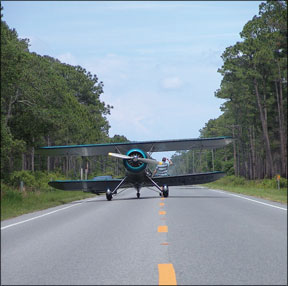
Off-airport landings are a perennial subject whenever pilots get together, and rightly so. Among the topics inevitably coming up will be whether or not to land on a paved road. After all, you probably took off from pavement; why not try to land on it, too, that too-quiet engine in front of or beside you notwithstanding? We last looked at this overall topic in our December 2006 issue. In that article, we basically concluded theres no free lunch: While a paved road may offer the smoothest, most-familiar surface, it also poses a set of problems others may not-like wires, cars, signs, utility poles and other things you may or may not see before hitting them. While you should be able to spot vehicular traffic and avoid it (presuming one or more drivers dont do something dumb, which isnt always a safe presumption), spotting wires, roadside signage and the odd telephone pole from the air isnt the easiest thing to do. If you dont believe us, try it the next time youre out committing aviation. Dont forget youll be a bit distracted and may not have much time dealing with a real emergency: troubleshooting, cinching belts, calming passengers and performing all the other tasks required after the airplane soils the bed.

Read More »

Fighting Fires

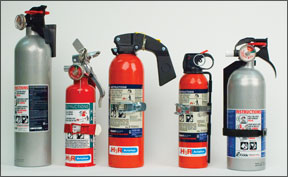
An in-flight fire is most pilots greatest fear, surpassing even a mid-air collision. Although relatively rare, the unique combination of combustible materials and ignition sources available in the typical personal airplane means an in-flight fire must be dealt with quickly and decisively. Doing so usually means disabling systems to deprive the fire of its fuel or ignition sources, and employing a fire extinguisher to smother it. A quick landing, even if off-airport, may be necessary. The problem? Our cockpits feature an abundance of materials capable of sustaining a fire. Carpeting, insulation, upholstery and paper charts are present in even the most basic airplane. This is true even if every scrap of fabric has passed an FAA-approved burn test. Throw in a fuel line or two-whether routed through the fuel selector, flowing via a capillary line to a fuel pressure gauge, or resulting from the designers basic need to move fuel from the tanks to an engine-and youve got another, much more combustible material.

Read More »

FIKI: Do You Really Need It?

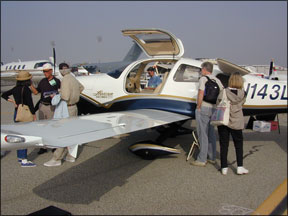
The phrases “all weather” and “single-engine airplane” belong in the same sentence only for a select few pilots whose tolerance for risk is best described as elastic. What has always been true, remains true: One mans routine trip through cold clouds is another mans (or womans) agita-inducing nightmare. Of late, the industry has made remarkable strides in giving even the most risk-tolerant pilots better tools to detect threatening weather and deal with its consequences. Still, even for many experienced pilots, structural icing represents an exceptional terror. Ice forecasting has improved-even in the last five years-but intensity forecasting is still uncertain at best. And many pilots worry-irrationally in our view-about the FAA-legal definition of known icing. When is it legal to depart? When is it not? Do so-called inadvertent ice protection systems really buy you any risk mitigation? (Short answer: yes.) For some pilots, worrying about these fine details leads to distracting hand wringing. It really shouldnt. Seeing an opportunity in this conundrum, Cirrus Aircraft (formerly Cirrus Design) recently developed and will soon certify and ship what is, in our view, the most sophisticated and possibly effective integrated approach to ice protection for any single-engine piston airplane weve seen. And thats saying a lot, given the excellent TKS-based known-ice package that Mooney has offered for years, not to mention inadvertent and certified systems for Beechcraft and Cessna models, including the composite Bend, Oregon-built Corvallis line. Prior to Cessna buying the then-Columbia Aircraft Company, Columbia had dabbled in electric ice protection systems, but without much success. TKS is now the market leader in new aircraft de-icing systems. By way of definition, “inadvertent” means a system is designed to provide some margin of protection without being certified for flight into known ice.

Read More »

ELT Alternatives

Emergency locator transmitters (ELTs) are one piece of equipment airplane owners love to hate. They dont work very well and they always seem to need replacement batteries. And, beginning this month, satellite monitoring of 121.5 MHz ELTs will cease, instantly making what didnt work all that well to begin with next to useless. This turn of events should not come as a surprise, since the U.S. Department of Commerce first publicized the Cospas-Sarsat decision to stop monitoring 121.5 MHz in November 2000. Cospas-Sarsat, of course, is the international organization charged with maintaining and monitoring the satellites listening for distress signals from ELTs and other devices. For pilots and aircraft owners, one question is whether 121.5 MHZ equipment will continue to be adequate. Another is whether alternatives exist to upgrading to a new-technology ELT transmitting on 406 MHz, the frequency on which Cospas-Sarsat satellites will continue to listen. The answers arent that complicated. Lets first take a look at the two technologies, and then something in the way of an interim solution to have a 406 ELT on a 121.5 budget.

Read More »

Revisiting The Brazilian Midair

As we noted in our January 2007 article, “Because it involved two very modern jets operating under IFR and equipped with the latest in collision avoidance equipment, and because it occurred in controlled airspace, this is an accident that simply should not have happened.” We could have added to that statement information regarding Brazils modern ATC system, along with a discussion of the hyper-accurate altimetry and navigation systems required in RVSM (reduced vertical separation minima) airspace implemented throughout the world between 1997 and 2005. In fact, its arguable the accident happened because of RVSM and the accuracy it demands. Think about it: In years past something called the “Big Sky Theory” applied to so much of the altimetry and navigation standards. That theory held that, even if ATC screwed up and violated separation standards or-as in this case-put two oncoming aircraft at the same altitude-the inevitable variables in tracking a VOR radial or selecting barometric pressure in a Kollsman window provided a margin of error against midair collisions. Instead, this midair collision occurred in spite of all the “slack” built into the system. As the computer-generated image on the facing page demonstrates, the two aircraft were pretty much at the same altitude and displaced only 60 or so feet laterally. In the scheme of things, those are “noise-level” errors, the values of which dont really matter. In years past, with less-accurate systems, you couldnt have put these two aircraft that close together if you tried. The other automation-related event helping ensure this tragedy involves the way Brazils ATC system computer inserts a flights “cleared” altitude into the datablock displayed on controllers screens. In the event, they were presented with ambiguous data showing what the NTSB described as both the Embraers requested and cleared altitude. As the NSTB summarized it, “a design in which two distinctly different pieces of information…appear identical on the display is clearly a latent error.” Brazilian authorities defended this data presentation by noting, “controllers have always operated the system in this manner,” according to the NTSB. The NTSB went on to note the original clearance received by the Embraer crew cleared them to maintain FL370. Upon reaching the Brasilia VOR (BRS), the flight turned northwest to follow airway UZ6. As the NTSB drily put it, “The automatic change to the cleared altitude field did not accurately reflect the status of [the Embraers] clearance.” See below for an excerpt of the relevant FAA/NACO en route chart.


Read More »

Dangerous Passenger Tricks

Get any two or more pilots together for a bit of hangar flying and youll hear a lot of interesting tales of aerial travails-some of them actually true, albeit with perhaps a touch of modest embellishment. One topic always standing out as a regular, reliable crowd-pleaser is the story of the errant passenger. Sometimes these are humorous anecdotes passed pilot-to-pilot, with the commensurate amount of growth in awe and severity; sometimes these are more-cautionary stories, told by the first-hand participants or observers with the appropriate degree of warning. Among my favorites-yes, there have been just a few in my flying days-are the ones of an honest innocence at work. But the moral of almost all of them is to be clear and complete in briefing passengers, novice and experienced alike. Its required by the FARs (see the sidebar), and you just may avoid becoming a subject of a tale of an errant passenger trick gone bad.

Read More »

Cold-Weather Flight Operations

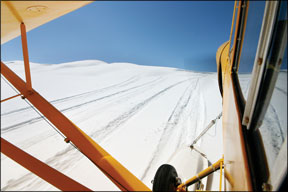
When living in a locale with winter weather cold enough for clichs and wanting to commit aviation, there are three alternatives for coping: 1) Borrow a snowplow and drive south-when someone asks, “Whats that?” stay there and fly; 2) subdue the urge (as did 1920s barnstormers, realizing the oversupply in warmer climes would cause them to starve), secure the airplane, rent a hotel room and hibernate after contracting with a bootlegger for regular deliveries; or, 3) keep flying. While not expressing a preference, our habit has been to continue flying while modifying our behavior. Among the changes is realizing winter means more than cold: It means fewer hours of daylight, so more-risky night flying also is likely. It means everything takes longer to accomplish, be it as mundane as putting on appropriate flying attire or as complex as readying a tied-down airplane for flight. It means hurrying means radically increasing the chance of making a small mistake and, in winter, small mistakes are far more likely to have a fatal outcome than in summer.

Read More »

Causes of Hypoxia and Flying Non-Pressurized Aircraft at Lower Altitudes

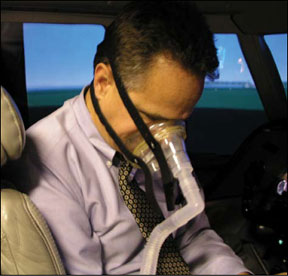
Twelve thousand five hundred feet. Fourteen thousand. Fifteen thousand feet. If youre a pilot, you immediately recognize the significance of these altitudes. Each triggers different requirements for supplemental oxygen use. Most of us learn the FARs associated with these requirements early in our primary training so we can spout them back on written exams and in the oral portion of the Practical Tests. After that, we may never think much more about them. But like most FARs, the oxygen rules are a minimum standard of safety. Of what real-world relevance are the oxygen requirements of FAR 91.211? From the standpoint of safety, when should you be using supplemental oxygen? Supplemental oxygen, for those not familiar with the term, is additional oxygen added to ambient air. The goal is to provide enough “added air” to bring the O2 users oxygen intake up to the same level it would be at a target altitude (usually sea level). The need for additional oxygen increases with altitude, since (obviously) the higher you go, the more O2 you have to add to give the breather sea-level air. For example, one aircraft manufacturers automatically regulated oxygen system meters supplemental air at the rate of 0.5 liters/minute/person at 5000 feet, scaling up to 2.8 liters/minute/person at Flight Level 250.

Read More »

Cockpit Noise

As recently as 10 or so years ago, the idea of an aviation headset incorporating active circuitry reducing cockpit noise wasnt commonplace. Earlier, cockpits had become extremely busy, and reaching for a microphone every time ATC called proved to be a major distraction. Finally gone were the days when pilots and crews strained to hear the radio and each other, evoking memories of the takeoff scene from the movie Airplane! Headsets have become such a common-place item that we tend to take them for granted-we dont often pause to think much about the broader implications of an inferior headset. Having recently had the pleasure to test headsets in a laboratory for sister publication Aviation Consumer, I came away with a new-found appreciation for the fssafety benefits a good headset can provide.

Read More »

My Payne Stewart Moment

In that vast wasteland we call television, a clever commercial has been making the rounds lately. It depicts a hapless sad sack in a crumpled white suit bumbling through a nighttime cityscape setting off fires, floods and other assorted mayhem. The catchline is “risk never sleeps.” It sure enough doesnt, but the other essential element of accidents is opportunity. Consider this: In two years time, Cirrus Design will have sold more than 1000 turbocharged SR22s, each capable of effortless cruise in the mid-20s. The risk, of course, is hypoxia, and 1000 airplanes is enough opportunity to give an insurance executive ulcers.

Read More »
Pilot in aircraft
Sign-up for newsletters & special offers!

Get the latest stories & special offers delivered directly to your inbox.

SUBSCRIBE