












Safety Analysis
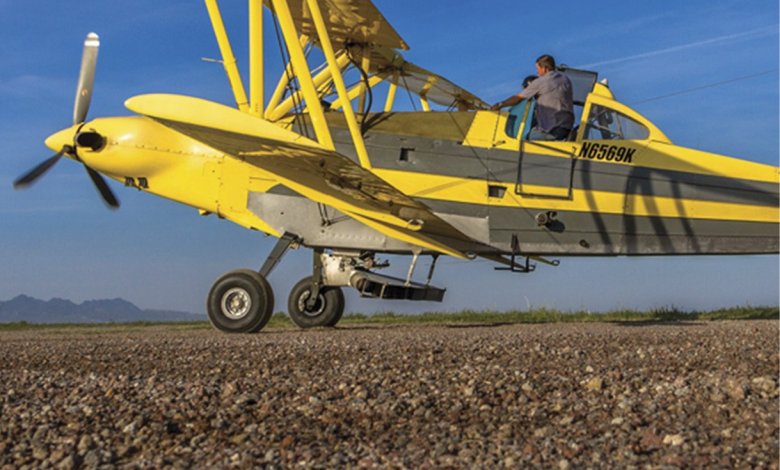
Ag Pilots
The old stereotype of crop dusters-excuse me, aerial applicators-is that they are scofflaw daredevils, perhaps with behavior issues. That caricature is a relic of the past, when an enterprising farmer would buy a $300 war-surplus Stearman, put a hopper in the front cockpit and fly the plane hard until it broke. It follows that some might think ag pilots are an unlikely source of safety wisdom, and have fallen far behind aviations cutting-edge technology, but the truth is quite different.
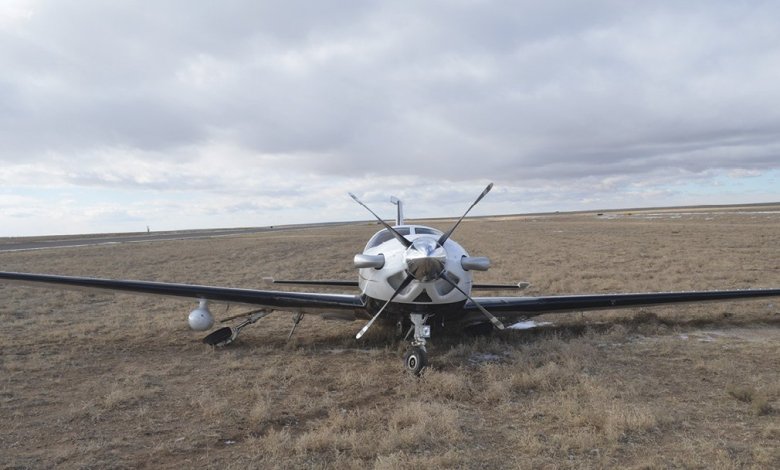
After The Prop Stops
One of the oldest jokes in aviation holds that the big fan is there to cool the cockpit: Whenever it stops unexpectedly, the pilot starts to sweat. Every aviator whos had that experience can probably confirm a significant uptick in pulse and respiration. In the best case, thats accompanied by a corresponding intensification of focus, rapid execution of the memory steps of the emergency procedures checklist and efficient assessment of available alternatives. In the worst…well, those pilots arent available for interviews, but tapes of their radio transmissions can make for uncomfortable listening.
FAA Proposes New AD On Piper Wing Spars
The April 4, 2018, crash of a Piper PA-28R-201 Arrow V operated by Embry-Riddle Aeronautical University (ERAU) continues to have repercussions. Most recently, the FAA has published a proposed airworthiness directive (AD) that would require inspecting each main wing spar of a wide range of Piper airplanes. The proposed AD is a response to the ERAU crash, which involved the inflight separation of the Piper Arrows left wing. Both aboard died and the airplane was destroyed.
NTSB Reports
After flying south through the Cajon Pass at 6500 feet msl, the airplane turned west and encountered what the commercial pilot presumed was leeside turbulence from the mountain range. She turned back south to find smoother air but the turbulence became more severe and the airplane began to descend rapidly. As the airline transport pilot struggled to change frequencies in the turbulence, the airplane descended to 2000 feet msl (about 500 feet agl). The commercial pilot applied full power but the engine did not respond. After the airline transport pilot enrichened the mixture and applied carburetor heat, the engine momentarily regained power. At about 2300 feet msl, the engine again lost power, and the ATP decided to land on the westbound lanes of a freeway. As he attempted to avoid a vehicle, the airplane landed hard.
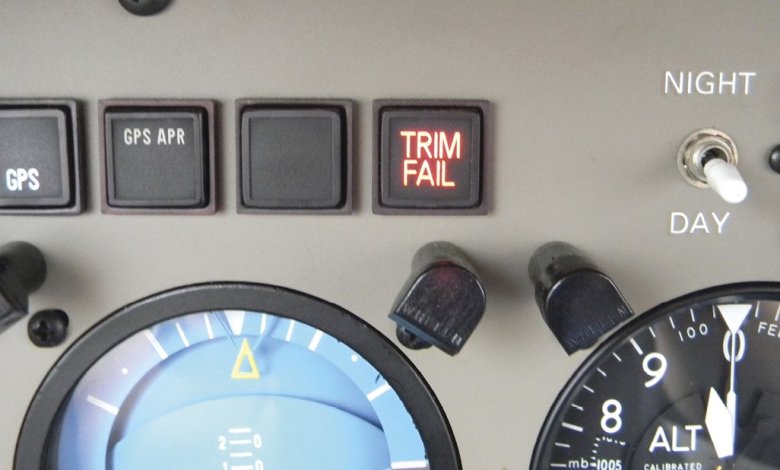
Trim Failures
Years ago, when I first heard the term runaway trim, my initial thought was something along the lines of, How can that happen? All of the trim systems Id seen up to that time had been manual, unassisted crank, lever or thumbwheel affairs, which rely on the pilot grabbing something and moving it to achieve the desired change. I was aware that trim systems could mechanically fail, but generally would stay in a fixed position when they did. I had discussed and trained for abnormal trim conditions, but how could a trim system run away? Then I learned about electric trim, autopilots and runaway trim, and it all became clearer.

Losing Orientation
A common night disorientation scenario is transiting from an area with many lights to empty countryside with few scattered lights (or none at all). I distinctly remember my first experience with night disorientation. I was a VFR-only pilot at the time and did not have a good instrument scan, nor much night experience, but thought I was proficient enough. I was flying from Boise to American Falls, Idaho, in a rented two-seat Alarus. The plane was painfully slow, so instead of flying over the highway, I hit the Direct To button on the GPS so I could fly the shortest path over the empty sagebrush back to the airport. Between the lack of lights and the moonless night, I strayed significantly off-course more than a few times. I knew my saving grace was the magenta line that I was able to keep pointed ahead.

Twelve Months
According to panelists at a recent Miami, Fla., conference geared to the business jet community and reported by Aviation International News (AIN), not all of the in-service fleet is expected to be compliant by the deadline. (Full disclosure: I often perform freelance work for AIN, for which I am compensated.) In fact, data cited by AIN show compliance is far from universal, with 17.5 percent of the piston-powered general aviation fleet (35,791 of 204,191) currently equipped.

Know Before You Go
UDRI’s test was conducted “at a higher speed than the combined maximum speed of the drone and airplane

Potpourri
By the time you read this, itll be late September or early October. In some regions of the U.S., that means leaves changing color, frost on the pumpkin and winterizing the house, the vehicles and the airplane. In other regions, like where I am, it means shutting off the air conditioning, opening the windows and putting a final close cut on the yard. Cooler, better flying weather, along with some seasonal challenges, likely will confront us all soon.
