Safety Analysis

The No-Go Decision

The mission was a simple day trip from my home field in southwest Florida to a familiar destination in north-central Georgia of 407 nm, planned to take 2+30 one-way. Spend a few hours on the ground visiting with an old friend, grab a late lunch, then hop back home later the same day. The airplane was ready and willing. But the weather wasnt cooperating as I wanted. The destination airport offered its own challenges. And while I was instrument-current, I wasnt as proficient with low IFR as I would have liked.

Read More »

Lean Of Peak EGT

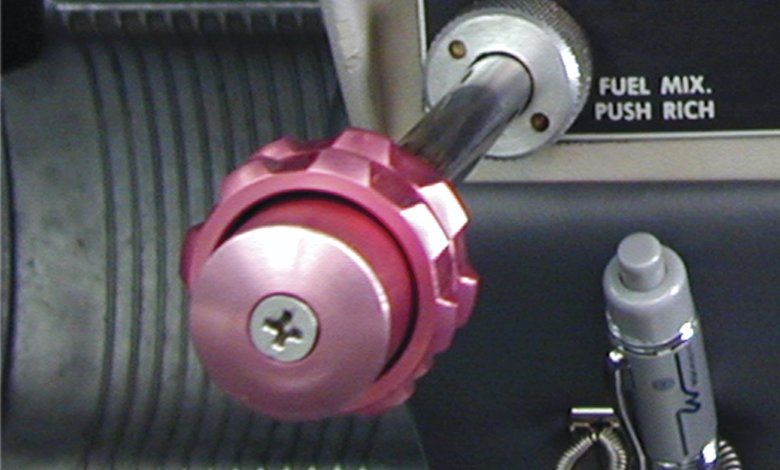
Its basic human nature that we often want to improve the efficiency of the things we do. Its also human nature to be skeptical when were offered something of value that carries little or no cost: Wheres the catch? What am I giving up to benefit from this largesse? These can be legitimate questions, and they deserve detailed answers, no matter whats being offered. When considering how pilots use the mixture control to manage aircraft piston engines, desires to improve efficiency and healthy skepticism can intersect.

Read More »

NTSB Reports

After overflying the destination runway, the crew made a steeper-than-normal approach to the 3880-foot-long runway due to terrain. According to the captain, a bump was felt near the threshold during the landing but it was not extreme. As the propellers were reversed, the airplane veered to the right. The crew corrected and the airplane tracked straight for about 2000 feet before veering sharply right, exiting the runway and spinning 180 degrees. Inspection of the runway threshold revealed several four-foot-tall piles of rocks and dirt.

Read More »

ADS-B Shenanigans?

Thank you for printing in Augusts magazine the short letter I wrote, highlighting an issue I encountered just south of the Albany, N.Y., Class C airspace-a Cub showing an ADS-B altitude of 500 feet below sea level. (By the way, I passed the same Cub today at very close range. This time he wasnt showing up at all on ADS-B). In your response, you asked readers to report other anomalies, so heres one from a week or so ago.

Read More »

Our Airplanes Are Aging

The event perhaps most demonstrative of what can happen as an aircraft ages occurred on April 28, 1988, over Hawaii. Thats when an Aloha Airlines Boeing 737-200 operating in scheduled passenger service as Flight 243 between Hilo and Honolulu lost part of its cabin roof while in cruise at FL240. The crew successfully landed the airplane after diverting to Maui. Of the 89 passengers and six crewmembers aboard, there was one fatality-a flight attendant who was swept overboard during the decompression event.

Read More »

NTSB Reports

During the landing roll, three deer ran from right to left across the runway. The pilot felt a hard strike on the inboard section of the right wing, observed a deer roll over the right wing and felt a sensation of the right landing gear running over a second deer. Although the airplane sustained substantial damage to its right wing, the pilot was able to maintain control and taxied to the ramp without further incident. The pilot and passenger had to egress through the rear baggage door due to damage to the cabin door.

Read More »

Mufflers

While carrying out Canadian AD CF90-03-R2, large leaks were found in the area surrounding the muffler tail pipe area under the structure for supporting the heat muff shroud. No defects were noticed in a visual inspection of this area. No data tag was on the muffler, so its assumed it is an original unit. The operators logs dont show it ever being changed.

Read More »

A New Homebuilt And Rusty Pilots

They expressed their nervousness, which was understandable. Who wants to show their flight skills to a critic when those skills are at low proficiency? It is human nature to want to show your best side, but a rusty pilot flight review will show the naked truth. I explained there is nothing wrong with being out of practice, and a flight review is not a test, but an opportunity to learn. Their anxiety acknowledged, we moved on to the needed practice.

Read More »

NTSB Reports

Radar data depicted the airplane flying northerly until about 1138, when it initiated a right turn to the south at about 400 feet msl. Witnesses then saw the airplane turn right to a westerly or northwesterly direction over land while radar depicted the airplane descending to about 200 feet msl. The airplane banked sharply left, and one witness observed the banner twist and separate. The airplane then banked to the right and impacted a 19-story condominium near its top floor. The airplane fell to the second floor deck and came to rest on its left side. Witnesses described the engine sound as either sputtering, operating normally or being at a low throttle setting.

Read More »

NTSB Reports

Upon raising the landing gear after takeoff, the gear motor continued to operate longer than normal, and the pilot heard an abnormal sound toward the end of the sequence. The right main gear was hanging at about a 45-degree angle, and the left main gear was not visible. The pilot completed the appropriate checklists, without change. The pilot declared an emergency and ATC confirmed during a fly-by that the main gear was not extended. During the landing, the nose gear remained extended and the two main gear were retracted. The airplane came to rest on the runway and the passengers egressed without further incident.

Read More »
Pilot in aircraft
Sign-up for newsletters & special offers!

Get the latest stories & special offers delivered directly to your inbox.

SUBSCRIBE