Risk Management

Are TAAs Safer?

My first “actual” instrument flight after earning the rating was a 27-nm hop from Sedalia to Boonville, Mo., in a Cessna 172. The entire flight was flown below radar coverage. Navigation was by ADF-an outbound bearing from Sedalia to intercept an inbound to Boonvilles Jessie Vertiel Memorial Airport. With my clearance received I climbed into juicy clouds at about 800 feet agl and cruised to the “far” NDB, thence flying the full-procedure approach. I had a strong crosswind on the inbound course; it was too low for VOR cross-bearings, so my navigation was by the lone, waggling ADF needle, my watch and a rough guess at my probable groundspeed. I juggled the approach plate, my charts and kneeboard, and the flight controls as I fought light turbulence while hoping to hold my wind-corrected bearing to avoid towers growing up into the murk. I broke out about two miles from the runway, lucky to pick out and avoid a Cessna scud-running just beneath the cloud deck, then scooted the rest of the way in at MDA until intercepting the VASI and landing in a stiff wind.
Read More »

Flying an Aging Airplane

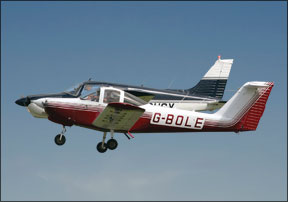
In 1985, I purchased a then-39-year-old 1946 Cessna 120. Several times my friends asked, “Is it safe to fly a 40-year-old airplane?” Their question was based on perceptions of the typical condition of 40-year-old cars, tools and houses. My answer was always a version of this: Properly maintained, a 40-year-old airplane is as safe as one much newer. Unlike cars and houses, airplanes are inspected annually and maintained to a high standard. As long as the pilot puts the time and money into it, and takes it to a mechanic experienced in the peculiarities of the type, it is indeed safe to fly a 40-year-old airplane. Fast-forward to 2008. According to AOPA, the average piston-powered general aviation airplane is more than 35 years old. Leisure suits, my high school graduation and the end of mass production of light propeller airplanes-1978 to 1979-were that long ago. Unlike when I bought my Cessna, now its not unusual at all for a light airplane to be 40 years old; 50- and even 60-year-old piston airplanes are increasingly common. Are airplanes this old still safe? What does it take to safely operate aging airplanes?

Read More »

On A Mission: Best Practices On Thunderstorm Avoidance

Thunderstorms can impede our progress any time of the year. If we kept the plane in the hangar every time a forecast called for them, however, wed almost never fly in the spring and summer months. To learn how to safely dispatch and conduct a flight in areas of thunderstorms, weve asked pilots “on a mission” to fly in almost all conditions-priority cargo and business transportation-what it takes to make it to their destination on schedule. More important, we also asked when storms are strong enough to sit it out despite the sometimes severe economic consequences. With far less stress to “go” than these commercial and business operators, pilots of owner-flown airplanes can learn from their expert strategy for thunderstorm avoidance.

Read More »

How Not To Get Experience

Its said we learn to make good decisions by experience, and that experience results from making bad decisions. The flaw in this plan is that in flying, bad decisions can have awful consequences. How can we learn to make good flying decisions without exposing ourselves and our passengers to undue risk? What are we as an industry doing wrong, that pilots regularly make such poor decisions about safety of flight? After all, as much as 80 percent of all aircraft mishaps result from a chain of poor decisions on the part of the pilot, with actual mechanical issues being secondary if they indeed are a factor at all. I think whats going on is the whole culture of how we “learn to fly.”

Read More »

On a Mission: LIFR Departures

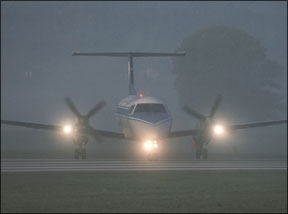
In a perfect world, wed always take off into clear skies. If were going to get any utility out of IFR airplanes, however, there will be times when we take off with reduced visibility and/or low clouds-an instrument departure. Transitioning from visual to instrument flight quickly after liftoff, while accelerating and still close to the ground, takes precision to be performed safely. How do pilots “on a mission” to take off into low ceilings or visibility plan and execute a safe departure? Dave Dewhirst runs Wichita, Kansas-based SABRIS, managing high-performance piston, light twin and light turbine aircraft around the country, with a network of mechanics and flight instructors helping assure safe operation by pilots in the managed fleet. The first key to safe IFR departures, says Dewhirst, is to “take a deep breath” before taxiing onto the runway, ensuring theres time to make certain all checklist items are complete. This includes briefing the departure, briefing passengers, along with all those little things like navigation and transponder settings, security of doors and windows, checking for seat belts closed in the door to flap against the fuselage in flight, and the like.

Read More »

Saving The Cessna Caravan

Theres virtually no substitute for Cessnas Model 208 Caravan as an economical, high-volume utility airplane. Thats why it was a shock to the industry when the FAA considered revoking the Caravans “known ice” certification. After becoming indispensable as a small-package workhorse and charter/backcountry passenger transport, a terrible trend began to develop: Caravans were crashing after encountering icing conditions. The FAA threatened to pull the 208s certification for flight in icing unless industry figured out how to reverse the trend. Somebody had to save the Caravan. What operators, Cessna and the FAA did may change the way we all think about icing certification.

Read More »

On a Mission: Managing Ice

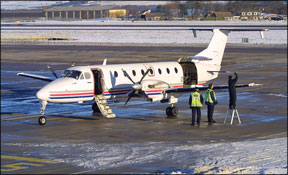
Aircraft utility can go down significantly in cold weather. Adverse weather is more common and tenacious than in warmer months, and along with the fog, low clouds and wind, there is often the threat of airframe ice. Yet we still want, and sometimes feel we need, to fly. How can we balance the possibility of airframe ice with the utility of our airplanes? How do the experts-those “on a mission” with their airplanes-predict, avoid and escape airframe ice? To answer these questions I spoke with professionals who slog through the weather every day (and night), flying high priority aeromedical, charter and air cargo in piston, turboprop and small jet aircraft.

Read More »

Improving GA Safety

The 2006 accident statistics are out from the National Transportation Safety Board (NTSB) and theyre not good. When compared to 2005, aviation deaths rose from 617 to 779. According to the NTSB, nearly 90 percent of aviation fatalities occur in general aviation, which also accounted for a significant majority of the increase in aviation-related deaths from 2005 to 2006. Clearly, theres some room for improvement. Whats not clear, however, is how to go about it. Sure, education is key; so is ensuring pilots not only get experience but get the right kind of experience. To gain some additional insights-and insights from the U.S. government agency charged with investigating transportation accidents and recommending safety-related improvements-we spent some quality time with NTSB Vice Chairman Robert L. Sumwalt. Here are some excerpts from that conversation.

Read More »

Why Cant We Maneuver?

Most airplanes spend the vast majority of their lives in straight and level flight; climbing, turning and descending only as necessary to get on and off a runway. Its when pilots start yanking and banking, however gently and smoothly their control inputs, that problems start to arise-and the accident rate starts to increase. And when the yanking and banking takes place close to the ground, any error margin becomes slimmer still. In fact, according to the AOPA Air Safety Foundation (AOPA ASF) and its 2006 Nall Report, “maneuvering flight accounted for one-third of all fatal accidents” in 2005, the most recent year for which complete data is available.

Read More »

Why It Went Wrong

Mishaps happen for a number of reasons, but all too often theres a “what were they thinking?” element to an NTSB accident report. In the calm, clear skies of retrospect-or a motionless easy chair-its easy to condemn a bad decision and move on. But its not usually a single bad decision that causes tragedy. Pilots dont take off intentionally choosing to put themselves in a no-win situation; they dont mean to kill themselves, their families and friends.

Read More »
Pilot in aircraft
Sign-up for newsletters & special offers!

Get the latest stories & special offers delivered directly to your inbox.

SUBSCRIBE