Risk Management

Successfully Ditching Jet Transports

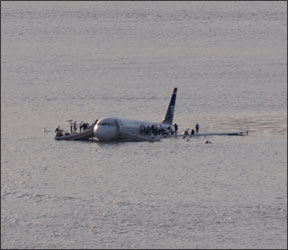
The FAAs Aeronautical Information Manual, at paragraph 6-3-3, puts it bluntly: “A successful aircraft ditching is dependent on three primary factors. In order of importance they are: sea conditions and wind, type of aircraft, and the skill and technique of the pilot.” I maintain that the AIM leaves out one critical component of a truly successful ditching: The performance of the crew and passengers, together, during the aircraft ditching and subsequent evacuation of the aircraft. You want to know how I know? Ive been there. On June 14, 2001, I was piloting a Cessna 210 out of Key West, Fla., on an IFR flight plan heading to Grand Cayman Island. Onboard were my two daughters, ages 8 and 9, their babysitter, age 15, and a 20-year-old first-timer in my airplane. I was the only pilot and we were loaded to maximum gross weight. I did myself a favor the evening before by briefing the babysitter at the airplane, about her responsibilities both during the flight, and if there was a problem. Being a bantam weight, I decided her best seat would be in the rear, since it was probably the most difficult seat from which to egress. We talked about the slim chance that a problem would occur, and we talked about the options and safety equipment that I had onboard. I showed her how to don her life vest, where the life vests lived, and we talked about the importance of wearing them for takeoff and landing, when wed be low over the water, with no time for donning them. We briefed on the life raft, which sat between the seats and just behind me. Finally, I showed her the mini SCUBA rescue bottle, with its own regulator, that sits in the seat pocket directly in front of the rear seat passenger. I told her it would give her a couple of minutes, even if she was underwater, and I had her turn it on and take a breath, just so shed know.
Read More »

To Scud Run, Perchance To Buy It

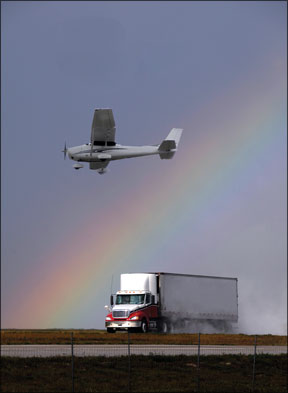
Scud running is the technique of flying very low to stay out of crummy weather. It was taught during flight training and regularly practiced for the first several decades of flight when, initially, instrument flight was not an option and, later, only a small proportion of airplanes had instruments. It was most successful in relatively flat territory and almost suicidal in any sort of mountainous terrain. The first professional pilots in the U.S. were airmail pilots. To avoid weather, they often flew but a few feet above the planet. Even in daytime, the accident rate was not pretty, especially in the Alleghenies and Rockies. Trying to fly without the benefit of good instrumentation (and training in how to use it) or radio navaids meant that foul weather flying was lethal. Nevertheless, particularly in the mid-section of the country, scud running could be practiced so long as the visibility wasnt too bad (fog and snow were killers) because a pilot could motor along 30 feet above a road knowing he was above the power lines and that broadcast antennas were located in the towns. All radio was AM, not limited to line of sight. For economy, the towers were put up on or beside the broadcast stations, not out in the country. In the late 20s, Henry Fords airline running between his auto manufacturing plants boasted on the order of a 95 percent on-schedule record, simply because the pilots could fly incredibly low and not have to worry about hitting anything.

Read More »

Declaring The Emergency

The left engine was cutting out but youve kept it running with the aux pump. Weather at the big airport, 15 miles from your destination, has been dropping slowly; its down to 500 feet overcast and a mile visibility, which just happens to be the published minimums for both of the approaches into Homeplate Regional, where you base your light twin. The couple in the back seat had been fighting about him drinking vodka from the bottle for the first hour of the trip, but once he passed out, things quieted down. Just as ATC gives you the clearance for a lower altitude, the rains intensity goes from light to firehose and the left engine again demands attention. Full rich mixture smooths it out. A moment later the remaining conscious passenger in the back seat announces her water has broken and shes in labor. Your right seat passenger asks if youre going to declare an emergency and shoot the ILS into the big airport. “No way,” you reply, visions of John Wayne, Chuck Yeager and The Right Stuff in your mind as you turn to focus your steely, glinting baby blues on him. “Im not filling out all that paperwork; Ill just make sure were number one for the approach into Homeplate.” Over the next 10 minutes the mother-to-be in the rear seat makes increasingly vocal announcements regarding contractions at regular and diminishing intervals, and when you make a power reduction as you near the final approach fix the left engine resumes its misbehavior.

Read More »

Post-Maintenance Test Flights

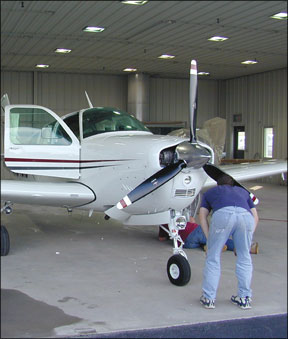
At some point during aircraft ownership, owners are faced with the prospect of a post-maintenance flight test with a technician or shop representative riding shotgun. Depending on the level of maintenance the shop performed on the aircraft, a lot can go astray-and were not just talking about in-flight emergencies (although the odds of one are higher after heavy maintenance). And even relatively simple owner-performed maintenance chores, like oil changes or brake-pad replacement, have been known to create airborne drama. Whenever an aircraft comes out of maintenance, some sort of test flight should be conducted with the idea of verifying the work performed. In fact and perhaps unsurprisingly, the FAA has a regulation covering post-maintenance test flights, FAR 91.407. Its applicability to a specific situation hinges on the extent to which, if any, work on the aircraft “appreciably changed its flight characteristics or substantially affected its operation.” Thats a fairly broad definition, and one an owner should think about whenever some maintenance is planned. But thats not all. Areas requiring consideration and planning for a post-maintenance test flight include piloting currency, insurance coverage, crew coordination and other FAA regulations, to name a few. For example, another regulation, FAR 91.305, states flight testing must be conducted over open water, or sparsely populated areas having light air traffic.

Read More »

Cold-Weather Flight Operations

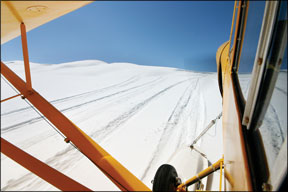
When living in a locale with winter weather cold enough for clichs and wanting to commit aviation, there are three alternatives for coping: 1) Borrow a snowplow and drive south-when someone asks, “Whats that?” stay there and fly; 2) subdue the urge (as did 1920s barnstormers, realizing the oversupply in warmer climes would cause them to starve), secure the airplane, rent a hotel room and hibernate after contracting with a bootlegger for regular deliveries; or, 3) keep flying. While not expressing a preference, our habit has been to continue flying while modifying our behavior. Among the changes is realizing winter means more than cold: It means fewer hours of daylight, so more-risky night flying also is likely. It means everything takes longer to accomplish, be it as mundane as putting on appropriate flying attire or as complex as readying a tied-down airplane for flight. It means hurrying means radically increasing the chance of making a small mistake and, in winter, small mistakes are far more likely to have a fatal outcome than in summer.

Read More »

Top Ten Aviation Risk Reduction Steps

Hows this for an aviation truism? “The best pilots possess the superior judgment to avoid situations requiring their superior skills to survive.” While arguably more true than a whole wealth of aeronautical truisms, it doesnt provide much guidance in our quest to become one of those wiser and more-capable aviators. Which raises an obvious question: How does one develop such profound judgment? Old, no-longer-bold, aviators (another truism) generally know the answer: by surviving unwanted experiences. Which reminds us that experience is hands-down the best teacher, something we hear repeatedly. Were not saying that experience is the safest teacher; obviously, the learning pilot faces elevated risks in the course of gaining the experience from which wisdom grows. A safer approach, of course, is absorbing tribal knowledge from those sobering hangar-flying tales of others experiences we hear and read. Another approach is to sample risky situations from safely within the confines of a full-motion cockpit simulator capable of providing exposure to palm-sweating situations without the, you know, danger. In the end, however, we have to emerge from the sim, leave the comfort of our fellow hangar flyers, and actually put on an airplane and fly it.

Read More »

Causes of Hypoxia and Flying Non-Pressurized Aircraft at Lower Altitudes

Twelve thousand five hundred feet. Fourteen thousand. Fifteen thousand feet. If youre a pilot, you immediately recognize the significance of these altitudes. Each triggers different requirements for supplemental oxygen use. Most of us learn the FARs associated with these requirements early in our primary training so we can spout them back on written exams and in the oral portion of the Practical Tests. After that, we may never think much more about them. But like most FARs, the oxygen rules are a minimum standard of safety. Of what real-world relevance are the oxygen requirements of FAR 91.211? From the standpoint of safety, when should you be using supplemental oxygen? Supplemental oxygen, for those not familiar with the term, is additional oxygen added to ambient air. The goal is to provide enough “added air” to bring the O2 users oxygen intake up to the same level it would be at a target altitude (usually sea level). The need for additional oxygen increases with altitude, since (obviously) the higher you go, the more O2 you have to add to give the breather sea-level air. For example, one aircraft manufacturers automatically regulated oxygen system meters supplemental air at the rate of 0.5 liters/minute/person at 5000 feet, scaling up to 2.8 liters/minute/person at Flight Level 250.

Read More »

Unfamiliar Territory

Theres little I find more exciting than launching for a new destination across unfamiliar territory. Exploring the great unknown makes adventurers out of pilots who use their planes for, you know, actually going places. But, getting there requires a little-sometimes a lot of-extra planning. My bride enjoys the adventure of personal airplane travel as much as any pilot; she also appreciates the added risks involved when tackling new terrain, new airspace, new weather systems and new destinations. Shes such a good sport, in fact, weve enjoyed the thrill many times. Our first “real” trip took us on a 2300-mile journey starting only five days after passing my private pilot checkride. Then, there was our first time to Sun n Fun; to coastal North Carolina and the sands of the Wright Brothers; our first flight to Oshkosh and-well, you get the picture. We also made a couple of international trips that still stand out years later: Key West to Grand Cayman for one, and Cancun, by hugging the Bay of Campeche to Vera Cruz, then the West Yucatan city of Campeche and across the Yucatan. The latter one took two days each way.

Read More »

Mitigating Terrain Risks

There we were in a friends F33A Bonanza at 9000 feet in radio darkness from Houston, Jacksonville, and Miami Centers. That put us plus or minus six feet from the geographical center of the Gulf of Mexico. We were droning along under a full moon at about 10 pm, listening to Jimmy Buffett on the CD player. The in-cockpit conversation mainly focused on debating which Key West bar we were going to grace as soon as we landed. Then the radio came to life and ruined the mood. “Baron 12345, this is American 3743, are you on the frequency?” My friend paused, then answered, “Uh, yep; were IFR to KEWY, niner thousand with Buffett on the CD player, 345.” “Okay; Miami asked us to see if you were on the radio. Theyre expecting you to check in.” “Yeah, we cant get em yet-too low,” he explained and gave a position report and ETA for the fix where we would report in before adding, “By the way, were a Bonanza.”

Read More »

Flying in High-Density Altitude Conditions

It happens every summer. Temperatures rise and with them so does density altitude. It may seem we should simply avoid flying when the density altitude (DA) creeps up, but this would be very short-sighted-although there are some hazards warranting a delay when the air heats up (thunderstorms and desert turbulence among them), the fact is we can safely fly in most high-density-altitude conditions. Doing it, however, requires some technique and some compromise. We all learned the basics of density altitude when we first learned to fly. But what are the practical techniques necessary to maximize airplane-and pilot-performance when hot and high? And when do we need to employ them? What is high density altitude? Its really a function of the airplanes capabilities…and those of the pilot. Youll find Piper Cubs and Cessna 150s flying out of Leadville, Colo., (elevation 9927 feet msl), yet hear of DA-related accidents involving much more powerful airplanes at much lower altitudes. Air density increases to “high” levels in summers heat, even at relatively low-altitude airports. When you consider that maximum available power drops by about 10 percent for every 3000 feet of density altitude increase above sea level (in naturally aspirated engines), even flat-land flyers need to compensate for power lost due to high DA in summer.

Read More »
Pilot in aircraft
Sign-up for newsletters & special offers!

Get the latest stories & special offers delivered directly to your inbox.

SUBSCRIBE