











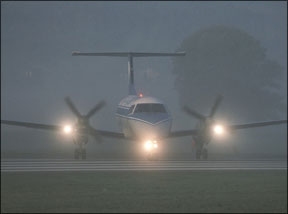
In a perfect world, wed always take off into clear skies. If were going to get any utility out of IFR airplanes, however, there will be times when we take off with reduced visibility and/or low clouds-an instrument departure. Transitioning from visual to instrument flight quickly after liftoff, while accelerating and still close to the ground, takes precision to be performed safely. How do pilots “on a mission” to take off into low ceilings or visibility plan and execute a safe departure? Into Veiled Skies 288
On a Mission: LIFR Departures
In a perfect world, wed always take off into clear skies. If were going to get any utility out of IFR airplanes, however, there will be times when we take off with reduced visibility and/or low clouds-an instrument departure. Transitioning from visual to instrument flight quickly after liftoff, while accelerating and still close to the ground, takes precision to be performed safely. How do pilots "on a mission" to take off into low ceilings or visibility plan and execute a safe departure? Dave Dewhirst runs Wichita, Kansas-based SABRIS, managing high-performance piston, light twin and light turbine aircraft around the country, with a network of mechanics and flight instructors helping assure safe operation by pilots in the managed fleet. The first key to safe IFR departures, says Dewhirst, is to "take a deep breath" before taxiing onto the runway, ensuring theres time to make certain all checklist items are complete. This includes briefing the departure, briefing passengers, along with all those little things like navigation and transponder settings, security of doors and windows, checking for seat belts closed in the door to flap against the fuselage in flight, and the like.

Key Takeaways:
- Thorough pre-flight preparation, including checklists and standard operating procedures (SOPs), is paramount to minimize distractions and ensure a safe IFR departure.
- Immediately after liftoff, establish a precise pitch attitude to achieve a consistent and safe positive rate of climb into instrument meteorological conditions (IMC).
- Engage automation conservatively, delaying autopilot use until well clear of the ground to maintain manual control and allow for anomaly recovery or correct programming.
- Always plan for a departure alternate, having approach charts and navigation ready for a potential return or diversion, especially if the departure airport weather is below landing minimums.
Key takeaways sponsored by Aviator Pro | Start Your Training ->
See a mistake? Contact us.

