











Risk Management
Patterns Of Risk
I was in the right seat of a late-model A36 Bonanza with a student, fine-tuning his landing technique with some full-stop trips around the pattern in gusty winds. During one trip up the parallel taxiway we heard a Learjet on Unicom call that he was taxiing out behind us.On our next downwind I noted the Lear taxiing toward the active runway, so my student made a point of radioing our turn onto base. The jet crew turned perpendicular to the end of the runway without another call, oblivious to my students report of turning onto a short final.
Non-Pilot Copilots
Just let me know if theres anything I can do” is a common request of the non-rated passengers Ive carried aloft from time to time. Usually, we dont even get to that point; the idea of going up in a personal aircraft is sufficiently foreign to most non-pilots they cant even conceive of helping minimize the workload. They also dont understand theyre contributing to it. Passengers unfamiliar with the concept often are a necessary evil of flying personal aircraft. Having been both the PIC and the pax over the years, Ive seen the phenomenon from both sides. Most of the time, some patience, understanding and smooth flying on a good-weather day is all the pilot needs to assure a pleasant experience for the pax and a safe flight.
Ramp Rage
If youre reading this article, chances are you are not the kind of pilot who would intentionally cut off someone off on final. You probably wouldnt attempt to verbally bully a nervous solo student into rushing her pre-takeoff checklist because your IFR clearance void time is ticking away. But what can you do if you find yourself wingtip to wingtip with such a self-absorbed and potentially dangerous individual?
Fuel Gotchas
I was painting myself into a corner. Id departed Louisville, Kentucky into a screaming westerly wind bound for Jefferson City, Missouri. Snow and icy clouds threatened to the north, so I steered the Cessna 172 slightly south of a direct course and crossed the Mississippi somewhere north of Cape Girardeau. Now making maybe 70 knots ground speed, I was over heavily forested hills, the few small airports below closed from a recent, heavy snowfall. I started to worry about fuel.
Cirrus Training
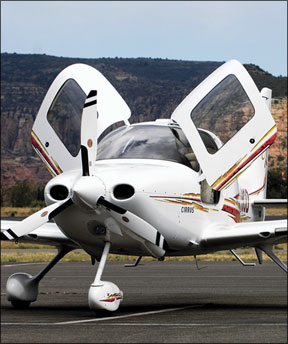
In November 2006, Alan Klapmeier, CEO of Cirrus Design, sent an almost-unprecedented letter to all owners of Cirrus SR20 and SR22 aircraft. The letter came on the heels of a string of fatal accidents in Cirrus aircraft in adverse weather conditions.
Safety Equipment
Its often a source of heated debate in hangar-flying sessions: What should you carry in the airplane to get you through an off-airport landing? How should you plan for such an event, and what will you need to get you through it? The scenarios raised in such discussions can range from making a quick 911 cellphone call to request assistance from a warm, sunny beach to a marathon wintertime “Donner Party” episode. Or worse.
Pattern Traps
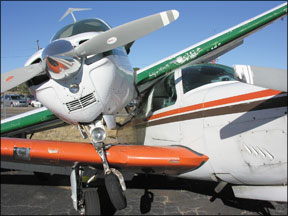
Everyone remembers their first solo flight. Mine was memorable for two reasons. First, the Cessna 150 I was flying had a habit of allowing its right-side window to pop open, seemingly at will. Of course, the airplane “willed” the window open shortly after I became airborne on my third touch and go.
The Brazilian Midair
Last September 29, over Brazils Amazon jungle, Gol Transportes Areos Flight 1907, a Boeing 737-800, and an Embraer Legacy 600 business jet collided at Flight Level 370. The Boeing tragically crashed shortly thereafter, killing all 154 aboard in the countrys worst-ever aviation accident.
Top Five Ditching Myths
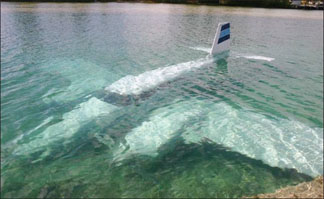
Even if you never venture out over a large body of water, ditching your airplane in a lake or river is a real possibility.
