Features

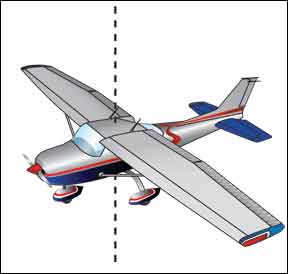
About The Vertical Axis

Conventional airplanes have three primary flight controls: ailerons to manage rolling about the longitudinal axis, elevators/stabilators to establish and maintain the desired pitch about the lateral axis, and a rudder to deal with any yawing moments around the vertical axis. All three of these axes meet and pass through the airplanes center of gravity and, when used correctly, are coordinated to produce smooth, efficient flight. If one spends much time listening to the old-timers populating FBO pilot lounges, todays pilots dont know how to use the rudder to manage yaw, especially when flying an older airplane or one with a tailwheel.

Read More »

Departure Deviation

Pilots and non-pilots alike fret about and measure a flights quality by the landing. Yes, landings are important to get right, but takeoffs and initial climb procedures can be just as critical. In fact, I worry about takeoffs more than landings. One of the reasons is a takeoff involves more variables and uncertainties than a landing. As an example, the airplane weighs more than it will the rest of the flight and exhibits its worst performance. For another, were accelerating, not slowing down. In fact, were trying to go as fast as we can in as short a distance as possible. A third thing is the relatively unknown status of the airplane: How will it feel? Is it loaded correctly? Is it trimmed correctly? Will it perform as expected? What about the local wind and weather-is it what we expected from our preflight briefing and personal observations? If there are obstacles, will we be able to clear them if something goes wrong?

Read More »

Avionics Gone Wild

As an avionics guy, Im often asked if I would rather deal with total avionics failure in an all-glass or round-gauge aircraft. My preference is all-glass because total failure is pretty unlikely. And even if it did happen, the situation shouldnt be debilitating. With dual batteries, dual electrical systems, standby instruments and a portable GPS, theres little reason why you couldnt put down safely. But for an older retrofit panel, the risks are elevated. You dont have to be an avionics tech to understand what makes your panel tick, but you do need to know what can make it a ticking time bomb. Perhaps you pushed the wrong button sequence for an autopilot-coupled approach, or maybe an encounter with ice has turned your Aspen PFD into an expensive tic-tac-toe game.

Read More »

Deviation Avoidance

If youre like many of us, the back-and-forth radio chatter between pilots and controllers leaves you, at times, bewildered and wondering what, exactly, that voice on the radio intended. Especially for new pilots and those simply not accustomed to the phrases and terms used, listening to ATC can be confusing, and occasionally even confounding and frustrating. At its worst, the constant stream of aviation shorthand through our headsets carries with it the potential to cause major problems, both for the pilots for whom the missed instructions are intended as well as the rest of us sharing the airspace. When the clag prevails and we turn to our training, charts, plates and procedures to make our way through a safe departure and arrival, we can ill afford to deal with additional issues.

Read More »

Nailing The Straight-In Approach

A good portion of our first few hours of flight instruction-the ones coming after learning basic control-involve getting to know the traffic pattern and perfecting what little takeoff and landing technique we can muster. Using the traffic pattern is convenient: We stay in a relatively small area yet experience one takeoff, a climb, a descent and turns, along with a brief period of straight-and-level flight. One outcome of staying in the traffic pattern and doing touch-and-goes is we get to practice many of the basic VFR skills-along with takeoffs and landings-in a relatively short period of time. The educational law of primacy tells us learning to fly a traffic pattern also teaches us it is the only way to properly approach a landing area in an airplane and-to some extent-it is.

Read More »

Unapproved Mod

Almost any airplane more than a handful of years out of the factory has been modified to some extent. These pages have, on several occasions, discussed the difference between minor modifications requiring only a logbook entry, major mods accomplished as a field approval with an FAA Form 337 and more complicated additions necessitating a supplemental type certificate (STC). For my own airplane, which has been in service coming up on 50 years, I keep a three-ring binder documenting and preserving the Forms 337 and STC paperwork. The binder isnt full, but it wont take much before Ill need to find another place to keep all those important forms.

Read More »

Will Training Reform Help Reduce Fatals?

The mantra “train the way you fly and fly the way you train” has been popular recently, yet we continue training pilots merely to pass the knowledge and practical tests, rather than on how they will operate in the real world. These tests emphasize rote knowledge and performance of specific maneuvers, rather than instructive scenarios emphasizing higher order pilot skills. This results in a pilots all-too-frequent failure to properly manage the risks inherent in typical general aviation flight operations. In an effort to bring focus to these issues and chart a course for beginning the reform process, the Society of Aviation and Flight Educators (SAFE) conducted a Pilot Training Reform Symposium in Atlanta, Ga., on May 4-5, 2011.

Read More »

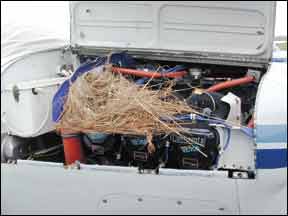
Preflight Lessons

Kick the tires, light the fires.” So goes a popular, flippant saying about preflight inspections. Most of the time, thats what we and various accident reports would label an “inadequate preflight inspection.” Sometimes-immediately after stopping long enough to drop off or load a passenger, for example-it might be adequate. After all, we just flew it in here-its a perfectly good airplane; why bother risking burnt fingers to check the engine oil or soiling our clothes to check tire pressure? Indeed, we dont go to such trouble when getting in a car; why are we conducting an inspection at all? Thats easy: Because despite the overall safety of general aviation, regardless of our comfort with flying and/or with the specific airplane, the hard truth is that airplanes are terribly unforgiving of mechanical imperfection.

Read More »

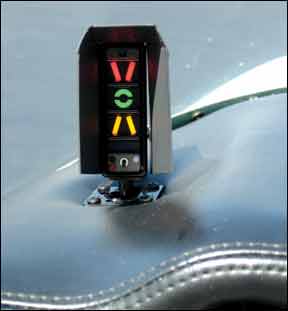
Flying AOA

Aerodynamics 101 teaches us about angle of attack and that all wings have a critical one at which they will stall. Afterward, were treated to a discussion about accelerated stalls and how the airplane will enthusiastically stop flying at an airspeed sometimes well above its straight-ahead stalling speed. Were also taught about stall-warning systems and how they are designed to alert us when were approaching that critical angle of attack.

Read More »

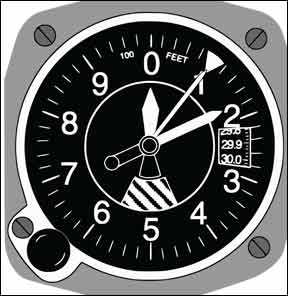
Your Altimeter Lies

The instruments in our so-called “steam-gauge” panels are marvels of ingenuity. A collection of springs, tubing, gears, bellows, shafts and dials, their basic design predates most of the pilots staring at them. While they have, for the most part, been rendered obsolete by the latest microelectronics and air-data computers, they still work as advertised. Well, pretty much. The fact is our faithful mechanical instruments are regularly susceptible to certain errors. Too, they can fall victim to not-so-regular problems, mostly brought about through neglect or damage. The good news is many of these errors are predictable, if we take the time to understand how the instruments work and how the errors may manifest themselves.

Read More »
Pilot in aircraft
Sign-up for newsletters & special offers!

Get the latest stories & special offers delivered directly to your inbox.

SUBSCRIBE