Features

Moving (Down) To Light Sport

Are you an experienced pilot with a light sport aircraft (LSA) in your future? For many of us, LSAs answer the need for a lower-cost option as we seek to continue flying even as the expense of doing so keeps rising. For others, an LSA is a way to scale back to the type of flying that attracted them to aviation in the first place. Yet other rated pilots see the medical self-certification of sport pilot rules as a way to keep flying longer, perhaps after becoming ineligible for an FAA medical certificate, while accepting the rules limit us to flying LSAs. Regardless of your motivation, moving from “traditional” airplanes to LSAs may be a little more involved than you’d expect. For example, what are the design and engineering issues that make LSAs handle differently than larger airplanes? What’s the safety record for pilots moving “down” to light sport? And, is there anything we can do to better manage the differences?
Read More »

Your Lying Eyes

Fight flights are some of my favorites. The air usually is smooth, what traffic is sharing the sky can be spotted easily, theres less chatter on ATC frequencies and-when conditions are right-the beauty is unmatched. But flying at night also brings with it some additional challenges, at least when compared with the same mission during the daytime. The root problem, of course, is lack of illumination. More than a few aircraft have smacked into hillsides at night and in good weather. Even more insidious is dealing with the odd emergency, especially if we have to put down in a remote, unlit area.

Read More »

The First 1000 Feet

Im always amused by pilots and non-pilots alike who express the view that landing is the most challenging portion of a flight. Yes, it can require all of our skills, but so can other segments, even straight-and-level cruising. The degree to which any flight segment poses a greater or lesser challenge depends on weather, terrain, aircraft loading-essentially all the variables were trained to consider and for which we compensate during our flight planning and execution. When merely considering the challenges posed, one of the oft-overlooked portions of flight is what comes immediately after the airplane clears the runway on takeoff. Depending on things like density altitude, terrain, weather and aircraft loading, the initial climb to clear obstacles and reach a “safe” altitude easily can be the most challenging flight portion. The combination of variables can conspire to rob us of the relatively marginal performance we have right after liftoff, putting us in the weeds.

Read More »

Are Flight Instructor Reforms Needed?

Both industry and the FAA recently have emphasized the importance of effective flight training to improve the fatal accident record. Flight instructors, who serve on the front lines in this effort, are the crucial human element in the flight training delivery system and the glue holding the other elements together. But questions regarding their experience, training, continuing education and professionalism raise doubts about whether the service they provide is effective, consistent, relevant and customer-friendly. After all, if they were doing their job, would the trend lines in general aviations safety record be as flat as they are?

Read More »

Whats Your Vector, Victor?

November 12345, turn right, heading 140, vector around traffic.” So begins yet another excursion off our planned course, courtesy of ATC: a vector. In their primary role-helping prevent us from swapping paint with each other-controllers use vectors to maintain spacing or establish sequencing for a runway. Other reasons for a vector include helping keep us out of weather or airspace, or because we request it. In fact, ATC always is supposed to tell us why were being vectored, something well get to in a moment. The reality in todays go-direct-everywhere ATC system usually means a heading to fly is not something we want or appreciate, since its usually an off-course delay, lengthening our trip and wasting time and fuel. But there are times-in terminal airspace especially, or when circumnavigating special-use airspace while en route-when vectors are good things and can help us cut various corners.

Read More »

The ADS-B Mess

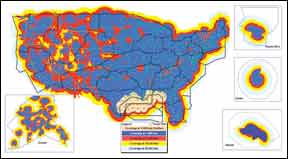
For the time being, a Mode C transponder is your key to regularly accessing Class A, Class B, TFR and ADIZ airspace. Under most circumstances, losing altitude squawk capability means ATC isnt going to let you into those places, although you can continue flying elsewhere. Thats one reason many operators have installed a second, back-up Mode C transponder, in case the primary box fails. But that Mode C transponder is destined to be supplemented by-maybe replaced by-the FAAs new air-traffic surveillance system, ADS-B, or automatic dependent surveillance-broadcast. As plans currently stand, well all need this technology installed in our aircraft to access various airspace types by 2020, when the FAAs final rule mandates the latest and greatest ATC system, NextGen, is implemented. Putting aside the new systems relative merits and implementation timetable, the time will come when at least ADS-B Out equipment will be required for a lot of places we want to go.

Read More »

Using A Flight Director

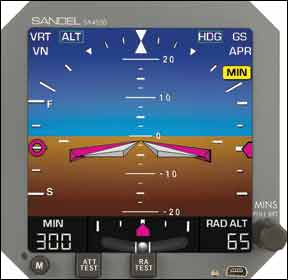
Fly a jet or turboprop airplane and youll consider a flight director to be an essential tool for precision and aircraft control. Turbine-powered airplanes are generally very powerful and slick, so being off as little as a degree in pitch attitude can quickly lead to an altitude bust. Fly a jet up high, where indicated airspeed provides only a small margin above one-G, wings-level stall speed-the so-called “coffin corner”-and a flight director provides the precise guidance you need to keep the wing flying. You may be new to turbines and just becoming acquainted with flight directors. Many of us who fly piston-powered airplanes also have flight directors as integral parts of an autopilot system. But the system isnt well understood by many pilots, especially those not yet fortunate enough to be flying turbine equipment.

Read More »

Maintaining Safety Margins

Students of introductory biology learn a basic lesson about sensory perception in a quirky behavior found in certain amphibians that has become common lore. By now we all know that if a frog is placed in hot water, he will immediately jump out to safety. However, if the frog is placed in cool water that is gently heated to boiling, the frog does not perceive the gradual rise in temperature or the impending danger. Likewise, when a pilot is presented with a problem or emergency that is an obvious attention-getter, he or she will react quickly to solve the immediate threat-a frog leaping from scalding water.

Read More »

Dissecting The Hold

November 12345, cleared to Avsaf, hold east as published, expect further clearance at 1845.” Thats a typical clearance into a holding pattern for an IFR flight when ATC needs to “park” it somewhere until traffic or other conditions allow it to continue to its destination. A holding clearance usually isnt something a pilot or crew wants to hear, and they are much rarer in these times of flow control and ground delays, which are designed to minimize holding in the first place. But ATC still hands them out when needed, and FAR 61.57, Recent Flight Experience, requires regular practice in “holding procedures and tasks” to maintain currency. For the most part, holding can be relatively simple: Fly to the fix and turn right. But it also can get a bit complicated if the hold isnt published. And there are ways to avoid it entirely if youre willing to play ball with ATC and eliminate the reason for the hold. Lets explore.

Read More »

Summertime Flying

Here in the Northern Hemisphere, were firmly in the season of the bumps, when the suns angle and proximity help contribute to significant swings of weather. Many a high-temperature record fell well before summers “official” entry on June 21, as late spring served up conditions more often associated with the dog days of summer. Pilots debate which season treats them worse, but my vote goes consistently to summer. Confirmation and justification come again and again by way of accident reports detailing how a pilot lost a tussle with the seasons inclement weather.

Read More »
Pilot in aircraft
Sign-up for newsletters & special offers!

Get the latest stories & special offers delivered directly to your inbox.

SUBSCRIBE