Features

The Big Picture

I ts widely accepted that having good situational awareness is vital to safe and efficient flying. But what does situational awareness even mean? How do we develop and maintain the good kind? How do we fit ourselves into the big picture, and why is it important to do so? And once we understand these aspects of situational awareness, how can we use it to make things easier? On three recent flights, I feel I had a high level of situational awareness and used it to make a difference. In one I used my knowledge of my place in the big picture to help another pilot. In the second I used it to help myself. In the third I used it to eliminate a possible delay on an approach. Heres what Im talking about.
Read More »

Fixing Your Bounce

The primary cause of a bounced landing is flaring too high above the runway, perhaps with too much speed. In our ideal, perfect landing, the airplane will quit flying just inches above the runway. Instead, a bounce results when the flare occurs a few feet above it, and the airplane has the energy-resulting from excess altitude, excess airspeed or both-to rebound back into the air. In any event, a bounce results when the airplane isnt finished flying.

Read More »

FAA Proposes New AD On Piper Wing Spars

The April 4, 2018, crash of a Piper PA-28R-201 Arrow V operated by Embry-Riddle Aeronautical University (ERAU) continues to have repercussions. Most recently, the FAA has published a proposed airworthiness directive (AD) that would require inspecting each main wing spar of a wide range of Piper airplanes. The proposed AD is a response to the ERAU crash, which involved the inflight separation of the Piper Arrows left wing. Both aboard died and the airplane was destroyed.

Read More »

Express Elevator Up

As the morning waned, the weather picture improved greatly, with only scattered showers and clouds over the Mojave Desert and clearing over the west side of the Tehachapi Mountains. We ended up filing to go over Victorville and into Bakersfield to visit family. Soon, we were cruising in VMC at 10,000 feet and looking at the activity over the Mojave. Ahead, there were Pireps for icing above 8000 feet, so we asked for and received routing over Edwards AFB at 6000. Based on what we saw visually and on the FAAs flight information system (FIS-B), we thought we were well out of danger.

Read More »

Trim Failures

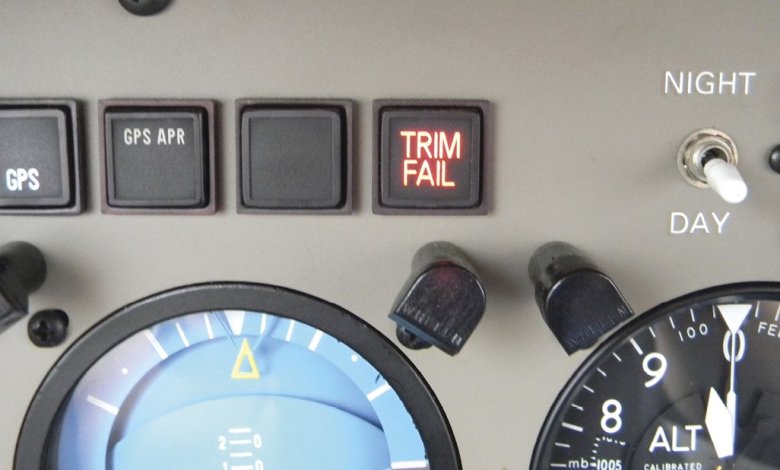
Years ago, when I first heard the term runaway trim, my initial thought was something along the lines of, How can that happen? All of the trim systems Id seen up to that time had been manual, unassisted crank, lever or thumbwheel affairs, which rely on the pilot grabbing something and moving it to achieve the desired change. I was aware that trim systems could mechanically fail, but generally would stay in a fixed position when they did. I had discussed and trained for abnormal trim conditions, but how could a trim system run away? Then I learned about electric trim, autopilots and runaway trim, and it all became clearer.

Read More »

Losing Orientation

A common night disorientation scenario is transiting from an area with many lights to empty countryside with few scattered lights (or none at all). I distinctly remember my first experience with night disorientation. I was a VFR-only pilot at the time and did not have a good instrument scan, nor much night experience, but thought I was proficient enough. I was flying from Boise to American Falls, Idaho, in a rented two-seat Alarus. The plane was painfully slow, so instead of flying over the highway, I hit the Direct To button on the GPS so I could fly the shortest path over the empty sagebrush back to the airport. Between the lack of lights and the moonless night, I strayed significantly off-course more than a few times. I knew my saving grace was the magenta line that I was able to keep pointed ahead.

Read More »

Dont Be Upset

David Jack Kennys article on upset training (Undoing An Upset, November) was excellent. A year or so ago, my son and I spent a day with Patty Wagstaff in St. Augustine, Fla. We took ground school and two flights each. Not inexpensive, but not outrageous either. We got unbelievable training and spent much of the day in spins and inverted. Back at the hotel that night, we just looked at each other and said, Wow! Were both much better pilots following the experience.

Read More »

Shock And Yaw

to maintain heading when employing the “one-wing low” method or apply it when using a little of both methods to align the airplane with the runway.”

Read More »

No Checklist For This

I was flying a 2002-model A36 Bonanza (yeah, with me its always a Bonanza) home to Wichita from Thanksgiving in Ohio with my wife and our son aboard. Somewhere over Indiana, the Bonanzas attitude indicator (AI) began to tumble. The failure announced itself slowly, but very soon the instrument was pitching up and down in very distracting oscillations. It then displayed a range of indications-from off-scale nose-up pitch excursions to slightly below 20 degrees nose-down-in a roughly two-second cycle, while indicating bank angles between wings-level and about 10 degrees left.

Read More »
Pilot in aircraft
Sign-up for newsletters & special offers!

Get the latest stories & special offers delivered directly to your inbox.

SUBSCRIBE