Weather

Why It’s So Bumpy

I recently got a question from a reader: When you are flying in clouds and the ride is bumpy, is it bumpy because its cloudy or is it cloudy because its bumpy? Good question. Turbulence is often approached from a rather pragmatic approach in aviation, and that often leaves pilots with questions about where it fits in with weather patterns. Lets look at this piecemeal. From a meteorological perspective, turbulence is bumpiness caused by flight into an area where wind is changing over a small distance.

Read More »

Forecast Accuracy

Walk into any flight operation and theyll tell you that safety is the top priority. As of 2016, accident rates across the board from GA to commercial operations have fallen to an all-time low. This is thanks to the cooperative efforts of pilots, controllers, technicians, instructors, and the organizations that support them. Given the great improvements in safety and the stringent standards that apply to everything from replacement of a torque link bolt to the handoff of an aircraft by ATC, it might seem strange that were approaching the year 2020 and busted TAFs (Terminal Aerodrome Forecasts) are still a fact of life.

Read More »

Winter Airplane Accidents

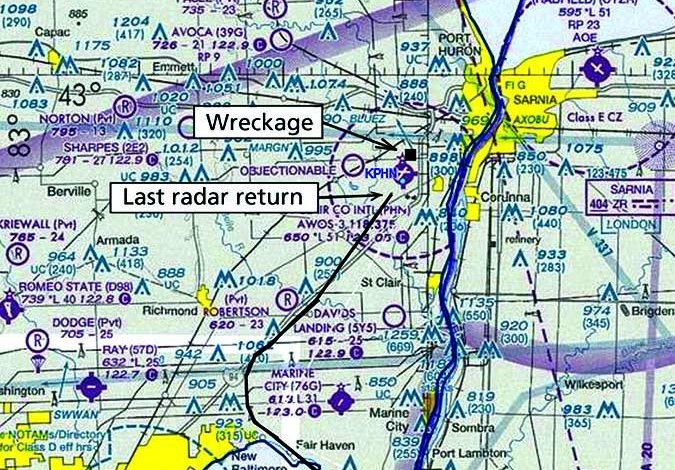
Investigators also found that there was an absence of radar returns for the aircraft as it moved over the airfield, suggesting that it was below radar, which is only 500 feet AGL here. The wreckage imprint on the trees suggested a shallow descent angle. This suggested the pilot was hunting close to the ground trying to acquire the runway visually. Unfortunately, he was already past the airport.

Read More »

Low Clouds and Fog

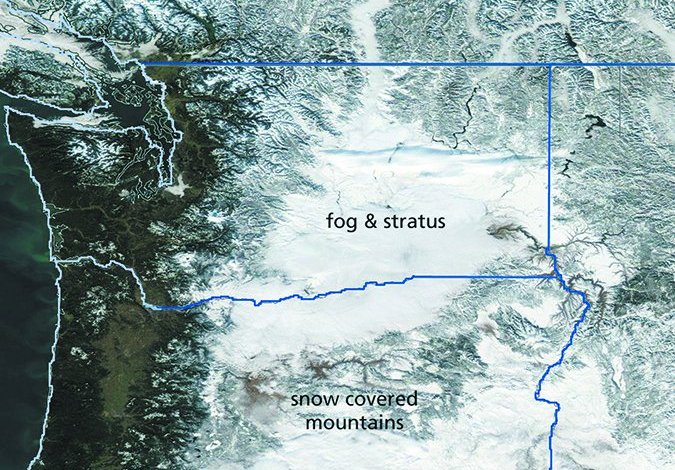
November in the U.S. means the risks from thunderstorms have disappeared everywhere except the Gulf Coast region as a new set of problems emerge, from icing to turbulence to low clouds, fog, and high winds. A breakdown of accident statistics helps tell us where to focus our attention first. Using a 2003-2007 study, we find that where weather was a cause or contributing factor, low ceilings and visibility were the #2 factors, involved in 18 percent of all weather-related accidents.

Read More »

When Air Traffic is Light, ATC Lets You Take Your Time Landing

Controllers cant just look where the traffic is now. Were mentally projecting every route ahead to see future conflicts. If Ive got two 120-knot aircraft at the same altitude converging on a point 20 miles away, in 10 minutes theyll be waving to each other. Something-like an altitude change-must be done in 10 minutes. If I need to use immediately in that altitude clearance, I screwed up by waiting way too long.

Read More »

A Change of Seasons

The most immediate change that meteorologists and pilots see in the weather pattern is an increase in the tropospheric flow across the United States and southern Canada at all levels. This starts in earnest in September and continues through October. Temperatures decrease rapidly in the polar regions as fall progresses, dramatically strengthening temperature contrasts between high latitudes and the tropics. This enhances the jet stream pattern and surface patterns alike. So across the board we see an increase in clear air and mechanical turbulence everywhere.

Read More »

Change Your Checklist

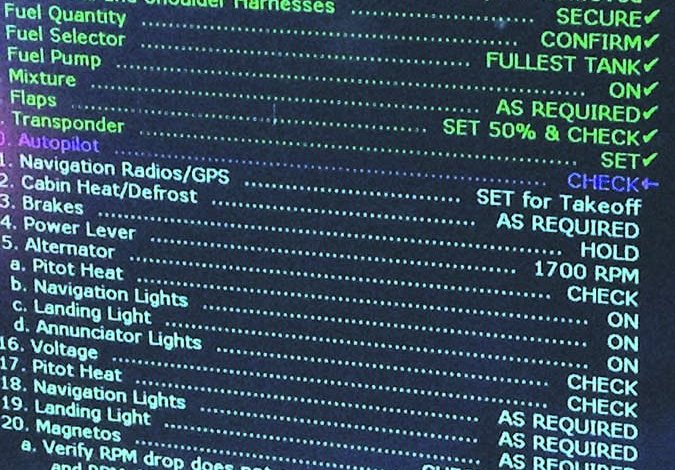
Checklists get taken for granted-settle into your seat in the cockpit, pull out the booklet or laminated cards, turn to the Before Engine Start page and start following the steps. Fire up the engine(s) and proceed down to After Engine Start and Before Taxi. Sound familiar? For most flying under 14 CFR Part 91, this read-then-do routine is the norm all the way to Parking and Securing. While many pilots with a fair amount of experience-particularly those with their own aircraft-will often go a step beyond and make their own checklists, there are far more efficient methods to get things done on time and in the proper order.

Read More »

Using Standard Operating Procedures in General Aviation

Some users of the National Airspace System live by Standard Operating Procedures (SOPs), and some do not. This is arguably the most significant difference between air carriers and general aviation when it comes to training, testing, and cockpit cultures. This is also, by some measures, a factor in accounting for the differences in accident rates. General aviation, particularly the single-pilot, personal-flying kind, relies not on the use of SOPs, but basic personal minimums for aeronautical decision making.

Read More »

Reading the Sky

A cloud is the visible manifestation of liquid water droplets or ice. It forms when humid air cools sufficiently for water vapor to saturate and produce condensation-the dewpoint temperature. On a dry summer day in California, this temperature might be 20 degrees F, and the weather remains clear. On more humid summer days in California, the cloud formation temperature might be 50 degrees, producing morning clouds along mountain peaks. When air is chilled to the dewpoint, the humidity becomes 100 percent and from the texts we expect saturation to occur. But in real life this doesnt always happen. If a given volume of air doesnt contain condensation nuclei-microscopic bits of dust, pollen, etc.-the relative humidity may exceed 100 percent without producing clouds. But for the most part, this relationship between temperature and dewpoint is correct.

Read More »
Pilot in aircraft
Sign-up for newsletters & special offers!

Get the latest stories & special offers delivered directly to your inbox.

SUBSCRIBE