











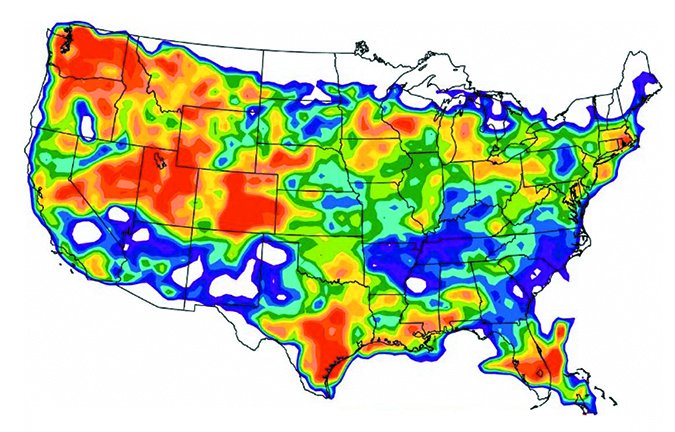


I recently got a question from a reader: “When you are flying in clouds and the ride is bumpy, is it bumpy because it’s cloudy or is it cloudy because it’s bumpy?” Good question. Turbulence is often approached from a rather pragmatic approach in aviation, and that often leaves pilots with questions about where it fits in with weather patterns.
Let’s look at this piecemeal. From a meteorological perspective, turbulence is bumpiness caused by flight into an area where wind is changing over a small distance. And we’re talking very small distances. While flying at 150 knots and being pulled upward one second, downward the next, and up again after another second, we can see that these changes are on the scale of hundreds of feet, and often even smaller. They may exist as areas of wind shear, where wind speed and direction is changing sharply from one location to another, or as turbulent eddies, where the wind flow has broken into a whirl, like a wave.

