











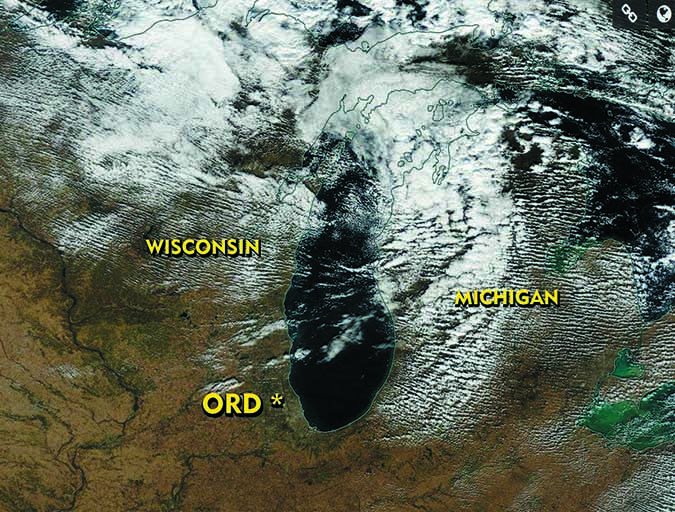


We often think of autumn as the end of summer, but it’s much more than that. Autumn starts on the equinox and ends at the winter solstice, so meteorologically the northern hemisphere is already hurtling headlong into the cool season, with fall ending at the time of minimum insolation. Fall would be a bitterly cold season if not for so much summer heat that was stored in the surrounding ocean waters.
The most immediate change that meteorologists and pilots see in the weather pattern is an increase in the tropospheric flow across the United States and southern Canada at all levels. This starts in earnest in September and continues through October. Temperatures decrease rapidly in the polar regions as fall progresses, dramatically strengthening temperature contrasts between high latitudes and the tropics. This enhances the jet stream pattern and surface patterns alike. So across the board we see an increase in clear air and mechanical turbulence everywhere.

