













Register

When Air Traffic is Light, ATC Lets You Take Your Time Landing

Controllers cant just look where the traffic is now. Were mentally projecting every route ahead to see future conflicts. If Ive got two 120-knot aircraft at the same altitude converging on a point 20 miles away, in 10 minutes theyll be waving to each other. Something-like an altitude change-must be done in 10 minutes. If I need to use immediately in that altitude clearance, I screwed up by waiting way too long.

Gemini Sparkle

Key Takeaways:

  • "Pilot's discretion" clearances grant pilots the flexibility to initiate climbs or descents at their chosen time and rate, and to temporarily level off at intermediate altitudes, as ATC has determined there are no immediate traffic conflicts.
  • A critical rule of a pilot's discretion clearance is that once an altitude has been vacated, the pilot may not return to that altitude without obtaining a new ATC clearance.
  • This discretion is also implicitly granted in specific clearances, such as "cross [fix] at [altitude]" instructions and "descend/climb via" Standard Terminal Arrivals (STARs) or Standard Instrument Departures (SIDs).
See a mistake? Contact us.

When an air traffic controller needs you to climb or descend quickly, they pepper their phraseology with “immediately,” “expedite,” or “no delay.” Is there a counterpart, for less stressful situations? Of course there is: “At pilot’s discretion.”

Even though it involves less urgency than a standard ATC altitude clearance, that phrase comes with some definite expectations. Some may be obvious. Others not so much.


Ready to Sell Your Aircraft?

List your airplane on AircraftForSale.com and reach qualified buyers.

List Your Aircraft
AircraftForSale Logo | FLYING Logo
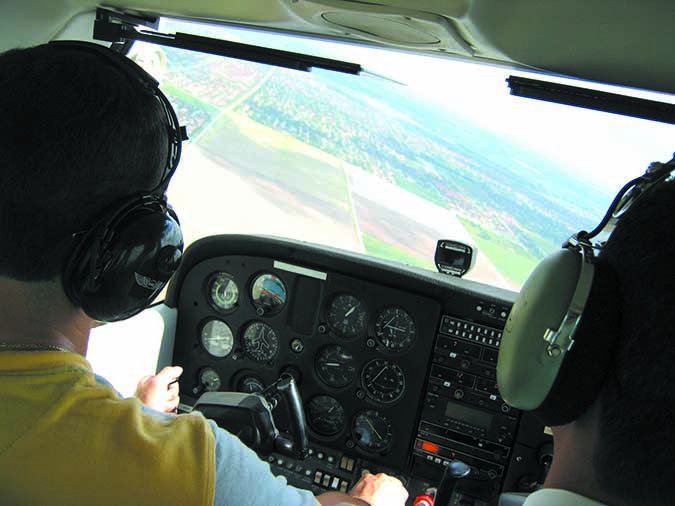
Pilot in aircraft
Sign-up for newsletters & special offers!

Get the latest stories & special offers delivered directly to your inbox.

SUBSCRIBE