













Register

Reading the Sky

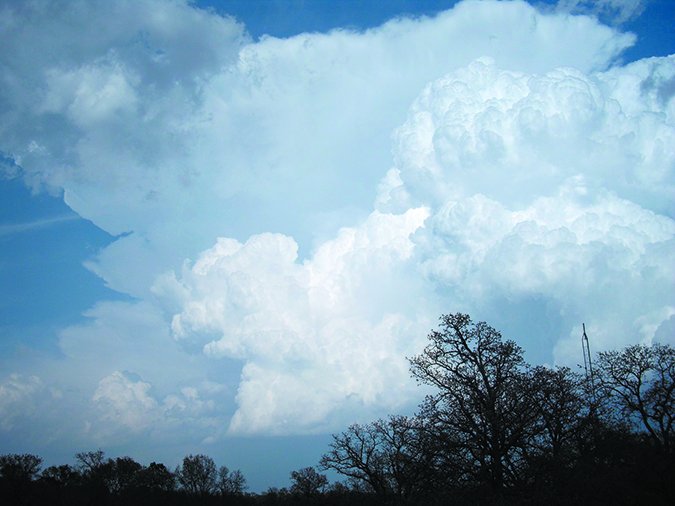
A cloud is the visible manifestation of liquid water droplets or ice. It forms when humid air cools sufficiently for water vapor to saturate and produce condensation-the dewpoint temperature. On a dry summer day in California, this temperature might be 20 degrees F, and the weather remains clear. On more humid summer days in California, the cloud formation temperature might be 50 degrees, producing morning clouds along mountain peaks. When air is chilled to the dewpoint, the humidity becomes 100 percent and from the texts we expect saturation to occur. But in real life this doesnt always happen. If a given volume of air doesnt contain condensation nuclei-microscopic bits of dust, pollen, etc.-the relative humidity may exceed 100 percent without producing clouds. But for the most part, this relationship between temperature and dewpoint is correct.

Gemini Sparkle

Key Takeaways:

  • Pilots must understand cloud types, their formation (humid air cooling to dewpoint with condensation nuclei), and how environmental factors like pollution and dust affect visibility and haze.
  • Clouds are classified as cumuliform (heap-like, convective) or stratiform (layer-like, uniform lift) and further by altitude (low, middle, high), with each type presenting unique flight characteristics and potential hazards.
  • Specific cloud formations, such as hazardous cumulonimbus (thunderstorms) and nimbostratus (deep, icy precipitation), indicate significant flight risks, while others like cirrostratus suggest approaching weather with initial good flying conditions.
  • Practical rules of thumb, such as inferring cloud tops relative to the freezing level based on precipitation or potential VFR-on-top conditions from non-precipitating low clouds, aid pilots in assessing weather and planning safe flights.
See a mistake? Contact us.

Most weather phenomena that pilots encounter involve clouds, so knowing the types and what forms them gives us insight into how our flight will be affected. Knowing a bit about clouds also helps us learn the mystical language of weather forecasters, briefers, and technical NWS forecast discussions that some of the more astute pilots may tackle.

A cloud is the visible manifestation of liquid water droplets or ice. It forms when humid air cools sufficiently for water vapor to saturate and produce condensation—the dewpoint temperature. On a dry summer day in California, this temperature might be 20 degrees F, and the weather remains clear. On more humid summer days in California, the cloud formation temperature might be 50 degrees, producing morning clouds along mountain peaks.


Ready to Sell Your Aircraft?

List your airplane on AircraftForSale.com and reach qualified buyers.

List Your Aircraft
AircraftForSale Logo | FLYING Logo
Pilot in aircraft
Sign-up for newsletters & special offers!

Get the latest stories & special offers delivered directly to your inbox.

SUBSCRIBE