Systems Check

Skyhawks

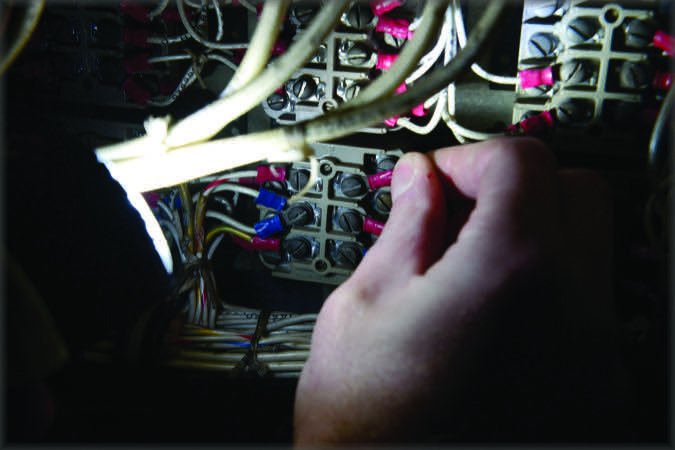
Landing light switch was stuck in the on position. Suspect internal arcing and welding of contacts. The overheating caused by the arc- ing can cause the switch body to melt, but did not in this case. No signs of heat damage of external switch surface were found.

Read More »

Licking Gravity

There is more to weight and balance than the obvious fact that airplanes behave differently when the center of gravity (CG) is forward versus aft. The acceptable CG range tends to be broader when the plane is carrying a minimal load and narrower as you approach gross weight. Performance always matters, but CG is the most critical performance factor when the plane is at gross weight.Calculating weight and balance is not complex. Its pretty basic math that we all learn to do early on in ground school. And just like balancing a checkbook before paying bills, the numbers should always add up. It is just a little more effort with a bigger plane offering more loading permutations-more options for where people and objects can be stationed inside.

Read More »

Maintaining Performance

Airplane performance and good maintenance are closely related. The figures published by the manufacturer are frequently viewed as optimistic once an airplane is put into service-and suffers prop nicks, bugs on the leading edge and a couple of bad landings-but book numbers can be achieved even years later. When actual performance differs from the published numbers, its often because the airplanes condition has diminished over the years and hours of use. The level of maintenance an airplane has received over the years will have a significant impact on its overall performance.

Read More »

Top Five IFR Mistakes

Whether we want to admit it or not, human flight by reference to instruments alone is an unnatural act. To determine up from down or left from right without a natural horizon, we need hours of training, and even more hours of regular practice. We also need a decently equipped airplane, stuffed with radios, colorful moving maps, some gyroscopes or their electronic equivalent, and more than a few charts, telling us where to go and how to get there.

Read More »

Electrical Systems

Unless youre flying a hot-air balloon, a sailplane or something with an engine that must be hand-propped, your aircraft has an electrical system. It may power only the basic equipment, like lights and the engines starter motor, or it can power everything, including the landing gear, flaps and flight instruments. Modern systems-and even those aboard so-called legacy aircraft-usually are relatively simple and robust, with well-understood components and maintenance requirements.

Read More »

Just Trying To Help

We all know the hazardous attitudes the FAA wants us to understand. Concepts like anti-authority, impulsivity and invincibility have no real place in the cockpit. Now, Im going to add one more: the desire to be helpful, or the motivation to please others. One of my big motivations in life is to be helpful to others. I enjoy writing for this magazine, for example, because it is helpful to other pilots. I also get great pleasure in being a solution to other peoples problems.

Read More »

Fuel Follies

Youre alone in your Lancair Evolution single-engine turboprop. You have just refueled at Chicagos Midway Airport and are headed to Denver, which your computer says is 788 nm away. The weather is good. The flight planning youve accomplished says it will take 3+15 and 121 gallons of the 170 available with the tanks filled. On startup, you reset your fuel totalizer to 170 gallons.

Read More »

Motoring

While in cruise flight, pilot noticed smoke coming out from under instrument panel. Pilot aborted flight but noticed landing gear extension much slower than normal. Aircraft was placed on jacks and gear retracted. Pump motor (p/n 98811281) could be heard grinding and working very slowly. Pump motor was too hot to be touched. Battery was disconnected, aborting retraction. New pump and motor were installed.

Read More »

Window Of Opportunity

Engine-out training teaches us to maneuver the airplane to a position from which a more-or-less normal landing can be made on an open surface. Among the elements to this training are that theres a finite amount of time and energy, in the form of altitude, available to get the airplane to the landing area. Maneuver the airplane to a key position abeam the runway at a certain altitude and airspeed, and it will have enough energy to glide to the runway as the pilot manages airspeed and turns.

Read More »
Pilot in aircraft
Sign-up for newsletters & special offers!

Get the latest stories & special offers delivered directly to your inbox.

SUBSCRIBE