Risk Management

ADS-B Shenanigans?

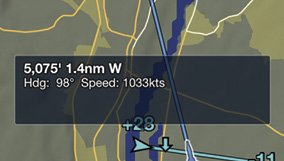
Thank you for printing in Augusts magazine the short letter I wrote, highlighting an issue I encountered just south of the Albany, N.Y., Class C airspace-a Cub showing an ADS-B altitude of 500 feet below sea level. (By the way, I passed the same Cub today at very close range. This time he wasnt showing up at all on ADS-B). In your response, you asked readers to report other anomalies, so heres one from a week or so ago.

Read More »

NTSB Reports

A witness observed the accident airplane at about 30 feet agl without its landing gear extended, and it was not extended when the airplane began to flare. Examination revealed the runway surface showed striated gouges and two long skid marks tracing the airplanes path from the runway.

Read More »

Power And Pitch

If youre like me, youve been watching the ongoing saga of Boeing and its 737 MAX. The gist of it for our purposes is that the new MAX versions of the 737 are powered by larger-diameter engines than the type was originally designed to accommodate. Since the 1980s-when Boeing switched from the types original low-bypass Pratt & Whitney JT8D engines to the CFM International CFM56-the reduced ground clearance when mounting high-bypass powerplants featuring improved fuel economy has required flattening the bottom of the cowlings. It was cheaper and easier than redesigning the landing gear, which is too short to accommodate the larger engines.

Read More »

Buddy System

Normally, I might have panicked, but with my experienced copilot at my side, I stayed calm. We talked through our options and decisions along as I continued to fly the plane. I began a series of small adjustments to the throttle and mixture to see how the engine responded. We quickly discovered these changes only made matters worse, so we left the settings as is. My buddy reminded me to stay high-altitude is our friend-and we looked for landing spots in case things deteriorated.

Read More »

Air Filters

Receiving inspection of new air filters (p/n P107336) revealed three out of four had a defective sealing surface, causing the sealing/mating surface to crack and crumble. This defective sealing surface could potentially enter the engine. The defective filters sealing surface has a light-gray color while the replacement filters we received, inspected and found to be in serviceable condition had a dark gray, almost black sealing surface. Suspect that the defective filters had improper material on the sealing surface or were improperly cured.

Read More »

Runway Incursions

There once was a time when piston singles were more prevalent at the Washington Dulles International Airport than they are today, and one evening I was in one of them, coming or going, on the ground control frequency. Another light airplane called for taxi clearance and, based on its position, was routed to a departure runway as far away as humanly possible from its parking spot. The pilot responded, Uh, ground, that looks kind of far; do you mind if we just fly over there?

Read More »

Cockpit Stress

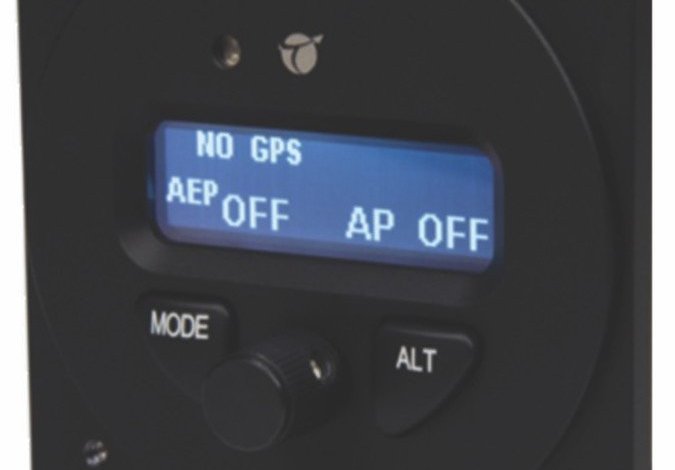
Knowing of the low overcast, if that pilots autopilot had this auto-capture feature, his motivation would have been to ease his workload and obviate spatial disorientation during transition into the clag. The effect of his action would have been to capture the airport elevation as target altitude. The TruTrak, at least, takes a few seconds to process and implement settings, so that the airplane would be expected to do exactly what it did: ascend into the clouds and a few seconds later return to the preset target altitude of the runway.

Read More »

Single-Stage Go-Around

Convincing the airplane that youve changed your mind and now want to climb-at the best rate, by the way-requires adding power, arresting the descent and beginning a climb, reconfiguring the airplane and ensuring directional control. While the order in which we perform these tasks varies-check your POH/AFM for the details-we still have to fly the airplane as we accomplish them. That means we can be tempted to add full power when doing so is probably not what we want to do.

Read More »

NTSB Reports

Upon raising the landing gear after takeoff, the gear motor continued to operate longer than normal, and the pilot heard an abnormal sound toward the end of the sequence. The right main gear was hanging at about a 45-degree angle, and the left main gear was not visible. The pilot completed the appropriate checklists, without change. The pilot declared an emergency and ATC confirmed during a fly-by that the main gear was not extended. During the landing, the nose gear remained extended and the two main gear were retracted. The airplane came to rest on the runway and the passengers egressed without further incident.

Read More »

Passing The Ride

Expecting that I had somehow unknowingly blown my check ride, we landed, shut everything down and he informed me I had…well…passed! A bit confused but obviously glad I hadnt actually blown it, I accepted the good news not wishing to open my mouth and undo it, and simply thanked him. I never told my instrument instructor what the examiner had said, only that he passed me.

Read More »
Pilot in aircraft
Sign-up for newsletters & special offers!

Get the latest stories & special offers delivered directly to your inbox.

SUBSCRIBE