Risk Management

When Aircraft Fuel Runs Out

With the engine still running and sputtering, we were getting closer to the airport. With about 10.5 hours of dual under my belt, I was not frightened for some reason, assuming we would disembark and swim if it came to ditching.

Read More »

Airmanship: Legal VS. Safe

I hope it wont come as a shock to learn magazine editors dont always practice what they preach. Kind of like fat-cat politicians urging austerity for the proletariat, we arent always as prolific in our flying as we may seem, or as we encourage others. In fact, over the last couple of years, competing and conflicting priorities conspired to keep me and my airplane on the ground much more than was good for either of us.

Read More »

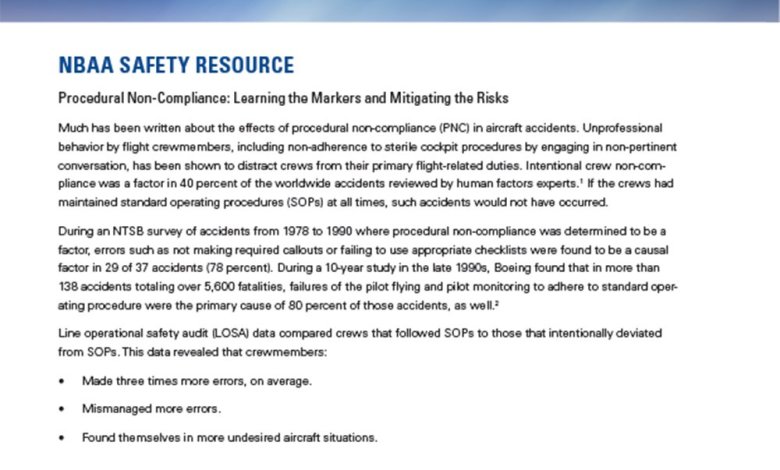
The Cost of Procedural Noncompliance

The safety consequences associated with procedural noncompliance-failing to correctly perform normal checklists-have become hot button issues within the business aviation community and the NTSB. All general aviation pilots should heed the warnings raised.

Read More »

Business Aviation Responds

To its credit, the business aviation community has risen to meet the challenge of procedural noncompliance. I serve on the National Business Aviation Association’s (NBAA) Safety Committee and for 2015, procedural non-compliance is one of the committee’s top safety priorities. I should point out that procedural noncompliance (PNC) is also on the NTSB’s 2015 Most […]

Read More »

Analyzing PBOR2

As long-time readers know, weve been following developments on industry attempts to deregulate the FAAs airman medical certification process. Happily, on December 15, 2015, the full U.S. Senate passed its version of the underlying measure, the Pilots Bill of Rights 2 (PBOR2), by unanimous voice vote. The bill, S. 571, now goes to the U.S. House of Representatives, where its immediate future is uncertain at this writing. The Senates vote to pass PBOR2 comes on the heels of literally years of work by industry organizations, individuals and Sen. James Inhofe (R-Okla.), the bills sponsor, to deregulate, or reform if you prefer, circumstances under which an FAA medical certificate is required for pilots commanding personal aircraft. The PBOR2 legislation builds on more than 10 years of experience with the FAAs sport pilot certification, which merely requires a state-issued drivers license as proof of fitness to fly. The Senate-passed version may actually require pilots to spend more time with their personal physician, reviewing their fitness to fly than before. The sidebar on the opposite page summarizes the bills provisions.


Read More »

Aviation Hydration

A few years ago, as my need to travel on business to various locations ill-served by the airlines grew, using a GA airplane was a natural solution. After months of making, missing and rescheduling appointments, conducting business in FBO meeting rooms and up to four sales calls a day, I started to get the hang of it. What I learned about weather flying and fitting small airplanes into the ATC system would fill several magazines!

Read More »

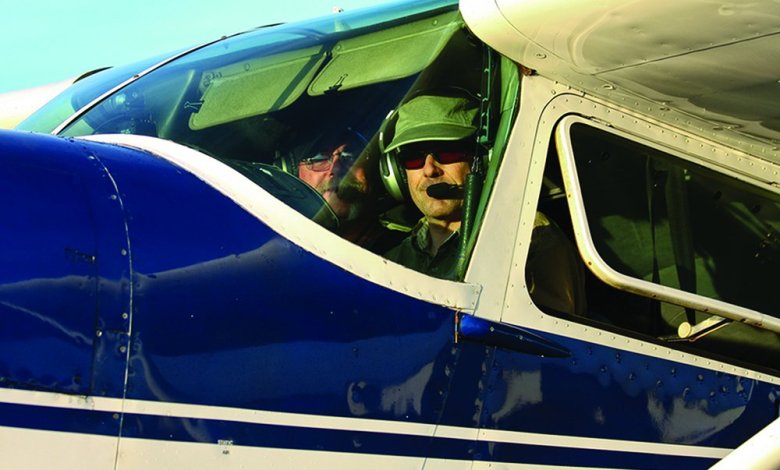
Are Two Pilots Better Than One?

The days mission was to coach a friend of mine through his three bangs-and-goes using another friends Cessna 172. Although he had little time, if any, in Cessnas, he was in the left seat. I was serving as PIC from the right. Shortly after we secured the cabin and ran the before-start checklist, the mighty 160-hp Lycoming was happily purring away. We were getting ready to call for a taxi clearance when the engine stopped. No cough, no protest, no warning. What did you do? I asked. Nothing, the bang-and-go candidate responded. So we ran the checklist again. When we came to the floor-mounted fuel selector, I asked, How did the fuel selector get turned off? He said, Its not; I turned it to both before starting the engine and havent touched it since. Houston, we found the problem.

Read More »

Who Is Flying the Plane?

According to the FAA, accidents and incidents have occurred due to a lack of communication or misunderstanding as to who actually had control of the aircraft. This is particularly a problem between students and flight instructors, but affects all flight operations when two or more people have access to the flight controls. Without clearly delineating […]

Read More »

Keep Your Aircraft Clean

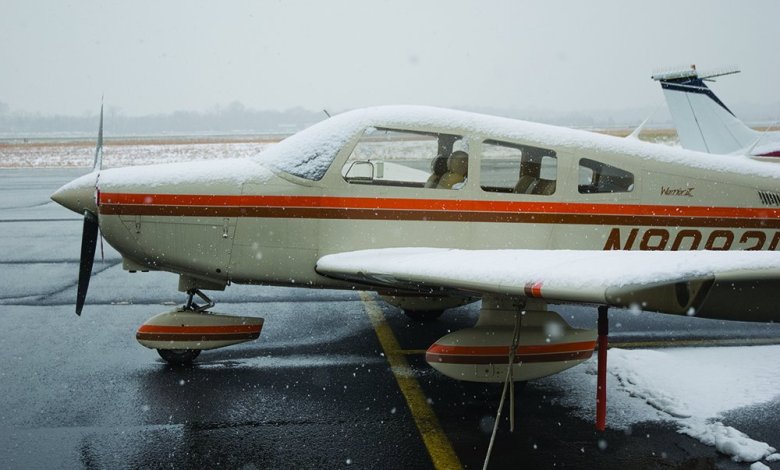
Ice, snow or frost adhering to our wings and other control surfaces add weight and drag, and can change way air flows over and around the airframe, making an otherwise clean air flow dirty. How dirty? Lets drill down a little bit into the underlying aerodynamics of airframe contamination for a better understanding of what the difference between a clean and contaminated airplane can mean.

Read More »

Continued VFR Into IMC

Continued VFR into IMC accidents have been part of the general aviation accident scene since before I started flying more than 50 years ago. Some headway in reducing these accidents was made when private pilot applicants were required to demonstrate basic instrument proficiency beginning in the early 1960s. Cockpit technology has also improved, with even basic training aircraft equipped for instrument flight and devices such as autopilots and weather data link becoming more prevalent. On the other hand, there is a much higher percentage of high performance aircraft in the general aviation fleet than 50 years ago, and more non-instrument-rated pilots are flying longer distances in higher performance aircraft. As a result, the prevalence of VFR-into-IMC accidents is still very high.

Read More »
Pilot in aircraft
Sign-up for newsletters & special offers!

Get the latest stories & special offers delivered directly to your inbox.

SUBSCRIBE