Features

Tips for Full-Circle Pilots

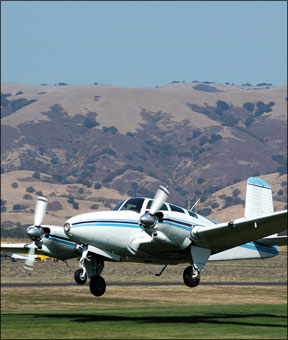
Its inevitable. Youll be standing on the ramp, clutching an avgas receipt rivaling Greeces national debt. Your chest throbs. You cant breathe, and ripping off your bolo tie, you scream, “Enough! I cant take this anymore!” Heart attack? Time to kiss 30 years of flying good-bye? Perhaps, but in this scenario, no. Instead, as you wander off toward your car, its first-love rekindled as you spot an old flame lounging in the grass across the field: a 1946 Aeronca Champ. And as your six-place Twin Turbo-Moneysucker is tugged off to its hangar, you stumble zombie-like toward the little taildragger and stammer to its owner, “I learned to fly in one of these….” She, then, takes your hand, guides you into the front seat and whispers, “Its time. Weve been waiting for you.” When she swings the prop by hand the 65-hp engine barks like a puppy on Christmas morning, and off you fly back to your aviation roots. Your flying life isnt over. Its merely come full circle, thanks to old airplanes that qualify as Light Sport Aircraft (LSA).

Read More »

Is 100LLs End Near?

Its no secret that 100LL aviation gasoline is one of, if not the, last leaded fuel in regular use in the U.S. Its also no secret-or at least it shouldnt be-that no other fuel offers the same capabilities throughout the general aviation piston fleet. Despite years of attempts to develop a substitute for tetraethyl lead (TEL, an additive helping boost fuel octane, preventing knock and valve-seat recession) or 100LL itself, nothing is FAA-approved as a replacement. Yes, promising research is being conducted into a substitute fuel or additive-especially over the last year or so. As those paying attention to environmental issues associated with aviation fuels know, the lead content of 100LL has long been an issue. The element is responsible for several long-lasting health issues, including neurocognitive, neurobehavioral, sensory, and motor-function effects in children exhibiting relatively miniscule blood lead levels.

Read More »

Quick Turn

If pilots engage in many cross-country flights during their careers, theyll often find themselves landing at a destination airport and then departing shortly thereafter. The landing may be to pick up a passenger, to refuel, to take a potty break or for any number of other reasons. As we gain experience, we also develop familiarity with the aircraft and with various aspects of the pre-flight ritual. One of these aspects is getting a weather briefing for the next leg, something were often tempted to short-circuit. After all, we just flew through that weather and landed here-how much could it have changed while we were in the head? The temptation during a quick turn like this is to pay the fuel bill, check the fuel caps security, light the fire and push on to the next stop without doing much else. We just climbed out of a perfectly good airplane. What could go wrong?

Read More »

When The Sparks Stop

This aviation “thing” brings with it the potential for events seemingly designed to test our internal response systems. You know the kind: situations with substantial potential for our adrenal glands to start working overtime. Learning how to deal with these kinds of events is one of the things flight training is all about. The time we spend with an instructor practicing various scenarios-from broken gyros and other useless instruments to no-flap landings and complete engine failure-teaches us how to combat a number of not-uncommon problems. And, unless were flying a glider, hot-air balloon or powered aircraft lacking an electrical system, the prospect of losing those flowing electrons-especially when in flight conditions where we really, really need them-is one very real prospect.

Read More »

Extreme-Altitude Hazards

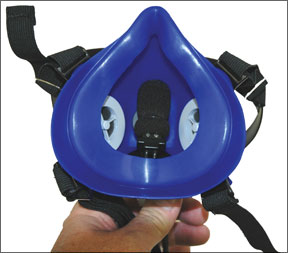
Most of my flying career was spent with an oxygen mask either five seconds away, or with it on and breathing 100-percent oxygen. After many sessions of lectures, altitude chambers and flight missions, oxygen education became a kind of gray thing. While the essentials stayed in the back of my mind, the details faded. That is, until my best friend died at the hands of the hypoxia monster. I learned and re-learned a lot during those next few weeks. One of the things I learned (or re-learned) is just how hostile is the high-altitude environment when were not prepared for it. Often, unfortunately, even if we are prepared, it can still rear up and bite us. Of course, the big problem with high-altitude flight operations is it can be a long way down to a safer level, where the air is denser. As well discover, an inability to breathe without some kind of assistance is just one of the problems.

Read More »

Investing In WAAS

The FAAs Wide Area Augmentation System (WAAS) has been widely hyped as a boon to safety because it offers more precise approach guidance with vertical capability. While thats true on some approaches, it can also cost an aircraft owner a bundle of money. Worse, the market offers limited choices in equipment-Garmins GNS430/530W and G1000 are among the short list. There are plenty of reasons to buy WAAS, and for many new installations WAAS comes standard. Theres also ADS-B, which relies on a WAAS-enhanced GPS position. But is the safety enhancement worth the upgrade costs for the typical pilot? And what exactly are you getting out of the WAAS deal?

Read More »

Five Exercises For Better Crosswind Landings

Everybody talks about crosswind practice, but few pilots do anything about it. Crosswinds are the number one factor in weather-related accidents, and even far more in-motion aviation insurance claims. The answer to handling crosswinds is usually to…practice crosswinds. Theres no question that practice makes one (at least closer to) perfect. And, as is the case with most other maneuvers we attempt when flying aircraft, landing in crosswinds requires the artful combination of a number of individual skills. As with so many elements of learning to fly and maintaining proficiency, there are several of ways to develop and improve your crosswind skills. You dont necessarily have to practice them in an actual crosswind, but you do need to be ready to combine them on the day when things are strong and gusty, and not aligned with the runway. Here are five exercises you and your CFI can use to develop better crosswind landing skills.

Read More »

Dissecting The NTSBs Glass-Panel Study

In March, the National Transportation Safety Board (NTSB) released a brief statement stating the results of a study it conducted into the relative safety of general aviation airplanes equipped with glass-panel technologies. As we reported in our April issue, the NTSB concluded the last decades glass-cockpit revolution has not resulted in enhanced safety for the period and aircraft it studied. It came to such a conclusion, in part, because it found single-engine airplanes manufactured between 2002 and 2006 and equipped with glass cockpits had a higher fatal accident rate than similar aircraft with conventional instruments. At that time, very little else was known about the study, including the specific aircraft models involved, its methodology and other metrics, raising many questions. Since our April issue was finalized, the NTSB has released the full 91-page study results, including a separate seven-page letter detailing a series of recommendations to the FAA. These documents may be retrieved from the NTSB Web site using links published in the box in the upper right corner of the opposite page.

Read More »

Ready To Land?

Years ago, when I was still just a student trying to figure out a Cessna 150, I managed to convince a CFI to sign me off for soloing a Cherokee 140. It was bigger, had a low wing (not that theres anything wrong with that) and four seats. At the time, it seemed like a 727. At this point in my training, I also had been signed off for solo flights to and from a couple of nearby non-towered airports.Soon, I decided to go fly the thing around the local area. Hearing this, the FBO asked me to visit one of those nearby airports to drop off some small items. I willingly agreed, loaded the stuff and launched uneventfully. Soon, as I cruised toward my destination, it dawned on me: I had never landed a 727/Cherokee 140 by myself. Since Im still around to write about it, its obvious it all worked out. I remembered my training, ran the checklist and spent most of my time in the pattern ensuring the airplane was ready to land. Would that we all paid as much attention to readying the airplane to land as we do simply moving various switches and levers.

Read More »

NTSB: Glass Hasnt Made Us Safer

A year-long study by the National Transportation Safety Board (NTSB) concludes the last decades glass-cockpit revolution has not resulted in enhanced safety. In making its March 9, 2010, announcement, the Board said its results found single-engine airplanes manufactured between 2002 and 2006 and equipped with glass cockpits had a higher fatal accident rate than similar aircraft with conventional instruments. The NTSB blamed complexity and lack of standardization among different aircraft and their glass panels, which has resulted in pilots failing to “understand the unique operational and functional details of the primary flight instruments in their airplanes.”

Read More »
Pilot in aircraft
Sign-up for newsletters & special offers!

Get the latest stories & special offers delivered directly to your inbox.

SUBSCRIBE