Features

Hand-Propping Demystified

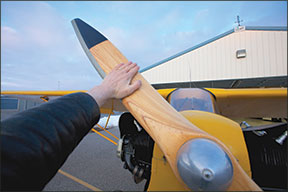
Most casual discussions of hand-propping begin and end with the admonition “Don’t.” That’s not bad advice, except when there’s no other way to start the engine. In fact, hand-propping is a time-honored practice, dating to the beginning of heavier-than-air flight. That it’s still employed says as much about the legacy of aviation as it does our ability to manage risk.

Read More »

Turbo Troubles

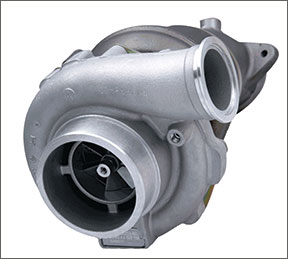
The turbocharger is a useful part of a pilot’s toolbag. When flying an airplane with one installed, it can increase our rate of climb, boost our groundspeed and lift us above a lot of the weather. It also can be used to pressurize the airplane’s cabin, allowing us to enjoy a shirtsleeve environment in the flight levels.

Read More »

Disoriented

License to learn” is the description often given to a freshly earned certificate or rating. The phrase describes a pilot’s new ability to get into conditions for which he or she has been trained but lack experience. Most of the time, we don’t read about what happened on a pilot’s first few forays with a new piece of paper. It’s a good idea if the first few flights during which we exercise our new certification are over familiar territory in relative benign conditions. The aircraft should be in good condition, as should the pilot.

Read More »

Five Twin Training Tips

Would you like to declare an emergency?” the controller asked with practiced coolness. Looking at the stopped and feathered left engine on the Cessna 310R I’d had for just 10 days, there was only one possible answer: “Yes.” Moments before, the engine had started vibrating so violently I was afraid it would shake the plane apart. I quickly feathered and shut it down, and called ATC. “Buffalo Approach, Twin Cessna 692, my left engine has failed.” So there I was, about 20 miles from my destination with only one fan turning, taken somewhat by surprise by the failure of a freshly overhauled engine. I stabilized and trimmed the plane, and with airspeed well over the blue line, I keyed in “direct to” on the GPS. Approach indicated they would inform my non-towered destination of my situation and impending arrival.

Read More »

Head In The Game

Pilots of personal aircraft ultimately have all the responsibility to ensure a flight is conducted safely. To help meet our responsibilities to ourselves and our passengers, we need to minimize the outside world’s distractions when we sit down in the cockpit to focus on the task at hand. Different pilots have different ways of focusing, but one common thread is blocking out anything unrelated to ensuring the upcoming flight’s success. That’s a major challenge when we serve as baggage handler, dispatcher, meteorologist and pilot. It’s also a major challenge in the dynamic world of air show pilots. An air show’s sights, sounds and attention-grabbing activities perhaps make it one of the worst places a pilot can be prior to a flight. But pilots about to fly their air show routines have implemented a formal “quiet time,” allowing them to focus on their upcoming flight and get into “the zone” or “the game,” if you will. Here’s how they do it.

Read More »

Sump Early, Sump Often

A time-honored pre-flight inspection ritual is sampling an aircraft’s fuel tanks. The idea, of course, is to drain a quantity from each sump, which usually mounted at a tank’s lowest point, into a clear container, then examine the fuel for contamination and quality: Is it the same stuff that’s supposed to be in the tanks? Are water or other contaminants present? Is it even fuel? In my flying career, at least, it’s rare to find a problem with a fuel sample. But I’ve been quite shocked on a few occasions to find nothing but some very nasty-looking water in a tank or two, which demanded further investigation. Yet, I’ve seen pilots walk up to an airplane for the first flight of the day, kick the tires, light the fires and launch without sumping. Truth be told, I’ve probably done it a couple of times, too. But it’s a bad idea. Here’s why, and what can happen when we fail to sump fuel tanks and ensure we have clean, correct fuel.


Read More »

Icing Complications

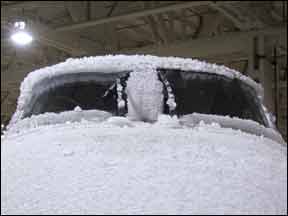
The only time ice on the airframe is a good thing is when it’s tied down and you really didn’t want to go flying today, anyway. Otherwise, it’s always something to be avoided. As we all should have been taught, ice adhering to the wings, tail and other components tends to add weight and drag. If it forms on an airfoil, the surface’s lift characteristics can be dramatically different, in addition to the weight and drag. Bad karma all around. But ice can affect other systems, too. The pitot/static system is problematic, as is the electrical system, as more current is demanded to keep things warm. Depending on the aircraft, ice also can extend the landing gear, fail an engine or cause critical electrical failures. The NASA Aviation Safety Reporting System (ASRS) recently updated one of its database report sets, the one covering icing incidents among commuter and general aviation aircraft. The incident descriptions have several lessons for us and highlight airframe icing’s complications, even if having the stuff on the airfoils turns out not to be a factor.

Read More »

No Electrics? No Problem!

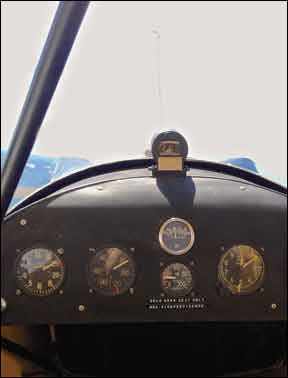
A pilot can learn a great deal by stripping his or her flying down to its fundamental roots. Flying an aircraft without an electrical system puts you in touch with the basics of flying by altimeter, whiskey compass, pilotage and pure stick-and-rudder skills. On the mechanical side, it’s a chance to commune with the engine using only the minimum required instruments. There’s also a certain romance to flying a vintage plane, especially one lacking an electrical system. It harkens back to the barnstorming days when men were real men, women were real women and there was no TSA to verify the difference via pat down. Even in this era of modern instruments, glass panels and gadgets, there’s still room in the skies for a basic plane with minimal systems. Here’s how.

Read More »

Flying For Transportation

Each of us flies for different reasons. Many pilots started (or continue) as enthusiasts interested in airplanes as recreational machines. Others learned to fly as a prelude to a career in the cockpit. For many, aircraft primarily are a means of transportation for business or personal reasons. In fact, if I did not require an airplane for travel, I would not bother to fly any more. If you seek to use general aviation aircraft for travel, I believe a special approach to safety—implemented through targeted training and consistent flight operations—is required, especially if you are trying to meet any kind of schedule. Unfortunately, our training and operating procedures generally don’t prepare us for these flights. It is possible, however, to achieve high levels of safe utility, even with single-engine piston aircraft, if you employ a few simple techniques to achieve efficiency and reliability while managing risk.

Read More »

The Alpha Principle

Loss of control in flight (LOC-F) is implicated in 51 percent of all fatal personal and business-use GA accidents, according to the NTSB. The preponderance of LOC-F events are aerodynamic stalls, according to NTSB member Dr. Earl Weener and as reported in his presentation at AOPA Summit in October 2012. Notably, fatal stalls are less common in instructional flight, perhaps because pilots are expecting them when training, and the instructor helps detect and respond to them. In my almost 30 years of experience, stalls and stall avoidance are constantly emphasized and feature regularly in NTSB investigations. I suspect a lot of Aviation Safety readers have even more experience than me, and have seen the same emphasis and crash record even longer.

Read More »
Pilot in aircraft
Sign-up for newsletters & special offers!

Get the latest stories & special offers delivered directly to your inbox.

SUBSCRIBE