Features

Handle With Care

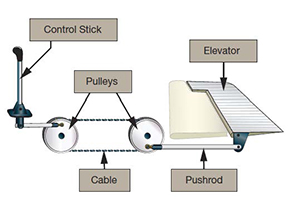
Any time repairs or other work is performed on an aircraft, it’s a good idea to conduct a post-maintenance test flight to ensure everything is working as it should. There’s even a regulation, FAR 91.407, covering such flights and the “operational check of the maintenance performed or alteration made.” In many ways, someone conducting such a flight is a test pilot, determining whether the work performed was completed properly and the aircraft performs as intended. During such flights, we generally plan to conduct a functional check of any and all systems potentially affected by the work performed and return. This, of course, presumes we don’t find a problem with the work performed. If we do find a problem during our post-maintenance check flight, an obvious response is to get the aircraft back on the ground expeditiously and resolve the issue. Depending on the problem, we may or may not be in a hurry: To us, an engine oil leak would mean hurry up and land, while a flight-control system issue might encourage us to take things easier and handle the aircraft gently.
Read More »

Five Tips From ATC

We bow to no one in our willingness to reject ATC clearances and forcefully but politely seek what we want and need from a controller. Since our chair usually is moving faster than their’s, we cop the attitude that our needs are more important than ATC’s. At the same time, we certainly understand controllers often have little flexibility in responding to our needs, whether due to their own requirements, conflicting traffic we know nothing about or high workload. But they also need things from us: basic airmanship, concise communication and the ability (willingness?) to follow instructions. To put it another way, both sides of the pilot/controller relationship have expectations. We know what ours are; What are their’s? To find out, we asked a controller-friend working in an ARTCC in the Midwest U.S. to share with us his top five pet peeves. Here’s what we learned.

Read More »

Gadget Flight Rules

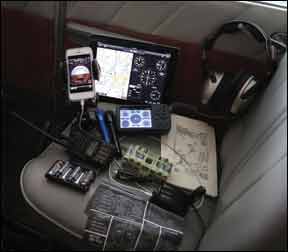
One thing we should have learned during our primary training is to always have an “out” or backup plan for when things don’t go according to plan. On any given flight, I typically have a smart phone with various aviation apps, an iPad with even more, a mounted Garmin 396 and a handheld radio. I would say most pilots have at least one, if not several of the above. Most of the time, everything in the panel works well and I can fumble my way to the destination without too much assistance from the portable devices surrounding me.But every now and then, we need a little “help.” The need can stem from a failed vacuum/pressure system and unreliable gyros, a total or partial electrical failure or simply a single instrument giving erroneous indications. Without going into too many specifics about hardware, brands and apps, let’s step through what it takes for an appropriate portable or handheld device to be a functional backup in your time of need, something I call “gadget flight rules,” or GFR.

Read More »

Experienced Decisions

Aeronautical decision-making, or ADM, wasn’t a big, formal deal back in the prehistoric times when I was doing my primary flight training. It was present, nonetheless, in many hangar-flying sessions and private discussions with other, more-experienced pilots. “Don’t run out of gas” and “Don’t mess around with weather” were chief among their warnings and war stories. Those cautions remain as valid today as they were then, of course. While I’ve never run out of fuel, or even been forced to make a precautionary landing to top off, the same can’t be said of many other pilots. Conversely, I’ve often diverted well out of my way, delayed or cancelled trips thanks to weather I simply didn’t feel I could handle. As a result, it could be said I’ve made good decisions. But all that’s in the past—what about the next set of decisions you and I will make? Will they be good ones or bad ones? What goes into aeronautical decision-making and how can we improve it?

Read More »

Fixing The Notam Mess

As more and more technology is welcomed into our formerly round-dial cockpits, many pilots have expressed growing frustration over the lingering need to do some things the old-fashioned way. In the new, high-tech cockpit, flat-panel screens, all-electronic flight instruments and portable, tablet-size computers with built-in GPS dominate our must-have lists. Along the way, these much-welcomed advances have helped simplify the pre-flight planning task. But much of the information we need for every flight remains stuck in the abbreviated, ALL CAPS format used when DC-3s and J3 Cubs were the cat’s meow. The notice to airmen (Notam) function is perhaps the best/worst example of how international regulatory agencies have failed leveraging new technologies to improve dissemination of flight-critical information. But now, thanks to an unlikely set of circumstances, an overhaul of the Notam system is underway. Here’s what’s going on, why and what you can expect.

Read More »

High At Night

These pages often have extolled the virtues of night flying, with less traffic and smoother air foremost among them. In almost the same breath, however, we also caution against the many ways night flying can trip us up. Yes, our basic inability to, you know, actually see things outside the airplane can be a problem, but that’s only part of the challenges we face when flying at night.

Read More »

The WINGS Program

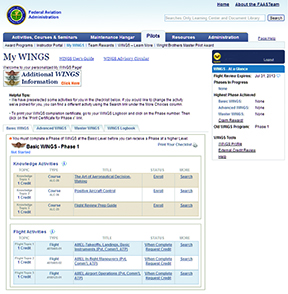
The FAA’s WINGS program has been a key element of joint agency/industry safety education efforts for many years. It is considered gospel among many general aviation safety advocates, and the program has indeed produced positive results. Yet, many are concerned it reaches only a fraction of those pilots who need it, and the positive safety results the program achieves would have resulted anyway because of the safety culture embraced by its current “church-goer” participants.

Read More »

Flight Control Failures

Perhaps the classic example of a failed flight control system involves United Airlines Flight 232, a scheduled domestic passenger operation of a DC-10. On July 19, 1989, while in cruise at FL370, the jet’s center, tail-mounted engine’s fan disk failed. The pieces penetrated the engine’s containment shroud and severed the airplane’s hydraulic lines. Those lines quickly leaked out their fluid, eliminating any ability for the flight crew to reposition the airplane’s primary control surfaces.

Read More »

Know Where To Go

My father was a mechanic for a major airline. One day he was a passenger on one of the company’s Boeing 767s on a flight from Chicago to Los Angeles. As the heavy Boeing lifted off into a low overcast at O’Hare, the right engine failed. My father later told me he could hear the change in noise and feel the deck angle, but said the crew artfully handled the failure and engine shutdown, and most passengers probably didn’t notice anything unusual had happened.

Read More »
Pilot in aircraft
Sign-up for newsletters & special offers!

Get the latest stories & special offers delivered directly to your inbox.

SUBSCRIBE