Features

Icing in Your Aircraft’s Engine

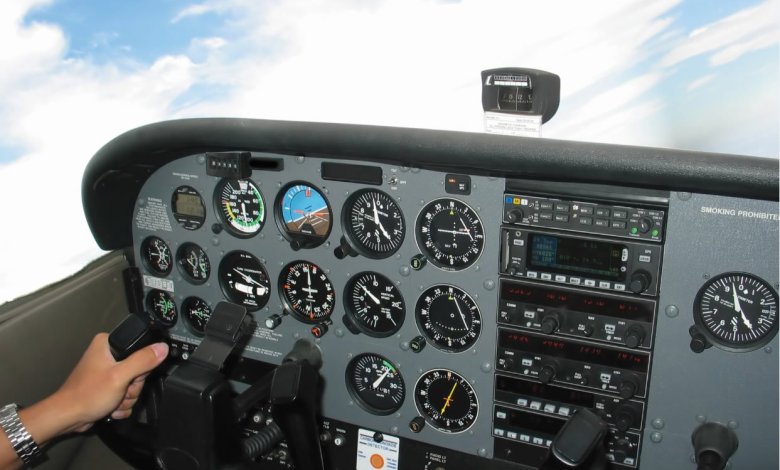
Its that time of year again in the Northern Hemisphere, when in-flight icing can be a threat. Depending on where you are and where youre going, icing may be a rare possibility during the upcoming season. It also can be a sure thing. Evaluating the possibility of in-flight icing is part of the equation-its potential impact is another. A pilot might completely overlook icings impact on other aircraft systems, including the powerplant(s). Carburetor icing should be a topic familiar to most pilots, but induction system icing can be an afterthought. And while there are systems we can activate to minimize icings impact on the induction system, we must remember they exist and know how to activate them.
Read More »

Stratux: A $110 ADS-B In Receiver

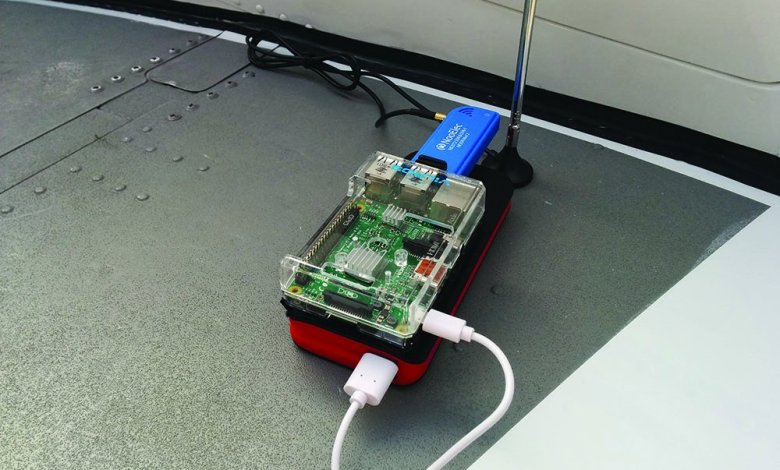
With an off-the-shelf microcomputer, a USB-based software-defined radio and a WiFi dongle, plus some free Linux-based software and a battery, pilots who don’t want to shell out a lot of cash to get a taste of ADS-B In’s traffic and weather information now have a lower-cost option. To see if there was anything to all […]

Read More »

Aircraft Accidents: the NTSB Reports

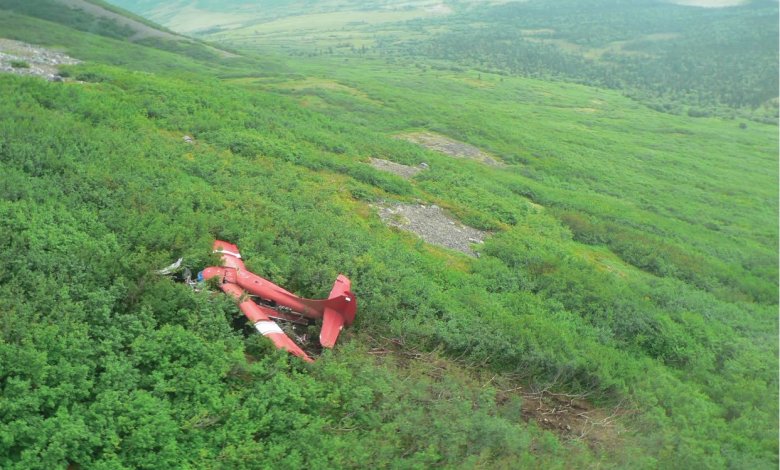
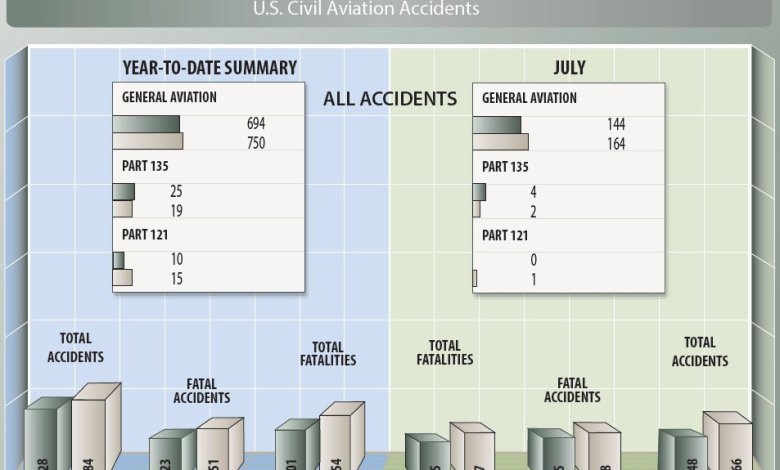
Every month, Aviation Safety publishes aircraft accident reports in order to give our readers the broadest perspective on aviation and the risks it involves. Our goal is to pass along a message of caution and safety as much as one of thrill and freedom. That’s why we think you should hear about recent mishaps from around the country. Here are some gathered from the National Transportation Safety Board.

Read More »

Logging Approaches

The question of what constitutes flying a loggable instrument approach procedure (IAP) often comes up during both hangar-flying sessions and check rides. The commonly accepted definition has been something like the aircraft flies over an initial approach fix (IAF) and departs the final approach fix (FAF) inbound to the airport in actual or simulated IMC and breaks out somewhere before reaching the missed approach point (MAP), decision height (DH) or decision altitude (DA). Its not all that simple, of course, especially once simulators and view-limiting devices get involved. To help clarify the answers, the FAA recently published official guidance.

Read More »

IFR Practice Approaches

Many instrument-rated pilots struggle to maintain their proficiency for IFR. Logging the six approaches, holding procedures and course intercepts/tracking required by FAR 61.57(c) can be quite the challenge for pilots who fly infrequently or who are based in regions where good weather is routine. Simulators and training devices can be major boosts to maintaining proficiency, especially when focused on maintaining instrument scanning skills and practicing IFR procedures. But when it comes to flying personal aircraft in the clag, theres nothing that beats practicing in the real thing.

Read More »

Managing Aviation Load

I often verbalize the last item on my preflight checklist just before taxiing onto an active runway and ask, aloud, How could this flight kill me? I run through all the Big Stuff in my mind, mentally ticking off each item that meets the criterion from an imaginary checklist. Its similar to the FAAs PAVE model- Pilot, Aircraft, environment and External pressures-but theres also a factor that doesnt quite fit the acronym: the payload. Call it PAVE-Load, or LPAVE.

Read More »

Coordinated Flight

Most of the time, the typical pilot flying the typical airplane will be in a straight-and-level attitude. When it comes time to join a traffic pattern, for example, enter a holding pattern or fly an ATC vector, we abandon straight-and-level for turning flight. When we turn, we change the airplanes aerodynamics-the degree of change depends quite literally on the degree of bank-and one outcome can be uncoordinated flight. Ideally, we all would be adept at maintaining coordinated flight, in turns and other maneuvers.

Read More »

Decision Making for Pilots

According to those who have done extensive research into pilot behavior, a major characteristic of a typical pilots decision-making often leading to a fatal accident is that we are highly mission-oriented. We continue to focus on getting to the destination even as weather and mechanical issues progressively go down the tubes. The accompanying stress results in tunnel vision and reduces our ability to objectively analyze the big picture. One result can be very capable pilots pressing on into conditions that ultimately bring the flight to an ugly conclusion.

Read More »

Your Altimeter Is Lying

All instruments in your panel lie some of the time. Some of them lie all the time. Even if you have a glass panel that eliminates things like compass turning errors, and its connected to an air-data computer so it always know the true airspeed, your back-up systems likely are steam gauges, the old-fashioned, mechanical kind. Thats the bad news.

Read More »
Pilot in aircraft
Sign-up for newsletters & special offers!

Get the latest stories & special offers delivered directly to your inbox.

SUBSCRIBE