Features

My Payne Stewart Moment

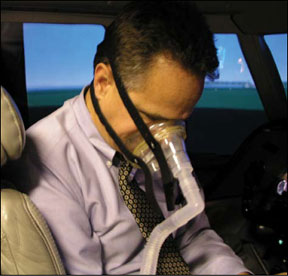
In that vast wasteland we call television, a clever commercial has been making the rounds lately. It depicts a hapless sad sack in a crumpled white suit bumbling through a nighttime cityscape setting off fires, floods and other assorted mayhem. The catchline is “risk never sleeps.” It sure enough doesnt, but the other essential element of accidents is opportunity. Consider this: In two years time, Cirrus Design will have sold more than 1000 turbocharged SR22s, each capable of effortless cruise in the mid-20s. The risk, of course, is hypoxia, and 1000 airplanes is enough opportunity to give an insurance executive ulcers.
Read More »

On a Mission: Managing Ice

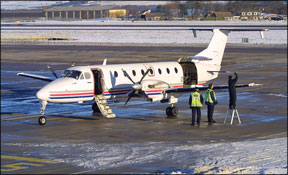
Aircraft utility can go down significantly in cold weather. Adverse weather is more common and tenacious than in warmer months, and along with the fog, low clouds and wind, there is often the threat of airframe ice. Yet we still want, and sometimes feel we need, to fly. How can we balance the possibility of airframe ice with the utility of our airplanes? How do the experts-those “on a mission” with their airplanes-predict, avoid and escape airframe ice? To answer these questions I spoke with professionals who slog through the weather every day (and night), flying high priority aeromedical, charter and air cargo in piston, turboprop and small jet aircraft.

Read More »

Improving GA Safety

The 2006 accident statistics are out from the National Transportation Safety Board (NTSB) and theyre not good. When compared to 2005, aviation deaths rose from 617 to 779. According to the NTSB, nearly 90 percent of aviation fatalities occur in general aviation, which also accounted for a significant majority of the increase in aviation-related deaths from 2005 to 2006. Clearly, theres some room for improvement. Whats not clear, however, is how to go about it. Sure, education is key; so is ensuring pilots not only get experience but get the right kind of experience. To gain some additional insights-and insights from the U.S. government agency charged with investigating transportation accidents and recommending safety-related improvements-we spent some quality time with NTSB Vice Chairman Robert L. Sumwalt. Here are some excerpts from that conversation.

Read More »

Hurry Up And Crash

Most of us dont fly personal airplanes to waste time. Sure; there are occasions we might pull back the power, look around for things other than traffic, and revel in the view and the freedom aviation provides. But, those of us who use these airplanes for personal transportation often have to stay on a schedule, regardless of whether its self-inflicted or imposed on us by others. And schedules are made to be broken. Im often reminded of a truism: If you have time to spare, go by air. It seems no matter how hard I try, Im frequently behind someones idea of a schedule. In fact, when people at my destination ask when Ill arrive, I just laugh.

Read More »

Handheld Six-Pack?

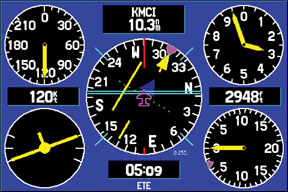
While it is unlikely youll ever have to use your hard-earned partial panel flying skills in a real emergency, critical systems do and will fail at the worst possible times. The good news is there are several relatively inexpensive tools on the market that can make the ordeal more manageable for a single pilot in IMC. The Garmin GPSMAP 396 and 496 handheld GPS receivers retail for under $2500, plus about $50 a month for the databases and XM weather subscriptions. In addition to a color moving-map display loaded with terrain and weather graphics, a “five pack” of virtual instrumentation provides most of the information one needs to accomplish partial-panel instrument flying. (There is no attitude information, hence its not a “six pack,” but more on that in a moment.) The 296 and monochrome 196 units each offer the panel page, too, but not the XM weather.

Read More »

Gliding With Precision

From almost our very first flying lesson, pilots are taught what to do in the event a single-engine airplanes lone powerplant fails. As with too many concepts at that early stage of our training, we basically accept what were taught without many questions. Later, as we gain experience, we begin to think more about those early lessons and try to apply to them what our experience has taught us. In turn, many questions can arise. If your airplane ever becomes a glider, you would suddenly become very interested in its new aerodynamics. How promptly and accurately you can remember to make the most of the variables at your disposal would play a large part in determining where and how softly you land. Lets take a look at those variables and how they can affect your emergency glide.

Read More »

Why Cant We Maneuver?

Most airplanes spend the vast majority of their lives in straight and level flight; climbing, turning and descending only as necessary to get on and off a runway. Its when pilots start yanking and banking, however gently and smoothly their control inputs, that problems start to arise-and the accident rate starts to increase. And when the yanking and banking takes place close to the ground, any error margin becomes slimmer still. In fact, according to the AOPA Air Safety Foundation (AOPA ASF) and its 2006 Nall Report, “maneuvering flight accounted for one-third of all fatal accidents” in 2005, the most recent year for which complete data is available.

Read More »

Flying In The Margins

In some ways VFR flying can be more challenging than flying under instrument flight rules. Apart from achieving the skill of being able to read and understand the instruments, controlling an aircraft solely by reference to them, talking to and taking notes from ATC and planning your next move-all at the same time-IFR flying is almost entirely built upon procedures. Compared to VFR flying, its about as intuitively challenging as rendering a picture by the use of numbered colored pencils. When the weather is marginal and youre flying under visual flight rules, the challenge comes from knowing how to interpret a different set of numbers.

Read More »

Someone To Watch Over You

From their perches in the towers, approach controls and center work stations, air traffic controllers track us and guide us and provide valuable help when requested-and sometimes even when its not. Far from a separate society, controllers are an active part of the aviation safety team. From their unique vantage points, controllers have a pretty good idea of what works and what doesnt in aircraft movement. They know what pilots do right and what they might do better to fit into the system and get safely from departure to destination. I polled air traffic controllers to discover what we can be doing better to improve safety, fit into the flow of traffic, get the best possible information while en route, and perhaps expedite our handling and requests. Hear, then, the advice of aviations Watchers.

Read More »

Busted Boost

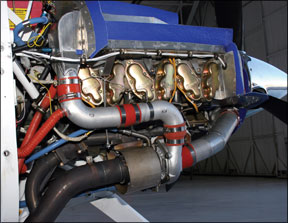
If you fly a turbocharged airplane, you know a different reality than the poor slugs who have to muddle along in the weather gasping for manifold pressure above 12,000 feet. Pilots with boost climb faster, fly higher and have more options in making altitude-related weather decisions. Nothing is for free, however, especially if you own an airplane with one or a pair of turbochargers. Youll pay more for overhauls and routine maintenance, and you may burn bit more fuel. You also know-or should know-a different reality with regard to potential system failures. Although theyre as simple as a bag of rocks, turbochargers are like any other mechanical device, so they occasionally fail, presenting sometimes perplexing symptoms you wont see from a normally aspirated engine. Lets consider some possibilities.

Read More »
Pilot in aircraft
Sign-up for newsletters & special offers!

Get the latest stories & special offers delivered directly to your inbox.

SUBSCRIBE