Airmanship

Losing Orientation

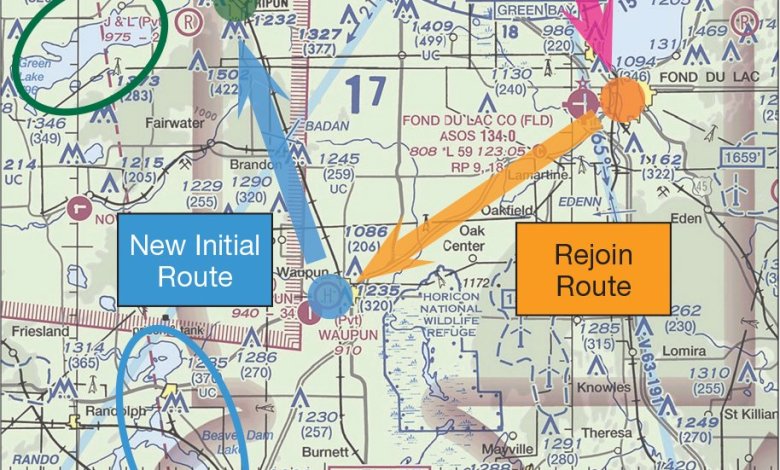
A common night disorientation scenario is transiting from an area with many lights to empty countryside with few scattered lights (or none at all). I distinctly remember my first experience with night disorientation. I was a VFR-only pilot at the time and did not have a good instrument scan, nor much night experience, but thought I was proficient enough. I was flying from Boise to American Falls, Idaho, in a rented two-seat Alarus. The plane was painfully slow, so instead of flying over the highway, I hit the Direct To button on the GPS so I could fly the shortest path over the empty sagebrush back to the airport. Between the lack of lights and the moonless night, I strayed significantly off-course more than a few times. I knew my saving grace was the magenta line that I was able to keep pointed ahead.

Read More »

Shock And Yaw

to maintain heading when employing the “one-wing low” method or apply it when using a little of both methods to align the airplane with the runway.”

Read More »

NTSB Reports

According to the pilot, he was delayed about 10 minutes by traffic before completing the engine run-up and takeoff roll with no anomalies noted. After the pilot lifted off and retracted the landing gear, the engine stopped producing power about 300 feet above the runway. There was no time to perform remedial actions to restore power, so the pilot lowered the landing gear and touched down on the remaining runway. The airplane went off the departure end of the runway, down an embankment and across a road before coming to rest upright 384 feet beyond the runways departure end in low brush.

Read More »

Test Pilot

My airplane has wingtip-mounted fuel tanks, installed under a supplemental type certificate (STC). In many ways, theyve transformed and improved the machine by adding greater loading flexibility, thanks in part to a gross-weight increase. What drag they produce isnt noticeable, and the additional endurance means the airplane is faster over some trips than it was before. For many of my destinations, I can depart with full tanks, fly to my destination, shoot an approach, miss it and fly home with reserves.

Read More »

NTSB Reports

The pilot reported that he and his co-owner had flown the airplane the night before the accident; it flew normally without problems. On the morning of the accident, he had to use the low-pressure boost pump to start the engine, but the pre-takeoff run-up was normal. The airplane ised most of the 4201-foot-long runway before becoming airborne. On reaching about 500 feet agl, the pilot determined the engine was not producing full power. He turned on the low-pressure boost pump and climbed to 1000 feet agl before turning back to the airport. The engine continued losing power, so he conducted a forced landing to a cornfield. A witness reported observing dark exhaust trailing the airplane during the takeoff.

Read More »

Whos In Charge?

I started my lessons (at 50 years old!) at an airport called Howell-New Lenox in Illinois. On my first solo, I had to go around due to a back taxi by another student with his instructor (my first exposure to being PIC in a two-pilot operation. But I was cool; I also learned that I was pretty calm in an abnormal situation-when Im alone.

Read More »
Pilot in aircraft
Sign-up for newsletters & special offers!

Get the latest stories & special offers delivered directly to your inbox.

SUBSCRIBE