The pilot reported that he and his co-owner had flown the airplane the night before the accident; it flew normally without problems. On the morning of the accident, he had to use the low-pressure boost pump to start the engine, but the pre-takeoff run-up was normal. The airplane ised most of the 4201-foot-long runway before becoming airborne. On reaching about 500 feet agl, the pilot determined the engine was not producing full power. He turned on the low-pressure boost pump and climbed to 1000 feet agl before turning back to the airport. The engine continued losing power, so he conducted a forced landing to a cornfield. A witness reported observing dark exhaust trailing the airplane during the takeoff.
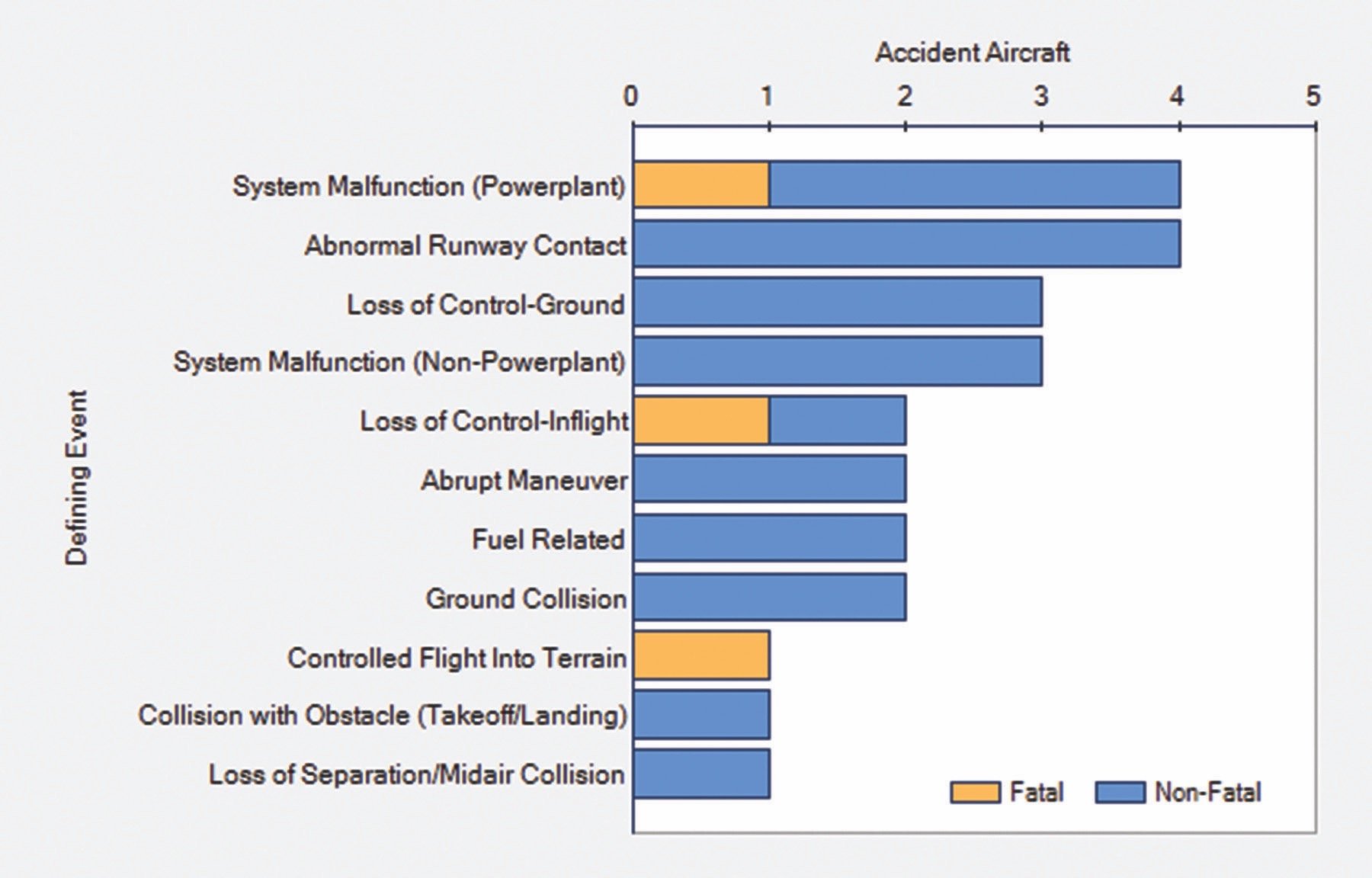
Multiple accidents involved partial or total engine power loss, frequently leading to forced landings.
Several incidents resulted from loss of aircraft control or in-flight structural failures, often occurring during aggressive maneuvering or after a balked landing.
Takeoff and landing phases presented various hazards, including runway excursions, mechanical failures such as seat slippage, and a mid-air collision due to communication issues.
September 1, 2018, Crete, Neb. Cessna P210N Pressurized Centurion
At about 0900 Central time, the airplane sustained substantial damage during a forced landing to a cornfield following a partial loss of engine power after takeoff. The pilot and right seat passenger received serious injuries; the two rear seat passengers received minor injuries. Visual conditions prevailed.
CREATE A FREE ACCOUNT
Sign up to keep reading
Create a free account to continue. Already a member? Sign in below.