










NTSB Accident Reports
A monthly summary of recently published NTSB preliminary accident reports involving general aviation and air carrier aircraft.

A monthly summary of recently published NTSB preliminary accident reports involving general aviation and air carrier aircraft.
Vintage aircraft often have vintage owners. Familiarity being a source of contempt, long-time owners of aircraft seeing little activity may also see little need to perform preventive maintenance or conduct regular inspections. It was just fine when I parked it; what could possibly have broken while it was sitting in a hangar? can be a familiar refrain to pilots who have owned the same airplane for a significant time. After a while, the pilot/owner is so familiar with the aircraft, he or she can tell somethings wrong just by the slipstream noise.
After overflying the destination runway, the crew made a steeper-than-normal approach to the 3880-foot-long runway due to terrain. According to the captain, a bump was felt near the threshold during the landing but it was not extreme. As the propellers were reversed, the airplane veered to the right. The crew corrected and the airplane tracked straight for about 2000 feet before veering sharply right, exiting the runway and spinning 180 degrees. Inspection of the runway threshold revealed several four-foot-tall piles of rocks and dirt.
One special category of pilots are those for whom going fast is important. Why? Because speed is relative. At altitude on a severe clear day, there’s little sensation of speed. We have to get close to something before our speed becomes apparent. And the risk with getting close to something is we might hit it. While untrained pilots who engage in such risky behaviors aren’t the norm, there’s enough of them that the practice has its own term: unwarranted low flying. Its use apparently has fallen out of favor, but the phrase “unwarranted low flying” has populated numerous NTSB reports over the years.
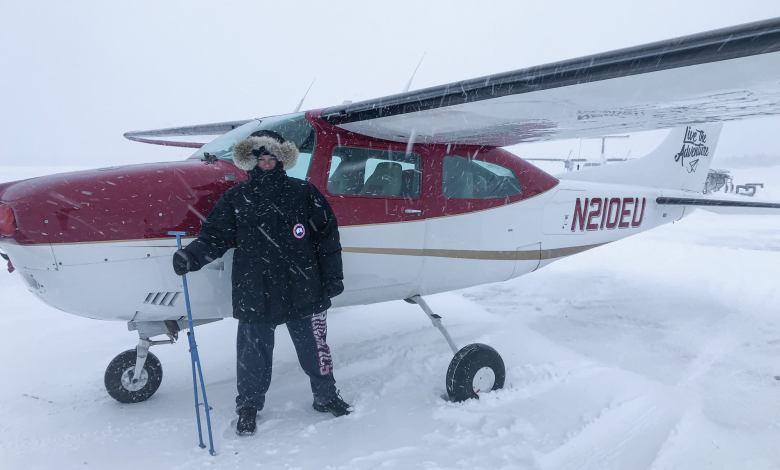
The pilot purchased the airplane the day prior to the accident. He departed the airport and performed maneuvers in the local area, then returned and completed four normal wheel landings. On the fifth landing, at about 30 mph, the tailwheel settled to the runway. When the tailwheel touched down, the pilot stated he felt a rumble “like a machine gun” and the airplane veered to the right. He applied left rudder, and the airplane subsequently veered left off the runway, the right main landing gear collapsed and the right wing spar sustained substantial damage when it impacted terrain. Examination revealed the tailwheel was cocked to the right, perpendicular to the fuselage.
During the landing roll, three deer ran from right to left across the runway. The pilot felt a hard strike on the inboard section of the right wing, observed a deer roll over the right wing and felt a sensation of the right landing gear running over a second deer. Although the airplane sustained substantial damage to its right wing, the pilot was able to maintain control and taxied to the ramp without further incident. The pilot and passenger had to egress through the rear baggage door due to damage to the cabin door.
A witness observed the accident airplane at about 30 feet agl without its landing gear extended, and it was not extended when the airplane began to flare. Examination revealed the runway surface showed striated gouges and two long skid marks tracing the airplanes path from the runway.
The only time Ive performed what I consider to have been a for-real high-altitude takeoff, it went fine. I was at Albuquerque, N.M.s Double Eagle II airport, elevation some 5800 feet. It wasnt the middle of summer, but it was a warm, sunny fall afternoon. I dont recall which runway I used, but it offered more than enough length for my Debonair, which carried only me, some gear and full fuel. As Id been trained, I leaned the engine before the takeoff and let the airplane fly itself off the runway. I handled it gently until gaining enough airspeed to establish a proper climb and I had some altitude.
After a low pass over the field, the pilot returned to land. On final approach, he was blinded by [the] sun and the tailwheel hit vines growing near the airstrip, causing the airplane to stall. The left wing, left main landing gear and propeller were damaged during the hard landing. According to the NTSB, [b]ecause the pilot did not hold a current pilot certificate, nor did he meet the medical certification requirements, he was not legally authorized to act as pilot-in-command of the airplane at the time of the accident.
Radar data depicted the airplane flying northerly until about 1138, when it initiated a right turn to the south at about 400 feet msl. Witnesses then saw the airplane turn right to a westerly or northwesterly direction over land while radar depicted the airplane descending to about 200 feet msl. The airplane banked sharply left, and one witness observed the banner twist and separate. The airplane then banked to the right and impacted a 19-story condominium near its top floor. The airplane fell to the second floor deck and came to rest on its left side. Witnesses described the engine sound as either sputtering, operating normally or being at a low throttle setting.

Get the latest stories & special offers delivered directly to your inbox.
SUBSCRIBE