Another Look

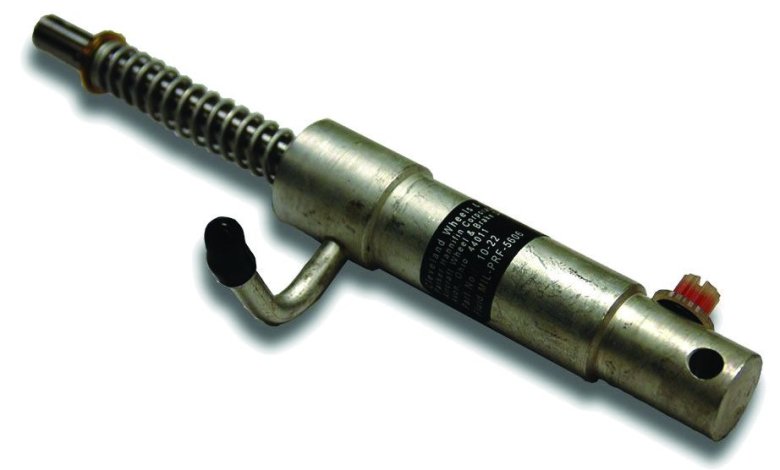
Brake Master Cylinders

After a brake master cylinder was installed, the technician was unable to bleed the brake system. Fluid pulled from reservoir would return to reservoir through the same line as the internal bypass was not functioning properly. Master cylinder was disassembled and bypass was found stuck and unable to move. Metal shavings were found inside, and an O-ring was torn, with black specks mixed in with the shavings. Part replaced with new master cylinder.
Read More »

Top Ten Tips For Managing Risk

Everyone talks about the weather but no one ever does anything about it. (Stop me if youve heard that before.) The same could be said about managing the risk of general aviation. We-both this magazine and the industry as a whole-spend a lot of time preaching to pilots about the mechanics of understanding weather forecasts, determining if the aircraft is capable, and making honest evaluations of our own performance in considering how and when to conduct a flight. But once we identify the need to mitigate a risk, we sometimes have little space left over to describe the tools we can use. Lets try to fix that.

Read More »

Geographic Risks

The Pacific Northwest, for the purposes of this article, includes the states of Washington, Oregon, Idaho, and parts of Montana and Wyoming. Thats a huge hunk of territory and comprises more than 250,000 square miles for Washington, Oregon and Idaho alone. The region includes two major mountain ranges-the Cascades and the Northern Rockies-and many smaller ones, as well as several major river basins. There are major cities in the region, such as Seattle, Portland and Boise, but also thousands of square miles of largely empty land and wilderness.

Read More »

Negligent Maintenance

Vintage aircraft often have vintage owners. Familiarity being a source of contempt, long-time owners of aircraft seeing little activity may also see little need to perform preventive maintenance or conduct regular inspections. It was just fine when I parked it; what could possibly have broken while it was sitting in a hangar? can be a familiar refrain to pilots who have owned the same airplane for a significant time. After a while, the pilot/owner is so familiar with the aircraft, he or she can tell somethings wrong just by the slipstream noise.

Read More »

Lean Of Peak EGT

Its basic human nature that we often want to improve the efficiency of the things we do. Its also human nature to be skeptical when were offered something of value that carries little or no cost: Wheres the catch? What am I giving up to benefit from this largesse? These can be legitimate questions, and they deserve detailed answers, no matter whats being offered. When considering how pilots use the mixture control to manage aircraft piston engines, desires to improve efficiency and healthy skepticism can intersect.

Read More »

NTSB Reports

After overflying the destination runway, the crew made a steeper-than-normal approach to the 3880-foot-long runway due to terrain. According to the captain, a bump was felt near the threshold during the landing but it was not extreme. As the propellers were reversed, the airplane veered to the right. The crew corrected and the airplane tracked straight for about 2000 feet before veering sharply right, exiting the runway and spinning 180 degrees. Inspection of the runway threshold revealed several four-foot-tall piles of rocks and dirt.

Read More »

Filing Direct?

Since Eric is a working controller, I respect his advice. I was a little surprised when he stated that filing direct grinds controllers gears. With GPS capability, filing direct has saved me a lot of time and money. It was never realized that doing so was creating a problem for anyone. It was not done as a sign of laziness or to engage in a bad practice, but to get in and out of the ATC system as quickly and efficiently as possible.

Read More »

Brave New World

Toward the back of the magazine youre holding in your hand, in our Quick Turns department, theres a news item about the FAA formally transitioning to the ICAO-standard/international flight plan form for all domestic non-military operations. If youve been paying attention over the last few years, as we have, youll be happy to know a process that has seen several earlier deadlines come and go seems to have finally staggered across the finish line. As of August 27, the international flight plan form is the law of the land, so to speak.

Read More »

NTSB Reports

During the landing roll, three deer ran from right to left across the runway. The pilot felt a hard strike on the inboard section of the right wing, observed a deer roll over the right wing and felt a sensation of the right landing gear running over a second deer. Although the airplane sustained substantial damage to its right wing, the pilot was able to maintain control and taxied to the ramp without further incident. The pilot and passenger had to egress through the rear baggage door due to damage to the cabin door.

Read More »

Preflight, Interrupted

The airline industry long ago figured out that one of the most dangerous things in aviation is two pilots trying to fly the same airplane at the same time. One inevitable result of such an arrangement is that there are times when no one is flying, and one of the ways we know this is from the accident record. Airlines evolved the pilot-flying/pilot-not-flying concept to acknowledge this characteristic of crewed cockpits and established clear responsibilities for each pilot.

Read More »
Pilot in aircraft
Sign-up for newsletters & special offers!

Get the latest stories & special offers delivered directly to your inbox.

SUBSCRIBE