Another Look

Air In The Tanks

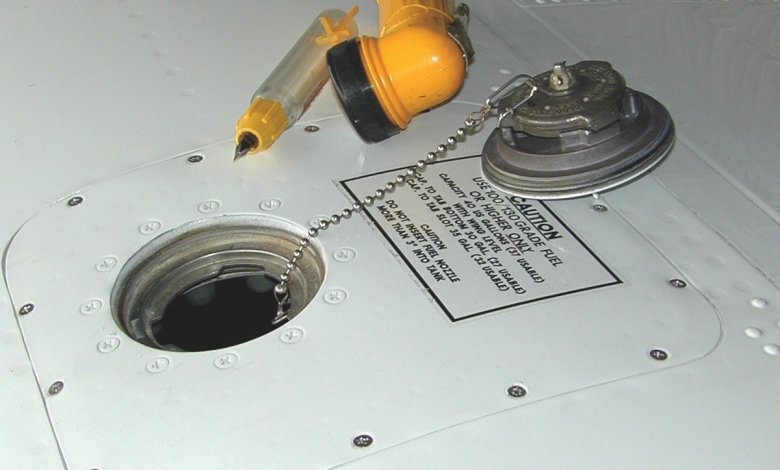
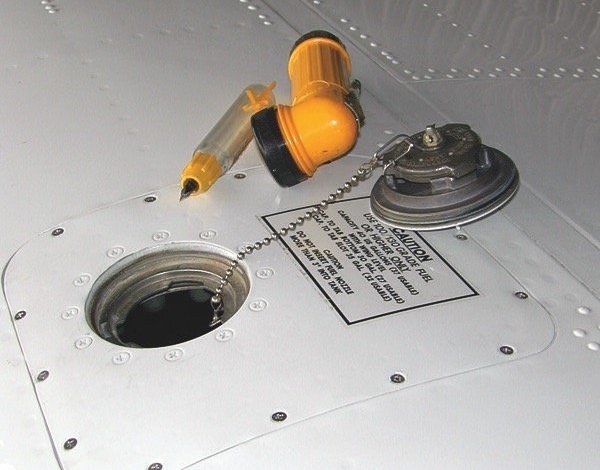
Ive owned Cessna T210s since 1977; first a 1969 J model and then a 1979 N model with a TSIO-520-R engine. In the 1980s, there were a number of fuel exhaustion accidents in 210s, all of them attributable to not getting a full fill and resulting in being shorted an hours supply when fueling stops after fuel backs up out of the filler port. The outboard sections of the fuel tanks are slightly higher than the bottom of the filler port. To get the last one-plus gallons in the tanks requires the slowest of fueling until reaching the real full point.
Read More »

Turbochargers

During descent, pilot noted oil streaking back from top engine cowl louvers, then dropping oil pressure. Pilot conducted precautionary shutdown and feathered propeller. Pilot continued descent and landed at destination without issue. Maintenance removed cowling and found oil appearing to come from the turbocharger (p/n 4066109025) area. Further investigation revealed oil bypassing the seals on the turbo.

Read More »

Truth In Icing

I received a call from the owner of a turbocharged, high-performance single who lives in the Great Lakes region, well-known for icing conditions in late autumn, winter and early spring. His airplane was equipped with an aftermarket TKS-style ice protection system and was not FAA-approved for flight in known icing (FIKI). The pilot wanted to discuss strategies for flight during the cold times of the year, including insights into conditions where icing layers are vertically thin and/or rates of ice accumulation are typically light (or even only a trace).

Read More »

EAA Lauds Experimental Aircraft Safety News

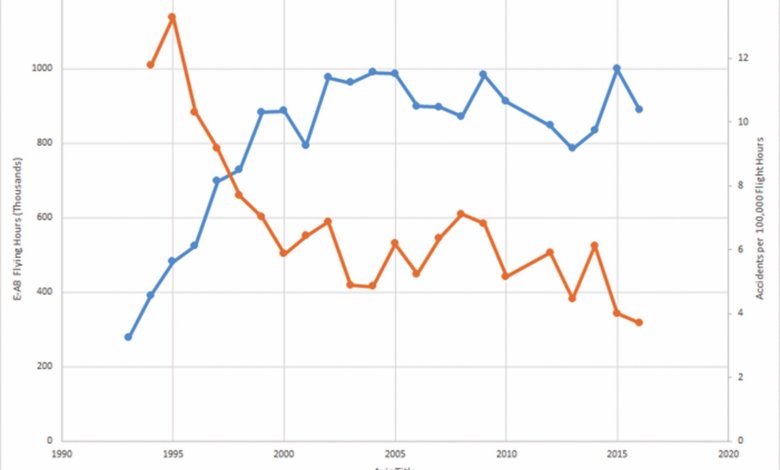
Experimental amateur-built aircraft in 2017 achieved their safest year ever, according to the Experimental Aircraft Association (EAA). The association based its findings on the recently finalized results of the FAAs 2017 General Aviation and Part 135 Activity Survey (GA Survey). Pilots of experimental amateur-built (E-AB) aircraft were involved in fatal accidents at a lower rate than has ever been recorded, with 2.63 fatal accidents per 100,000 flight hours last year, the association said. That fatal accident rate-2.63-breaks a record set the previous year, when E-AB pilots were involved in 3.6 fatal accidents per 100,000 flight hours, EAA added.

Read More »

NTSB Reports

A witness observed the airplane make a normal landing aligned with the runway centerline. His attention was momentarily diverted and when he looked back, the airplane was established in a gradual left turn, maneuvering at a slow speed in a three-point attitude. The airplane then collided with the airport perimeter fence and came to rest about 600 feet past the touchdown point. The pilot stated that, despite application of brakes and right rudder, the airplane veered off the runway. Damage included the right wing strut.

Read More »

Fixations

A pilot-buddy and I were flying two airplanes to the runway at Cape Hatteras, N.C., to spend the day on the beach. Both my rented Cessna 172 and his recently purchased Piper Warrior were loaded with people and gear for the trip, and we both had departed with restricted fuel. Wed hooked up en route at a prearranged time, location and altitude, and were chatting back and forth on the air-to-air frequency. Plan A was to stop in Elizabeth City, N.C., and take on enough fuel for each of us to get back to our respective bases that evening without stopping.

Read More »

Return Strategies

We were ready to take off from a nontowered airport into a 700-foot overcast ceiling. Through a remote communications outlet (RCO), Id received my IFR clearance with instructions to hold for release and call ATC when I was number one for takeoff. Taxiing out, I saw a Cessna Citation Mustang light jet at the hold line. I swung onto the run-up pad, knowing I had plenty of time because the Mustang pilot would be holding for his release, and I would not be permitted to depart until he was airborne and well away from the airport.

Read More »

Canceling IFR Too Soon

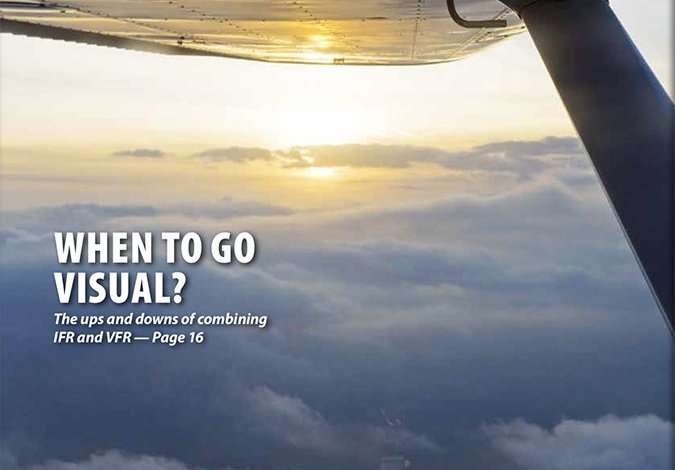
Tom Turners article in the October issue, When To Go Visual, touched on one of my pet peeves about canceling IFR after breaking out on an approach to a nontowered airport: the need to maintain VFR to the runway in an IMC environment. While we all need to be courteous and try to expedite other traffic, canceling IFR at, say, 500 agl after breaking out of a 700-foot ceiling puts us 200 feet below the clouds, too close for legal VFR in Class E airspace. And canceling two miles out on the final can provide all the evidence one needs that youre operating in less than VMC without a clearance. Enterprising feds have brought enforcement actions in similar circumstances. And theres always the guy who pulls his pickup truck onto the runway forcing you to go around and fly the miss.

Read More »
Pilot in aircraft
Sign-up for newsletters & special offers!

Get the latest stories & special offers delivered directly to your inbox.

SUBSCRIBE