Another Look

Are You Experienced?

This sounds like malpractice on the part of his FBO and possibly flight instructor. How can a student pilot in primary training with about 20 hours get checked out in a different aircraft with that little training? I remember that being approved for solo flight in my FBOs 172 was a big deal, like it is for most students: you do some landings with the instructor, then he or she gets out and tells you to do it yourself while observing from the ground, something that apparently didnt occur in this case since the instructor was with him for that sole hour of dual. Im even wondering how the students insurance company would have covered him (or if he was covered at all…).

Read More »

Paperwork

Over the years, Ive spent way too much time as self-loading cargo on airliners. Regardless, Im always curious about whats going on in the front office but rarely get a clear glimpse. One exception is when some last-minute maintenance is performed or connection problems result in some passengers arriving late to the gate. Invariably, Captain Speaking will come on the PA and apologize for the delay, commenting that well be ready to go as soon as we get the final paperwork. What is the captain talking about?

Read More »

Flying For Money

A year and a half ago, it dawned on me that what I most enjoyed about my previouscareer as a science communications consultant was when I got to commute to visit clients in my faithful Cessna 180. With some 1500 hours in my logbook-accumulated primarily on those business trips-I sent out my rsum to two area commercial operators. In response, I got two job offers. Wow. What a game-changer for me. I jumped into the Part 135 world with both feet and left my previous career behind. Now, with more than a year under my belt flying for money, I have been reflecting on how profoundly the move from Part 91 to Part 135 has affected my risk management experiences and choices.

Read More »

NTSB Reports

After maneuvering away from the airport, the Piper returned and executed a touch-and-go landing. Radar data indicate the airplane climbed to 900 feet msl at 80 knots of groundspeed before radar contact was lost. Witnesses observed the airplane flying normally, then saw the left wing separate from the fuselage, which impacted a field. Preliminary examination revealed the left wing main spar exhibited cracks from metal fatigue extending through more than 80 percent of the lower spar cap, and portions of the forward and aft spar web doublers. The right wing also exhibited fatigue cracks in the lower spar cap at the same hole location extending up to 0.047-inch deep. The 2007 airplane had accumulated 7690 flight hours since new. Weather at 0953 included wind from 260 degrees at seven knots, 10 statute miles of visibility and few clouds at 25,000 feet.

Read More »

Flight Review: Nuisance Or Opportunity?

Most pilots who fly single-engine piston airplanes in non-commercial operations do not undertake formal training at annual or other intervals. Instead, they are only required to complete a flight review from a certified flight instructor (CFI) every other year to fly as pilot-in-command. For most pilots, this is an exercise to be completed with as little effort as possible. Some pilots resent the requirement while a few even dread it. This doesnt have to be the case, however.

Read More »

Risk And Benefit

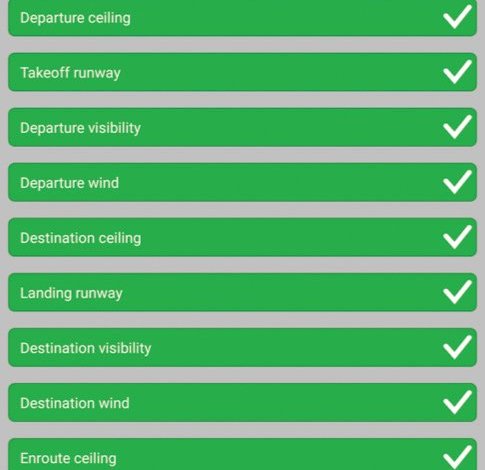
I much appreciated Robert Wright’s May 2018 article, Risk Assessment Tools. We use a version of a flight risk assessment tool in our flying club, and while I agree that numerical values should not be the sole criteria for the go, no-go decision, the process does provide a checklist of sorts for decision-making. The most valuable risk assessment tool I use is not found on any web site or aviation app, but is the application of a simple philosophy: If I have to analyze a go, no-go decision for more than a few seconds, it is a sure sign that the risk requires serious mitigation or a willingness to stay safely on the ground.

Read More »

Lack Of Assertiveness

Any pilot whos flown in the system much knows air traffic controllers can be intimidating. The very use of the term controller implies a level of authority over pilots, which often translates into the mindset that pilots always must comply with a controllers instructions, or else. Thats true to an extent, but the pilot is always the final authority as to the operation of the aircraft. It says so, right there in FAR 91.3

Read More »

NTSB Reports

At about 1051 Eastern time, the airplane was substantially damaged when it struck terrain during an attempted go-around. The private pilot and the pilot-rated passenger were not injured. Visual conditions prevailed.

Read More »

Nuts And Bolts

While changing an IO-520-BBs oil during an annual inspection, steel and red rubbery pieces were found in the filter. Metal determined to be coming from crankshaft gear driving alternator. Rubber was coming from alternator drive coupler. Four bolts holding crankshaft gear to crank were loose, allowing gear to slop around and cause wear of gears and coupler. Locking plates securing the four bolts were missing.

Read More »
Pilot in aircraft
Sign-up for newsletters & special offers!

Get the latest stories & special offers delivered directly to your inbox.

SUBSCRIBE