Another Look

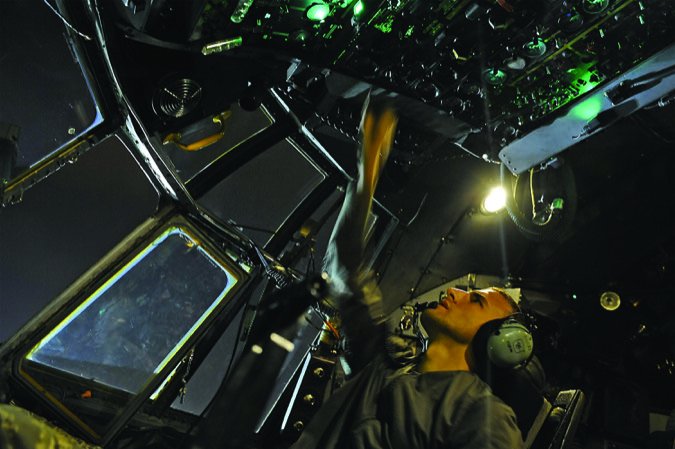
Cockpits By Braille

Stuff happens. One minute the engine may be purring like a kitten, the next it can be coughing up a hairball. Pilots who react well to such challenges often credit their training, applying the instincts honed by indoctrination without the need for excessive thought. How does that happen? Most pilots regularly practice simulating an engine out, picking a field and pitching for best glide. That is one scenario to be ready for, but emergencies come in many forms, and your preparation in advance will pay off when that time comes.

Read More »

Downdraft Dual

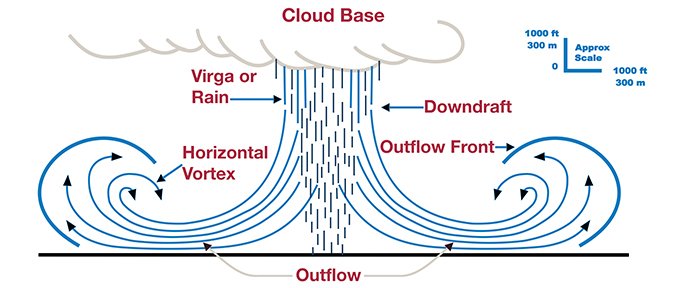
I am a lapsed pilot who last flew 47 years ago. Ive recently gotten back into the left seat and have picked up about 10 new hours flying with a CFI. The first few hours were intimidating, but confidence is returning every. Until, that is, a few days ago.

Read More »

FAA Targets Incorrect Surface Landings

On July 7, 2017, an Airbus A320 operating as a scheduled Air Canada passenger flight and conducting a night visual approach to Runway 28R at the San Francisco International Airport overflew other airliners positioned on a taxiway and awaiting takeoff clearance. As we wrote in our October 2017 issue, Runway 28L was closed at the time; its lighting was turned off and a 20.5-ft-wide lighted flashing X (runway closure marker) was at its threshold. The Airbus lined up for its landing on parallel Taxiway C, which had four air carrier airplanes on it awaiting takeoff clearance-a Boeing 787, an Airbus A340, another Boeing 787 and a Boeing 737. Subsequent investigation reveals the Airbus crew advanced its thrust levers for a go-around when the airplane was about 85 feet above the taxiway; the minimum altitude recorded on the FDR once the go-around was initiated was 59 feet agl. The Boeing 787 is 55 feet 10 inches high.

Read More »

Single-Pilot Jets

While most of us probably feel fortunate to be able to fly any kind of general aviation aircraft, most of us also have fantasies about owning and flying more expensive machines, including jets. A small number of us achieve that goal and obtain certification to operate small jets single-pilot. But the safety record of these operations is mixed. Some recent accidents point to gaps in the training and checking associated with single-pilot type ratings.

Read More »

Into The Flight Levels

It seems to be an arbitrary cutoff, 18,000 feet. However that height was originally chosen, its the altitude that defines, at least in U.S. airspace, what we call the flight levels. There are a number of rules that apply to all airplanes flying at and above FL180 but less obvious are some of the real-world considerations protecting you and your passengers as you climb above 18,000 feet-considerations that relate to very real hazards.

Read More »

NTSB Highlights Gas Fuel-Related Accidents

The NTSB in August released the latest in a series of what it calls Safety Alerts, which focused on preventable accidents stemming from fuel starvation or fuel exhaustion. According to the Safety Alert (SA-067, Flying On Empty, August 2017), an average of more than 50 accidents each year in the five years from 2011 to 2015 occurred due to fuel management issues.

Read More »

NTSB Reports: October 2017

The aircraft broke up in flight then impacted the ground after an uncontrolled descent at about 0153 Central time. The commercial pilot and five passengers sustained fatal injuries; the airplane was destroyed. Dark night visual conditions prevailed. An IFR flight plan was in effect.The airplane was in cruise at 10,000 feet msl when its pilot queried ATC about nearby weather conditions. Radar data then showed the airplane climb slightly and turn left.

Read More »

Finding The Airport

Starting a new job right out of engineering school was everything I thought it would be. With a great boss, a smart and experienced team, and interesting work, I had everything I wanted, with the exception of having to work the second shift.

Read More »

Skyhawks

Landing light switch was stuck in the on position. Suspect internal arcing and welding of contacts. The overheating caused by the arc- ing can cause the switch body to melt, but did not in this case. No signs of heat damage of external switch surface were found.

Read More »
Pilot in aircraft
Sign-up for newsletters & special offers!

Get the latest stories & special offers delivered directly to your inbox.

SUBSCRIBE