Another Look

Download the Full June 2018 Issue PDF

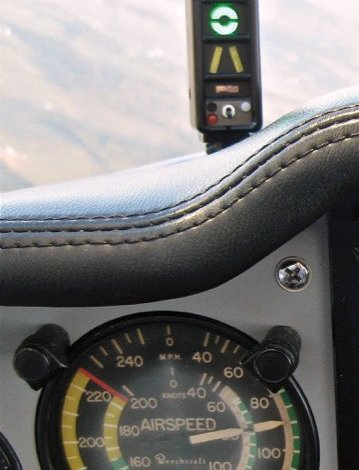
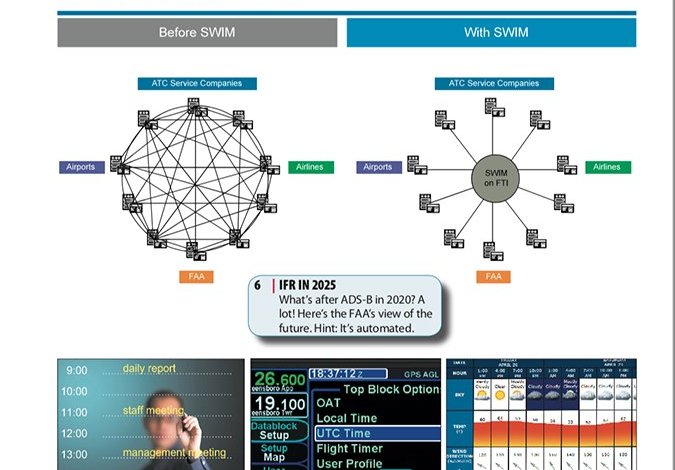
Getting weather info in flight has gotten cheaper due to FIS-B (ADS-B In). However, years before the FAAs eventual roll out of FIS-B and its array of free weather-information products, the dominant player in that industry was Baron Services though XM Radio. Sirius radio offered a competitive product from WSI. Eventually, Sirius and XM merged. The leading hardware was probably Garmins GDL 69 and 69A receivers getting XMs Baron offering.

Read More »

Mind The Gaps

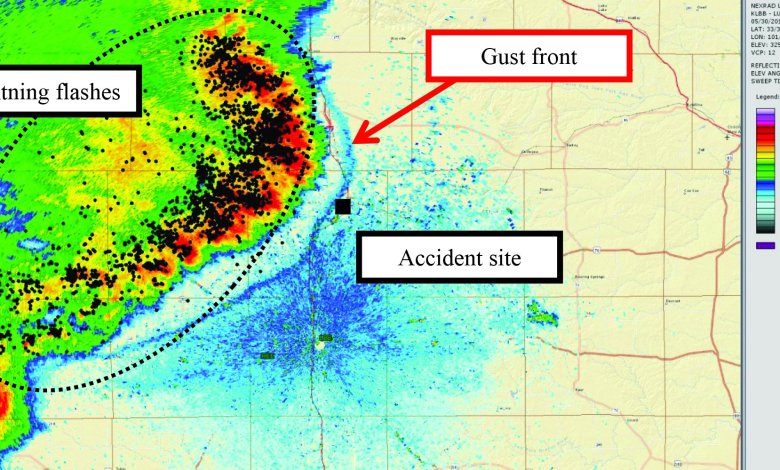
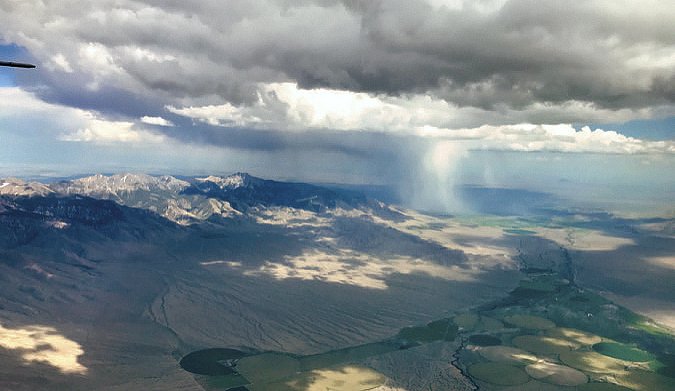
NY NEXRAD. There is a large wind farm nearby with turbines oriented from due north through southeast of the radar. The turbines are close enough (within 18 km) to cause spurious multipath scattering that extends well beyond the wind farm and contaminates data at multiple scanning elevation angles.ӟOur modern Nexrad (Next-Generation Weather Radar) system is still based on radar

Read More »

The Air Is A Fluid

Iwish I had read, or at least learned the material, in Mike Harts April 2018 article (Seeing The Invisible) before my husband and I departed on a flight from Santa Monica to Lone Pine, Calif., back in 1998. My excuse is that I had not yet earned my certificate. At the time, I blithely believed the plane simply went where you pointed it.

Read More »

Why Do We Stall?

Fixed-wing pilots start learning stall recognition and avoidance during pre-solo training. The private and sport pilot checkrides require recovering from developed stalls with minimal loss of altitude, and stall and spin awareness are (or at least should be) refreshed during flight reviews for the duration of ones flying career. But unintended stalls still put dozens of airplanes into the ground every year. Is it possible that stall training as currently practiced isnt as effective as it might be?

Read More »

Gust Front

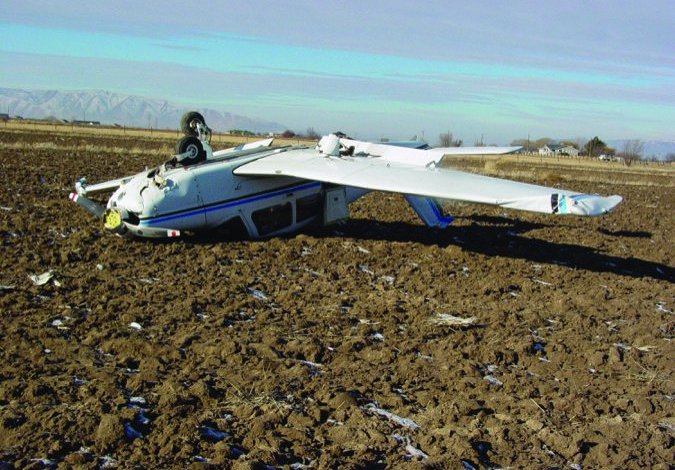
There are many old sayings sprinkled throughout aviation. One of them, Theres no such thing as an emergency takeoff, highlights the fact that deciding to initiate a flight is optional. As pilots, we get to decide many elements of our takeoffs, including whether to perform one in the first place. This is important since there are many unknowns in the first few minutes after a takeoff.

Read More »

Cessna 172 SDRs

Pilot found a brake anomaly. Checked aircraft and found that the anchor had detached from bulkhead assembly (p/n 0513488-11), causing the brake system failure.

Read More »

Tune And Identify

Im a 63-year-old pilot completing my IFR training and obtaining a high-performance endorsement for a 182. Virtually all of my training has been with a large flight school in South Florida (name withheld to protect the guilty).In my regular life Im a senior faculty member for a respected trade association. After about 30 years as an educator, Ive learned that a successful learning outcome happens when the teacher is addressing the unique learning styles of each individual student. All of my students are adults with varying skill and education levels. If I teach in a manner that I think is the right way, but fail to connect with the individual student, Ive failed as an instructor.

Read More »

Fuel Tank Frustrations

Right fuel tank cracked at top seam. Tank was replaced. Operator noticed a very loud oil canning sound from right wing after shutdown following a one-hour flight. Investigation revealed a partial blockage of the fuel tank vent, causing oil canning of fuel tank due to vacuum in fuel tank. Vent line was cleared and vented cap was replaced with new.

Read More »

Procedure Vs. Technique

If youre lucky, youve gotten some of your aviation education from an instructor with extensive real-world experience. One CFI who fits that description-having flown freight, charter, airline and corporate without ever giving up teaching in the 35 years hes had his certificate-likes to remind students of the difference between procedure and technique. The former is what you have to do; the latter is how you choose to go about doing it. Before landing, for example, a constant-speed prop should be moved to its full-forward high-rpm setting to prepare for a possible go-around. Whether its done after turning final, on base or immediately after reducing power on downwind is entirely at the pilots discretion, provided it gets done. Reasonable arguments can be made for each alternative.

Read More »
Pilot in aircraft
Sign-up for newsletters & special offers!

Get the latest stories & special offers delivered directly to your inbox.

SUBSCRIBE