
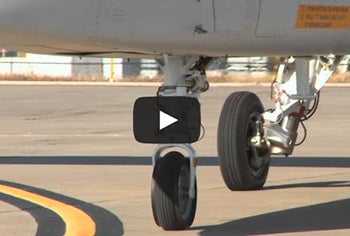
Video: Scorpion Jet Gets Ready for First Flight
Gemini Sparkle

Key Takeaways:

  • Textron, in partnership with AirLand Enterprises, is rapidly progressing the development of the Scorpion, a straight-wing military twinjet.
  • The Scorpion has successfully completed high-speed taxi tests at McConnell Air Force Base and is now very close to its first flight.
  • Designed as a versatile and affordable tactical jet, its intended missions include border security, counter-narcotics, and humanitarian relief.
  • The jet boasts a useful load greater than 9,500 pounds (including 6,000 pounds of fuel for a 2,400 nm range), a projected max speed of 450 knots, and an all-composite airframe with an expected 20,000-hour service life.
See a mistake? Contact us.

Textron, the parent company of Cessna, is moving fast on the development of its sexy straight-wing military twinjet, the Scorpion, which surprised the world with its emergence earlier this year. As evidenced by the following video, Scorpion test pilots have completed the first taxi tests and are getting close to taking the airplane to the skies. The last high speed taxi tests were completed today at the McConnell Air Force Base in Wichita, Kansas, according to Dale Tutt, chief engineer of the Scorpion program.

“All systems performed, as expected, very well,” Tutt said. “We had smiling pilots and we always consider that a good thing.”

The Scorpion project is a joint venture of Textron and AirLand Enterprises, under a newly formed LLC conveniently called Textron AirLand. The object of the Scorpion is to create a very versatile yet affordable tactical jet. Possible missions for the Scorpion include border security, counter narcotics missions and humanitarian relief.

With a useful load greater than 9,500 pounds, the airplane can carry 6,000 pounds of fuel, giving it a range of around 2,400 nautical miles. The remaining payload will enable the Scorpion to carry a lot of precision and non-precision munitions, communications equipment or whatever the mission may require.

Textron AirLand claims the airplane’s Honeywell TFE731 turbofan engines will exceed 8,000 pounds of thrust, giving the Scorpion a projected max speed of 450 knots and the ability to climb as high as 45,000 feet. The company expects the all-composite airframe to have a service life of 20,000 hours.

The video makes the small tandem-seat jet appear nimble on the ground and the Scorpion had no trouble making a quick 180-degree turn on McConnell’s runway. The pilots would have undoubtedly preferred to lift off, something they are bound to do very soon.

Also check out this explosive footage of the Scorpion Jet Ejection Seat Test.

Get exclusive online content like this delivered straight to your inbox by signing up for our free enewsletter.

We welcome your comments on flyingmag.com. In order to maintain a respectful environment, we ask that all comments be on-topic, respectful and spam-free. All comments made here are public and may be republished by Flying.

Pia Bergqvist

Pia Bergqvist joined FLYING in December 2010. A passionate aviator, Pia started flying in 1999 and quickly obtained her single- and multi-engine commercial, instrument and instructor ratings. After a decade of working in general aviation, Pia has accumulated almost 3,000 hours of flight time in nearly 40 different types of aircraft.

Ready to Sell Your Aircraft?

List your airplane on AircraftForSale.com and reach qualified buyers.

List Your Aircraft
AircraftForSale Logo | FLYING Logo
Pilot in aircraft
Sign-up for newsletters & special offers!

Get the latest stories & special offers delivered directly to your inbox.

SUBSCRIBE