













Clouds In Your CAVU

For a supposedly CAVU day, I was now pointed at a solid cloud bank. I transitioned to instruments while still VFR and entered the clouds continuing toward VOR #3. It was still smooth as I crossed it and adjusted course toward VOR #4. Shortly after crossing VOR #3, there suddenly were a lot of pilots on the frequency asking for course and/or altitude changes to get out of this weather. I was still enjoying a smooth ride.

Gemini Sparkle

Key Takeaways:

  • An instrument-rated pilot encountered unexpected IMC and severe turbulence during a flight previously briefed as CAVU.
  • A sudden jolt of turbulence, combined with a head turn, caused complete spatial disorientation and blurred vision, making instrument reading difficult.
  • The pilot successfully recovered by focusing intently on the attitude indicator, reinforcing the lesson to minimize head movement in turbulent conditions.
See a mistake? Contact us.

Reading Mike Hart’s February 2019 article, “Losing Orientation,” brought back a not-so-fond memory. As a recently certified instrument pilot, I had started making semi-regular trips to visit my mother. I was flying a Piper Warrior II, but we hadn’t gotten around to installing a GPS yet. So my trip was a series of four VORs up and the same four in reverse to get home.

On the day in question, Flight Service’s briefing basically consisted of, “Enjoy your flight; it’s CAVU all the way.” Off I went and had a nice day and lunch with mother. Late that afternoon, I called Flight Service about the flight home and received the same briefing: “CAVU.” Soon, I was enjoying a smooth ride up at 10,000 feet, had crossed VOR #2 and adjusted course toward VOR #3…and what’s that ahead?


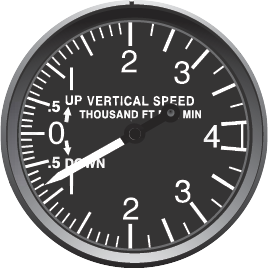
VSI_800fpmDown

For a supposedly CAVU day, I was now pointed at a solid cloud bank. I transitioned to instruments while still VFR and entered the clouds continuing toward VOR #3. It was still smooth as I crossed it and adjusted course toward VOR #4. Shortly after crossing VOR #3, there suddenly were a lot of pilots on the frequency asking for course and/or altitude changes to “get out of this weather.” I was still enjoying a smooth ride.

About this time, something in my peripheral vision caused me to turn my head to take a quick look outside the left side of the airplane and down. And as I did, I hit one (and only one) severe jolt of turbulence. And I became completely disoriented. My vision blurred to where I could not make out the instrument panel. I stared at the attitude indicator and could barely make out blue and brown, so I concentrated on just trying to keep the same amount of brown and blue visible, with blue on top. It seemed like forever, but slowly my vision started coming back and I started being able to see the AI better and was able to discern I was at least straight and level.

When I thought I could handle it, I checked and found I was 40 degrees off-heading, so I started a slow turn back toward the VOR radial. I was 400 feet low, so I started easing back up and continued on. While it seemed like forever, it must have only been a few seconds because ATC never called me to ask about my heading or altitude deviations. Eventually, I let ATC know I’d had a single jolt of severe turbulence shortly after crossing VOR #3. Mr. Hart was exactly right—don’t move your head too much when there may be turbulence in the area!

Ready to Sell Your Aircraft?

List your airplane on AircraftForSale.com and reach qualified buyers.

List Your Aircraft
AircraftForSale Logo | FLYING Logo
Pilot in aircraft
Sign-up for newsletters & special offers!

Get the latest stories & special offers delivered directly to your inbox.

SUBSCRIBE