











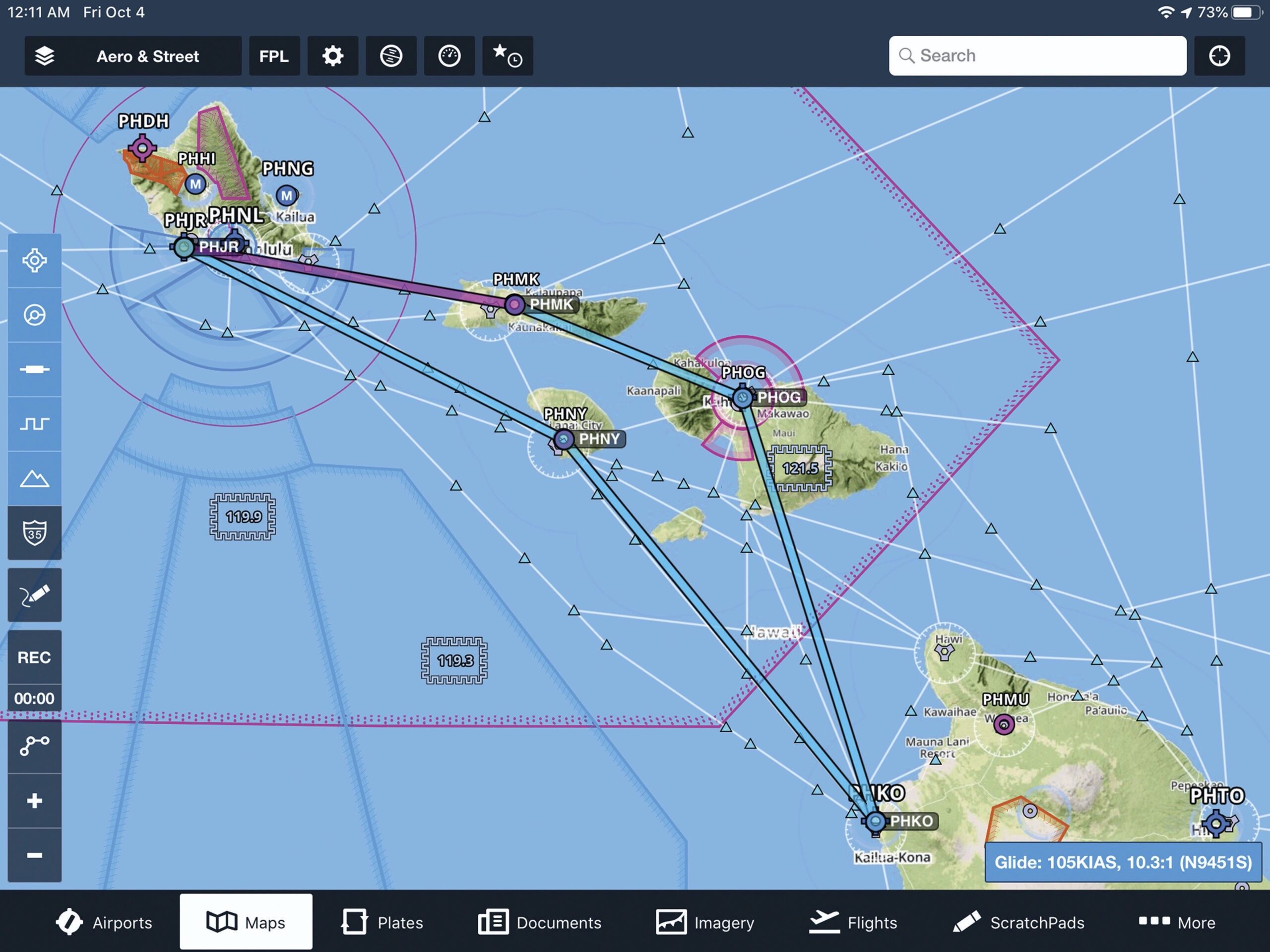


It’s an aviation clich that your single engine goes into “automatic rough” when crossing any significant body of water. To be sure, any engine problem while beyond gliding distance from land is a critical problem, even if you have more than one. When flying a single, it’s everything. Another clich is that most of us don’t bother to analyze the real risks of overwater flying. Any water crossing of any significance—and we’d put the Great Lakes, Hawaii and Bahamas in that basket—should be carefully planned to ensure risks are mitigated to acceptable levels. The thing is, both clichs are true more often than not.
Let’s be clear: Transoceanic flight in a small general aviation aircraft is beyond this article’s scope and deserves a series of articles on its own. Nor are we concerned with small lakes or inland bodies of water since their risks blend into general risk management hazards and practices. We’ll briefly look at water survival techniques in the sidebar on the opposite page, another topic deserving detailed treatment. But what we really want to do is discuss identifying and managing overwater risks when doing so isn’t common for our operations. We’ll look at some real-world examples I‘ve experienced over the years, and we’ll find I haven’t always practiced what I preach.

