Register

Technique

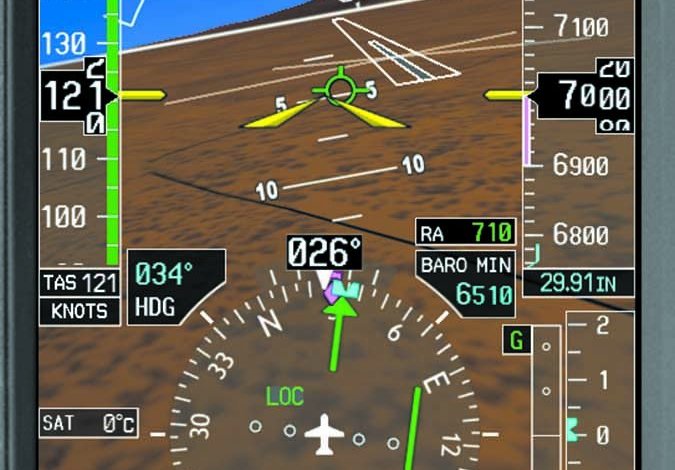
Not Quite an ILS

Among these procedures youll find a surprising variety of features. But here are the common threads: The LDA is made up of a localizer transmitting a course signal with the expected beam width of three to six degrees, but it will be offset by as much as 30 degrees, even when advertised with a specific runway.
Read More »

On the Air: October 2016

I got the dreaded write down this number to call the FAA last week. We were flying into Lancaster, south of Dallas, for breakfast. After taking off from my local airport in a V-tail Bonanza in VFR conditions, the predicted scattered clouds at Lancaster turned out to be a low overcast. We were on VFR flight following, so I called DFW approach and got a pop up IFR clearance to shoot the GPS 31 approach. About the time we reached the FAF, we got the call to copy down a phone number.

Read More »

Deflated Ego

A few months back I admitted here that Id not flown in a year, but was correcting that shortcoming. My ego told me I was a retired airline pilot with many thousands of hours, who had been flying over 75 hours a month, so returning would be no big deal and Id easily do it. The editor in me considered the more responsible, conservative and methodical approach I would espouse in writing. Fortunately, the more conservative path won out.

Read More »

Readback: October 2016

The minimum vectoring altitude near my home drome is about 3000 feet MSL because of our distance from the radar site. Thats higher than the 2000-foot crossing at the FAFs so we always get cleared for a full approach. However, our ADS-B reception is currently around 1000 feet MSL/700 AGL. After 2020, when the traffic picture is nearly full via ADS-B and closer to the ground, do you foresee MVAs being lowered in areas that have been limited primarily by poor radar coverage?

Read More »

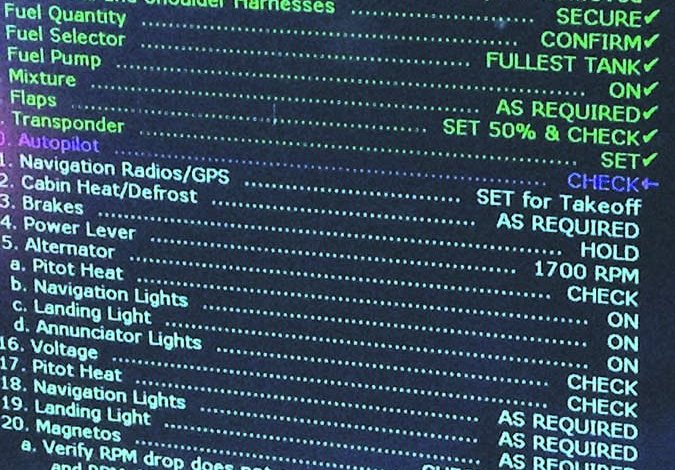
Change Your Checklist

Checklists get taken for granted-settle into your seat in the cockpit, pull out the booklet or laminated cards, turn to the Before Engine Start page and start following the steps. Fire up the engine(s) and proceed down to After Engine Start and Before Taxi. Sound familiar? For most flying under 14 CFR Part 91, this read-then-do routine is the norm all the way to Parking and Securing. While many pilots with a fair amount of experience-particularly those with their own aircraft-will often go a step beyond and make their own checklists, there are far more efficient methods to get things done on time and in the proper order.

Read More »

You Need an Electronic Flight Bag

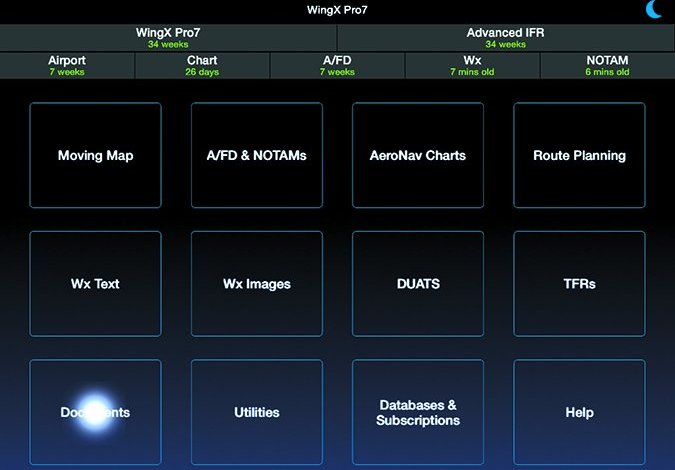
The AC defines an EFB as an electronic display system intended mainly for cabin or cockpit use. To that end, an EFB can display aviation data such as charts and make basic calculations such as time, fuel and distance calculations. An EFB can also include other databases, perhaps FARs, or additional applications such as crosswind, weight-and-balance and holding calculators.

Read More »

Radio Readback Could Save Your Life

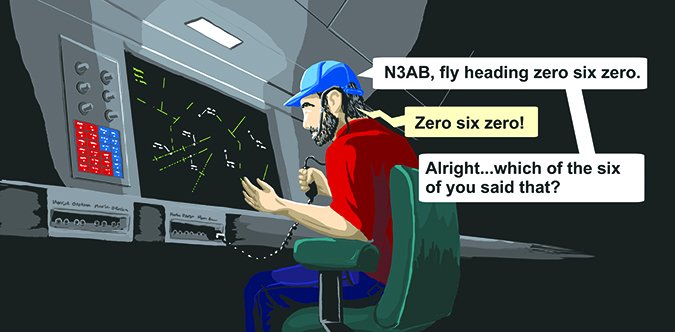
On any given day, per National Air Traffic Controllers Association statistics, theres an average of 87,000 flights over the U.S. Dozens of these pilots may be on the same ATC frequency. They could be dodging weather, descending into complex terminal airspace, or conducting military operations. Perhaps theyre just out for a sightseeing flight or training. As they fly, theyre checking in, replying to instructions, taking frequency changes, and making requests.

Read More »

Using Standard Operating Procedures in General Aviation

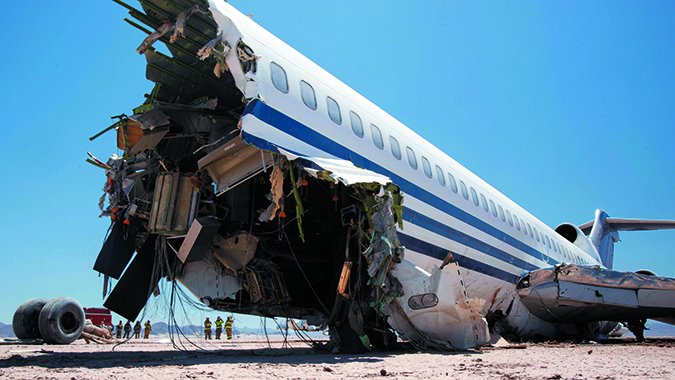
Some users of the National Airspace System live by Standard Operating Procedures (SOPs), and some do not. This is arguably the most significant difference between air carriers and general aviation when it comes to training, testing, and cockpit cultures. This is also, by some measures, a factor in accounting for the differences in accident rates. General aviation, particularly the single-pilot, personal-flying kind, relies not on the use of SOPs, but basic personal minimums for aeronautical decision making.

Read More »

Reading the Sky

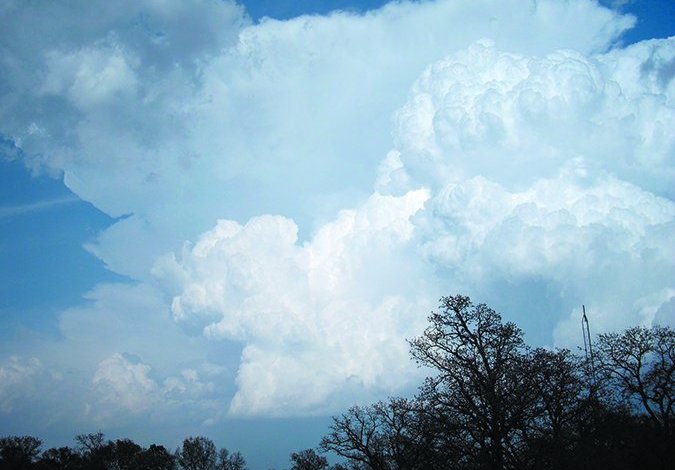
A cloud is the visible manifestation of liquid water droplets or ice. It forms when humid air cools sufficiently for water vapor to saturate and produce condensation-the dewpoint temperature. On a dry summer day in California, this temperature might be 20 degrees F, and the weather remains clear. On more humid summer days in California, the cloud formation temperature might be 50 degrees, producing morning clouds along mountain peaks. When air is chilled to the dewpoint, the humidity becomes 100 percent and from the texts we expect saturation to occur. But in real life this doesnt always happen. If a given volume of air doesnt contain condensation nuclei-microscopic bits of dust, pollen, etc.-the relative humidity may exceed 100 percent without producing clouds. But for the most part, this relationship between temperature and dewpoint is correct.

Read More »

Small World

Aviation is a small world; there are a limited number of topics on which one can write. Additionally, journalism is a specific enough trade that when you combine it with aviation, you have a very small world indeed. Thus, its inevitable that there occur certain overlaps and (gasp!) even certain duplications. Granted, this one innocently went too far, but just how many unique articles can be written about a single, odd approach without covering the same ground?

Read More »
Pilot in aircraft
Sign-up for newsletters & special offers!

Get the latest stories & special offers delivered directly to your inbox.

SUBSCRIBE