Register

Technique

Reader Feedback: December 2016

When I was based at PDK airport, a very busy airport in Atlanta, GA used by many business jets, the tower would routinely route smaller aircraft approaching from the east to cross over mid-field at or above pattern altitude and enter a left downwind for Runway 3L. Doing so while there were other aircraft in the pattern, landing and taking off. The reason was to keep the longer Runway 3R open for business jets landing and taking off. In this instance, a pilot would be crossing over two active runways.
Read More »

Where Your PIREPs Go

Weather and NOTAMs are a huge percentage of the mountains of data controllers process daily, and a significant chunk of that comes from pilot reports. Some pilots wonder how the information they share gets processed by ATC. As one IFR reader expressed: It appears that most reports of icing/tops/bases that are reported to ATC never make it into the PIREP system.

Read More »

Circling On The Climb

Everyone trains for that circle-to-land maneuver from an instrument approach, but theres also an occasional need to fly circling departures. These can put you in the most marginal visual conditions waiting for the official IFR clearance. The usual suspects-weather, obstacles and flying the airplane-all come into play when youre in that murky transition between VFR and IFR.

Read More »

IFR Briefing: November 2016

Air traffic controllers need better training to effectively assist aircraft in distress, the NTSB said in a safety-recommendation report released in September. In September, the FAA began offering a $500 rebate to aircraft owners who upgrade to ADS-B-capable avionics. New FAA rules that became effective in August make it easier for operators to secure a commercial drone certificate, and its expected their numbers will quickly outpace manned-aircraft pilots. NTSB staffers who investigated the ditching of USAir 1549 in the Hudson River in 2009 say the Hollywood movie about the event, Sully, portrays them in an inaccurate and unfair light.

Read More »

Reader Feedback: November 2016

In the June issue, a reader had a question regarding the TERPZ FIVE departure at BWI. Your response in a lost com scenario was that you should climb to TERPZ at 11,000 then climb to your filed altitude after 10 minutes. I disagree. In the regs, 91.185 offers clear altitude guidance in a lost com situation. It is simply the highest of 3 altitudes-the altitude in your clearance, the altitude you were told to expect, and the highest IFR altitude. No mention is made about waiting for 10 minutes nor about a filed altitude.

Read More »

Seeing Double

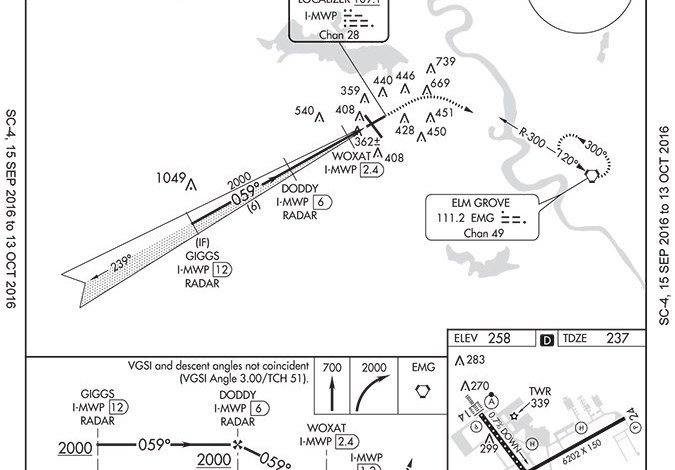
Instrument flight is a game of single degrees, so it should get your attention when numbers dont match. Were used to this when flying VOR radials with GPS. The magnetic declination of the VOR is infrequently updated, while GPS calculates it exactly from the latest data and the current location. This can be disconcerting on a VOR approach where the GPS youre using for situational awareness (or, the actual approach, now that you can) shows a course several degrees off from the chart.

Read More »

Lower Won’t Work

While we usually train by flying right to minimums and then frequently flying the missed, how often in our actual flying do we miss and do it again, or divert to an alternate? How often do we get caught by surprise when the ceiling were expecting to break out of is lower than we thought (or lower than we need)? For those of us operating under 14 CFR Part 91, how often do we consider or actually find ourselves pushing the looser legal limits of landing under IFR?

Read More »

Frankenstein Flight Approach

The RNAV (GPS) approach makes this a non-issue for pilots with GPS. This approach uses the Terminal Arrival Area (TAA) concept centered on TOPSY. Any arrival on a bearing to TOPSY from 326 degrees counterclockwise to 145 degrees simply crosses TOPSY at 2000 feet and continues inbound. In most of that area they can descend to 2000 feet 30 miles out, with a small segment over the Atlantic at 2100 feet. Cant be terrain out there; must be airspace.

Read More »

When Air Traffic is Light, ATC Lets You Take Your Time Landing

Controllers cant just look where the traffic is now. Were mentally projecting every route ahead to see future conflicts. If Ive got two 120-knot aircraft at the same altitude converging on a point 20 miles away, in 10 minutes theyll be waving to each other. Something-like an altitude change-must be done in 10 minutes. If I need to use immediately in that altitude clearance, I screwed up by waiting way too long.

Read More »

A Change of Seasons

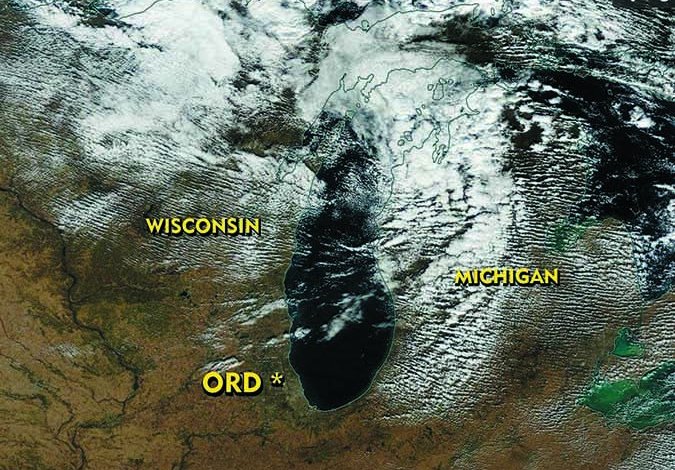
The most immediate change that meteorologists and pilots see in the weather pattern is an increase in the tropospheric flow across the United States and southern Canada at all levels. This starts in earnest in September and continues through October. Temperatures decrease rapidly in the polar regions as fall progresses, dramatically strengthening temperature contrasts between high latitudes and the tropics. This enhances the jet stream pattern and surface patterns alike. So across the board we see an increase in clear air and mechanical turbulence everywhere.

Read More »
Pilot in aircraft
Sign-up for newsletters & special offers!

Get the latest stories & special offers delivered directly to your inbox.

SUBSCRIBE