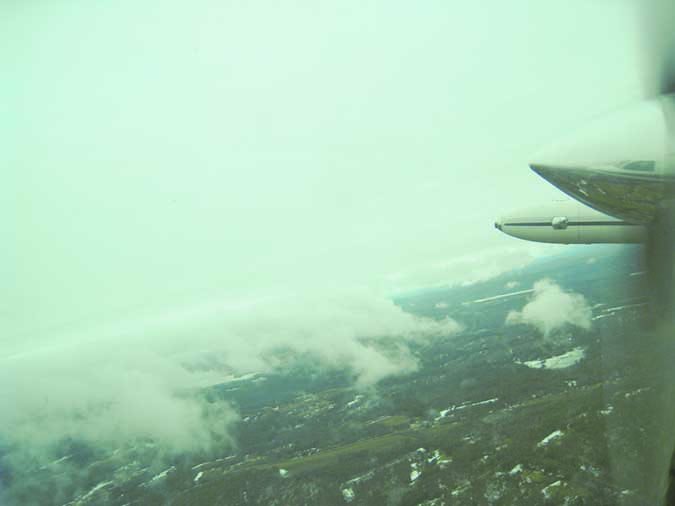
Everyone trains for that circle-to-land maneuver from an instrument approach, but theres also an occasional need to fly circling departures. These can put you in the most marginal visual conditions waiting for the official IFR clearance. The usual suspects-weather, obstacles and flying the airplane-all come into play when youre in that murky transition between VFR and IFR.
Pilots attempting VFR departures for an in-flight IFR clearance in marginal conditions risk violating VFR cloud clearance rules (especially in Class E airspace above 700 ft AGL) and face difficulties establishing ATC communication.
It's crucial to establish personal minimums for circling departures, guided by published circling approach minimums, aircraft performance, obstacle clearance, and the likelihood of reliable ATC contact at a safe altitude.
A robust contingency plan is vital for potential emergencies during the circling phase, including options for a safe circle-to-land back at the departure airport.
Everyone trains for that circle-to-land maneuver from an instrument approach, but there’s also an occasional need to fly circling departures. These can put you in the most marginal visual conditions waiting for the official IFR clearance.
The usual suspects—weather, obstacles and flying the airplane—all come into play when you’re in that murky transition between VFR and IFR.
CREATE A FREE ACCOUNT
Sign up to keep reading
Create a free account to continue. Already a member? Sign in below.