













Register

False Glideslopes

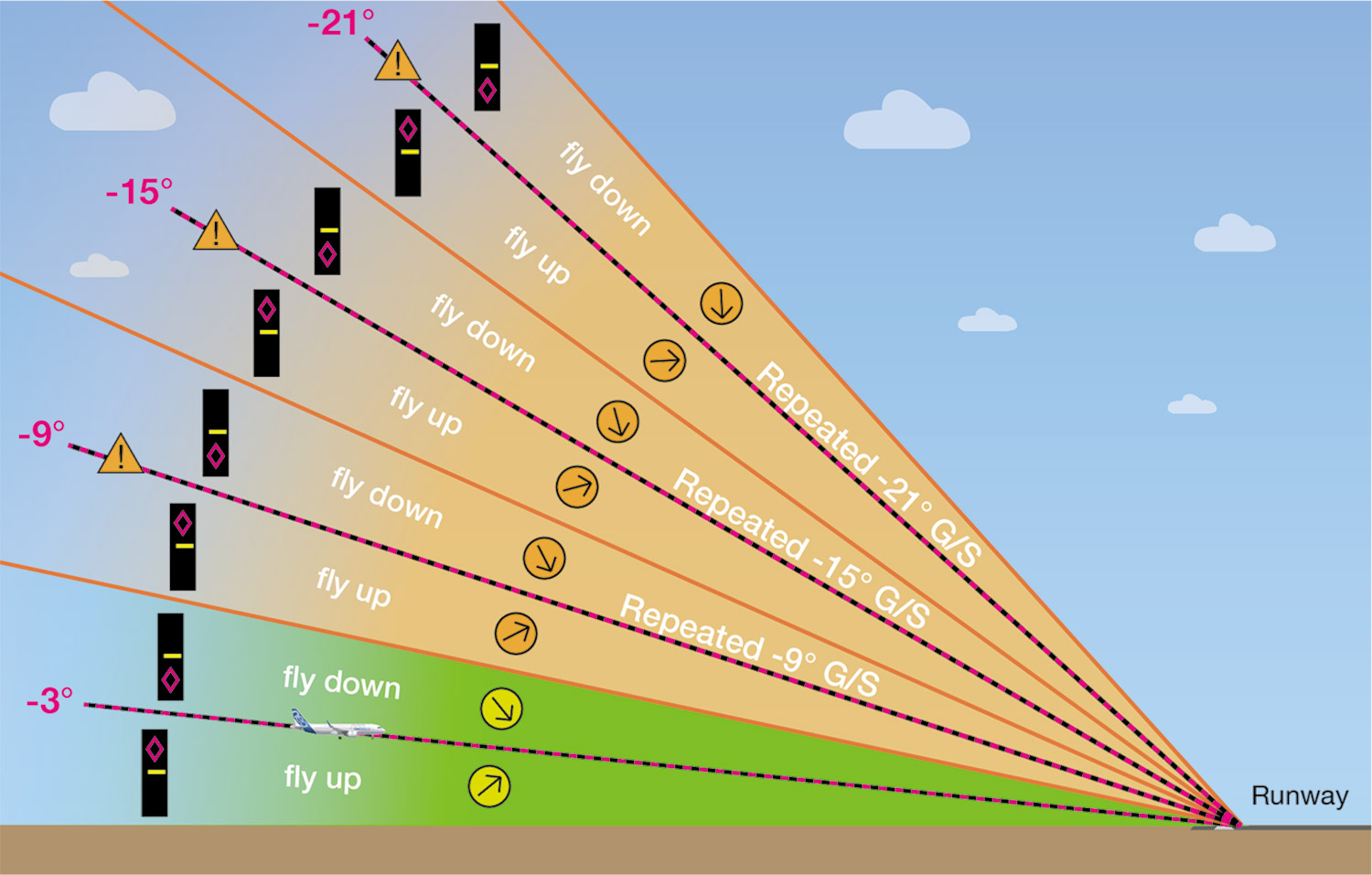
Today’s autopilots can arm for glideslope capture to make life easier. But, it’s possible to intercept a false glideslope if you haven’t managed flight path and autopilot correctly.

Depending on antenna type the secondary glideslopes provide differing incorrect guidance. (Image from Airbus Safety First, “Lining Up with the Correct Glide Slope”)
Gemini Sparkle

Key Takeaways:

  • Instrument Landing System (ILS) glideslopes, while remaining vital for precision approaches, contain "false glideslopes" above the desired path that can generate incorrect flight commands.
  • These false glideslopes pose a significant aviation safety threat, particularly when digital autopilots capture them, leading to excessive and potentially dangerous elevator movements.
  • False glideslope captures commonly occur when pilots arm the approach mode while too high for the primary glideslope, or due to inadvertent interactions with altitude preselectors that cause re-engagement in the false glideslope region.
  • Pilots can prevent false glideslope captures by carefully checking their altitude relative to the runway distance before arming approach mode and by rigorously adhering to charted altitudes throughout the approach.
See a mistake? Contact us.

While instrument landing systems (ILS) see far less use today with the increasing development of RNAV (GPS) approaches, ILS approaches are still common and form the backbone of precision approaches available today. With the bonus of possible added precision beyond what GPS can provide and immunity from GPS interference, these approaches will remain a staple for years to come. In this world of GPS as king, we should remain proficient in ILS use and be careful to avoid their few gotchas.

Fundamentals

A complete ILS installation consists of the localizer and the glideslope, each being related but separate systems. The localizer transmitter and antenna array were developed in the late 1930s which was quickly followed by the glideslope transmitter and its antenna array. Both the LOC and GS are ground-based navigation aids as opposed to satellite-based aids. (See sidebar for GNSS glidepath guidance). The ILS uses a radio signal whose beam is formed by an antenna array.


Ready to Sell Your Aircraft?

List your airplane on AircraftForSale.com and reach qualified buyers.

List Your Aircraft
AircraftForSale Logo | FLYING Logo
Pilot in aircraft
Sign-up for newsletters & special offers!

Get the latest stories & special offers delivered directly to your inbox.

SUBSCRIBE