













Register

Getting Testy About Exams

Limited testing availability is compounded by a cancellation and a recent FAA announcement reducing exam time.

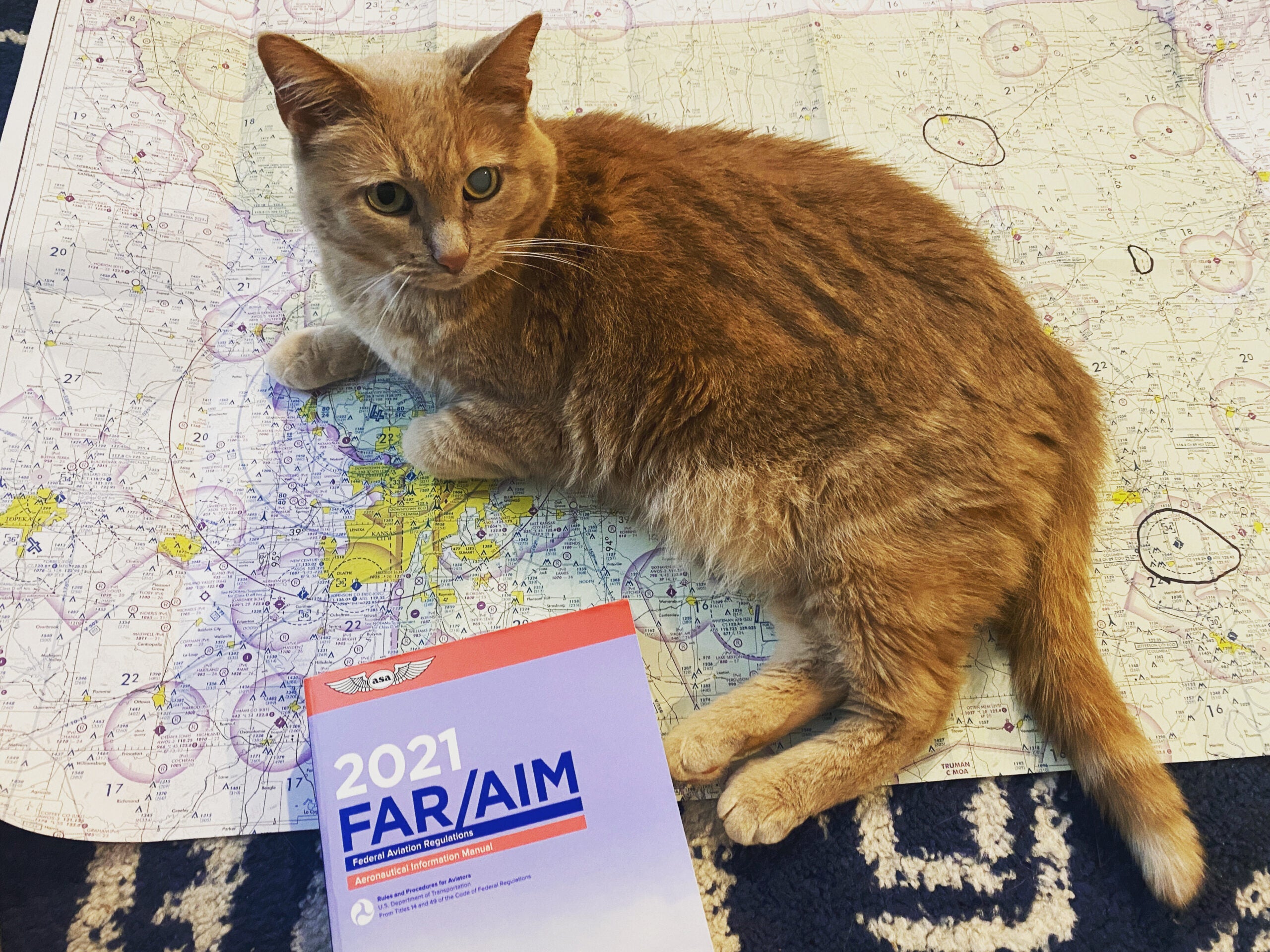
A ginger cat lies across an aeornautical sectional chart near a copy of the FAR/AIM
The author's cat has no respect for airspace rules. She was not cleared into the bravo. The FAA is unsure what to do with her as she is not a recognized aircraft type and does not hold a certificate of any kind.
Gemini Sparkle

Key Takeaways:

  • The author purposefully delayed taking the FAA knowledge exam until practical flying experience reinforced theoretical learning, finding kinesthetic application crucial for better retention and deeper understanding of concepts like compass errors.
  • Scheduling the FAA exam presented significant logistical challenges, requiring the author to travel over 100 miles and overcome limited availability and personal scheduling conflicts.
  • The author's booked exam was unexpectedly canceled by the testing provider without clear explanation, compounded by a new FAA rule reducing the time allotted for knowledge tests, creating pressure to reschedule before the change takes effect.
  • These combined hurdles highlight the considerable stress, logistical burdens, and potential costs faced by student pilots in completing their FAA knowledge tests, especially those in areas with few test centers.
See a mistake? Contact us.

It seems every pilot and CFI out there has a different philosophy about when to take the FAA knowledge exam during training. Many sources recommend completing ground school and taking the test before getting into an airplane, to have the background knowledge in hand and the milestone checked off the list before you start the practical side of training. 

I made a conscious decision to begin training concurrently with studying for my exam, and to delay taking the knowledge test until after I began cross-country training. While I can learn by reading and memorizing, my most effective learning mode is kinesthetic. Things just stick better after I use them, and I want my aeronautical knowledge to stick. To ensure the best retention and depth of understanding, I wanted to have practical experience with activities like reading aeronautical charts, calculating takeoff distances and fuel burn, and navigating airspace to supplement what I’d read in my books and give me a physical memory source. 
Amy Wilder

Amy Wilder fell in love with airplanes at age 8 when her brother-in-law took her up in a Cessna 172. Pretty soon, Amy's bedroom walls were covered with images of vintage airplanes, and she was convinced she'd be a bush pilot in Alaska one day. She became a journalist instead, which is also somewhat impractical—but with fewer bears. Now she's working on her private pilot certificate and ready to be a lifelong student of the art of flying.

Ready to Sell Your Aircraft?

List your airplane on AircraftForSale.com and reach qualified buyers.

List Your Aircraft
AircraftForSale Logo | FLYING Logo
Pilot in aircraft
Sign-up for newsletters & special offers!

Get the latest stories & special offers delivered directly to your inbox.

SUBSCRIBE

