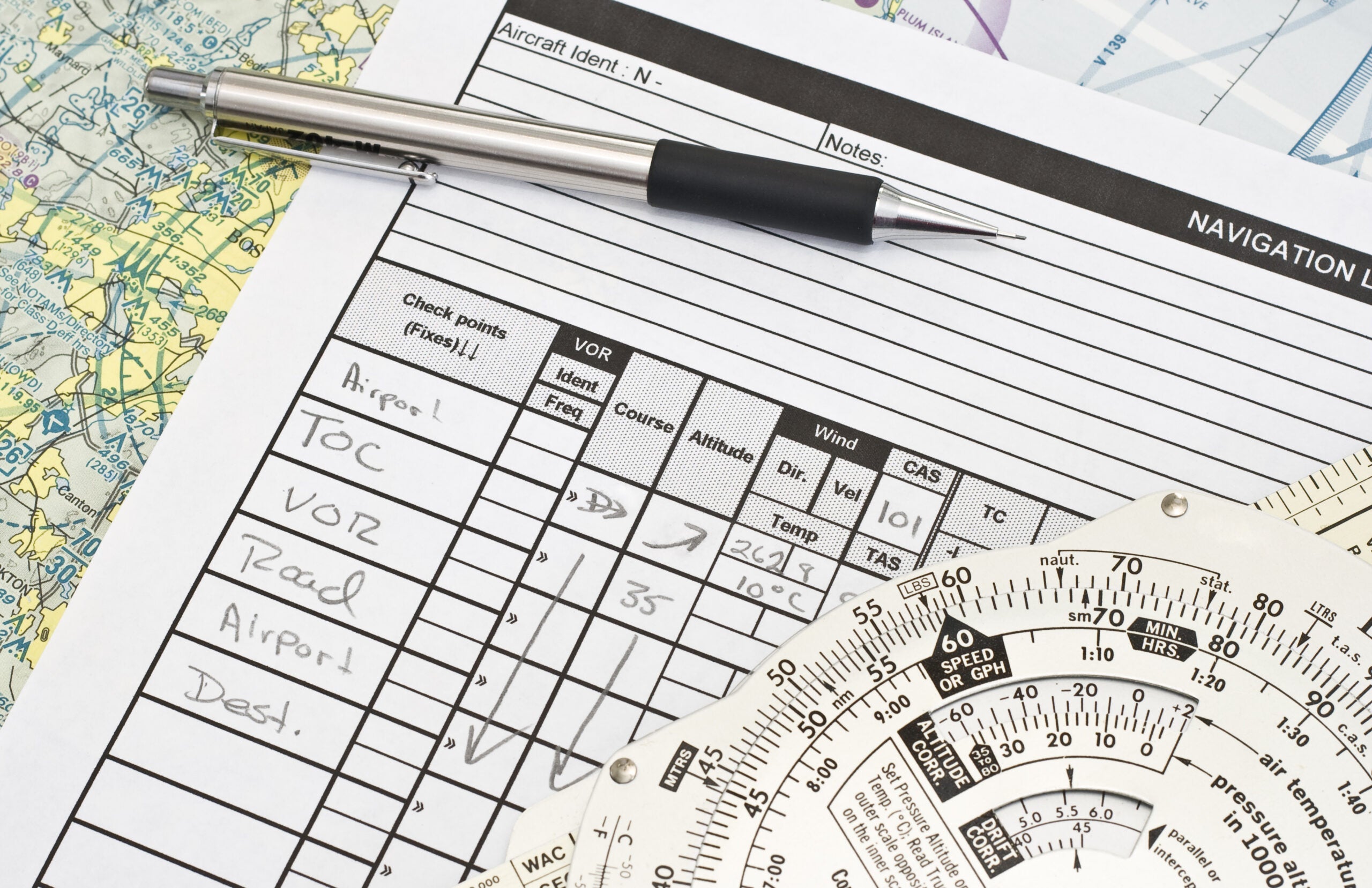
Analog cross-country flight planning begins with a paper sectional, navlog, plotter, and mechanical E6-B. [Credit: Adobe Stock]
Key Takeaways:
Analog flight planning methods, using tools like paper sectionals and the E6-B, are crucial for primary pilot learners to develop a deep, foundational understanding of VFR flight planning calculations and data sources.
Pilots who rely solely on Electronic Flight Bags (EFBs) for training often lack a comprehensive understanding of navigation elements, making them vulnerable to challenges during check rides or in situations where technology fails.
While EFBs offer convenience, environmental benefits, and easier updates, they should supplement, rather than replace, fundamental analog navigation skills, ensuring pilots can navigate effectively without relying on electronic devices.
When I spread the Seattle VFR sectional out on the desk, the private pilot learner breathed a sigh of relief.
“Thank goodness you use paper,” he said, going on to tell me that he wanted to learn using paper sectionals and navlogs, and once he mastered those, he might move into using an electronic flight bag (EFB).
CREATE A FREE ACCOUNT
Sign up to keep reading
Create a free account to continue. Already a member? Sign in below.
Meg Godlewski has been an aviation journalist for more than 24 years and a CFI for more than 20 years. If she is not flying or teaching aviation, she is writing about it. Meg is a founding member of the Pilot Proficiency Center at EAA AirVenture and excels at the application of simulation technology to flatten the learning curve. Follow Meg on Twitter @2Lewski.