Aviation Safety

July 31, 2009, Deming, N.M., Vans RV6A Experimental

While on final approach to land, the pilot initiated a go-around due to a glider on the runway. When he added power, the engine quit, forcing the pilot to land short of the runway. The airplane impacted the airports perimeter fence. The right fuel tank was empty and the fuel selector was on the left tank. Investigators confirmed flow from the left tank and no flow from the right tank.

Read More »

Oxygen Options

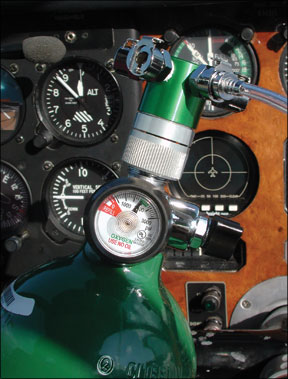
Not so long ago, when using oxygen in the cockpit graduated from the nice-idea to the must-have phase, the equipment took a quantum leap forward. In case you havent looked recently, state-of-the-art oxygen gear is better than ever, so good in fact that it may be time to toss that converted medical junk and upgrade. But what to buy? If your portable system dates back to the days when Loran was the hot choice for navigation, theres no need to spring for a complete new system to benefit from the latest stuff-a cylinder is a cylinder. Instead, upgrading some basic components will make using oxygen easier and cheaper. Sister publication Aviation Consumer recently took a close look at some of the latest products from the top oxygen suppliers in general aviation. What they found was more choices in regulators, flowmeters, cannulas, masks, conservers and monitoring devices, all at competitive prices. In fact, the industry has almost reinvented itself over the last 10 or so years, due in part to advances in the medical market. Just as improvements in consumer electronics have resulted in better, more-capable avionics, those medical advances mean higher-quality and easier-to-use oxygen systems are more accessible than ever.

Read More »

Failure To Climb

Almost 20 years ago, I rode coach from JFK to Osaka, Japan on a Northwest Airlines 747-400. Taking my time in deplaning, I managed to sneak a peek at its cockpit and chat briefly with the crew. I was astonished to learn the airplane weighed nearly 900,000 lbs at takeoff, close to or at its maximum gross, and burned almost half that weight in fuel before landing. I can presume the airplanes handling characteristics at takeoff versus landing. While transport pilots routinely operate at maximum weight, the rest of us rarely do. So, on our first gross-weight takeoff in, say, 10 years, the airplanes desire to roll farther and climb more slowly than were accustomed can be an eye-opener. Ive written previously in these pages about how my airplanes FAA-approved maximum gross weight is 250 pounds heavier than its manufacturer intended, thanks to wingtip fuel tanks installed pursuant to a supplemental type certificate (STC). That STC comes with various paperwork, but does not include revised performance charts showing expected takeoff or climb performance. From experience, I know a climb at the higher gross weight requires patience.

Read More »

Get-There-Itis

Most of us have likely experienced the flying version of get-there-itis. My return home from AirVenture this year had all the contributing ingredients at play. After hustling around the grounds to catch all the sights on a hot, muggy day, and then dodging lightning and rain during the ultimately aborted afternoon airshow, I pre-flighted for my long flight home to Bridgeport, Conn. (BDR), at 1830 local. I filed for 13,000 feet to catch favorable tailwinds at altitude, set up the oxygen and settled in for an uneventful four-hour flight in my Beech Travelair. Nearing my destination, NY Tracon did their part to keep me occupied by changing my direct routing to one of the circuitous STARs for BDR. The amendment required me to program the six waypoints in my older GPS. And of course, just after Id completed this task, ATC changed its mind again and assigned the other procedure.

Read More »

Twin And Turbine Troubles

Selecting the landing gear “down” produced an unsafe nose gear indication. Manual gear extension proved unsuccessful. The nose landing gear collapsed upon landing. Inspection revealed the nose landing gear linkage adjusting fork (p/n 5045211-2) had fractured, preventing extension of the nose landing gear to a down and locked position. Evidence suggests this fracture was progressive in nature, and some degradation to the components structure existed prior to failure.

Read More »

Electronic Charting

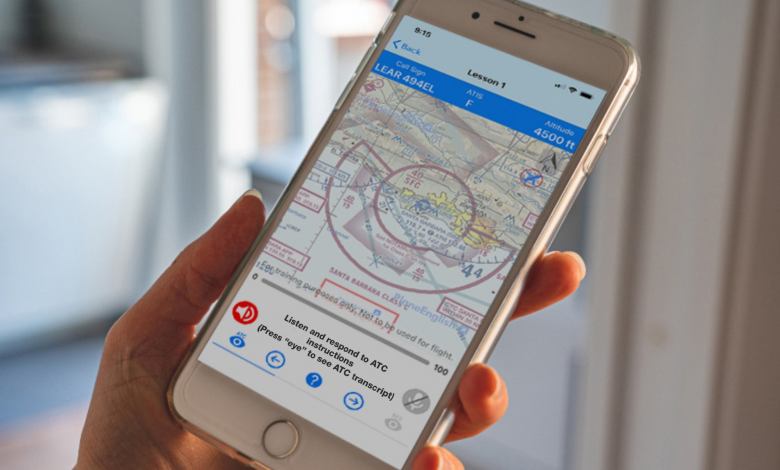
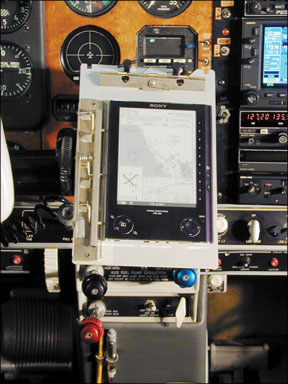
One of the things the FAA has done right in recent years involves charting. First, instead of standing by while the National Oceanic and Atmospheric Administration office responsible for aeronautical charts shut down its printing presses, the FAA established a new office to handle the work and took on the responsibility. Second, as electronic distribution became the norm, not the exception, the FAA made many of its products-including the all-important instrument approach procedure charts-available free of charge. The agency still has a long way to go (see the sidebar on page 10), but were all familiar with how it could be doing much, much worse. Of course, if youre flying one of the new-generation glass panels with built-in electronic charting, all this may seem like old news. And, depending on what youre flying and how, you may not have a requirement for en route charts or terminal procedures in your cockpit. Its likely you still need some kind of paper references, even if your glass panel is the latest and greatest, and even if all its costly databases are kept current. The rest of us are on the look for a simple, cost-effective solution allowing IAPs and en route charts to be displayed electronically. Sectionals, too, perhaps. The degree to which any or all of this is possible depends on how much money youre willing to throw at the problem, and with how many downsides youre willing to deal. Lets take a look why.


Read More »

Unfamiliar Airports

Hanging out for some hangar flying with some fellow pilots recently, the lies swapped were covering the spectrum, from weather dodging and electrical-system failures in IMC to cautionary tales circulated about other aviators flights with questionable fuel. But one of our little gang spent most of the session distracted from these obviously important proceedings, preparing for a flight the following morning. A relatively seasoned pilot, he largely zoned out of the session, looking at en route charts, collating his paperwork and notes, and closing out his preparations with a phone call to the destination airport-one hed never before visited. A fairly new pilot of about the same chronological age, but with a far-thinner logbook, offhandedly and inadvertently revealed an approach to planning that drew snorts of disbelief from the veterans, a tough room filled mostly with pilots who flew professionally. “You called the airport?” our middle-aged newbie taunted after the phone call ended. “Airport directories are online; Internet sites are available, along with those new sites with video-and you call?!?” Then came the big mistake. He produced his latest play-pretty, offering it up as the solution to the old pilots needs. “Heck, my handheld GPS has the entire airport directory…whaddaya want to know?”

Read More »

Beyond The Burble

Were going to do what?” Okay; I dont usually get quite that reaction when I discuss full aerodynamic stalls during a preflight brief with my students receiving checkouts, or flight reviews in high-performance aircraft. But you can see it in their eyes. Many pilots havent practiced full stalls since their private pilot checkride, and a large number of my students in 300-horsepower retractable singles-and especially light twins-have never stalled the airplane they currently fly. No wonder theres trepidation about a maneuver some have not flown in many years. No wonder stalls continue to take lift, and life, away. To reduce the chance a stall might go unrecognized or uncorrected, lets go back to what we learned in our early training, and build upon that knowledge to deal comfortably with what occurs beyond the first stall burble.

Read More »

First Flight Home

Insurance companies have pilot checkout provisions for a reason-the first hours in a new aircraft are higher-risk than routine operations. The week I made an offer on my very first airplane, a pilot crashed and died on his way home in his newly purchased Piper Comanche. I obviously wanted a different outcome for my trip to pick up a new plane. The next week, my co-owner Roger and I would be bringing our newly purchased 1960 Cessna 182-N225M-home to Idaho Falls, Idaho. Unfortunately, our new plane was located in Glenwood Springs, Colo. Picking it up would require a long VFR cross-country flight across the Continental Divide in the middle of winter. We also wanted to make the trip on a weekend, preferably in a single day at a time of year when the days are notoriously short and the weather consistently bad. Our plan was beginning to sound like the opening narrative of an NTSB accident report. Flying a newly purchased plane on a long cross-country trip is a non-routine, high-risk mission. Why? There are numerous factors that can line up the wrong way to complete the chain of events that lead to an accident.

Read More »

Add-On

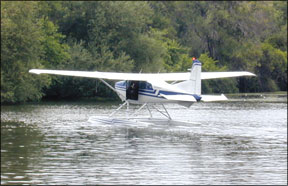
Last month, the stars finally aligned, the bank account wasnt empty for a change and I was able to accomplish something Ive been trying to work in for more than 10 years: add a seaplane rating. Though I had some seaplane stick time, it was long ago and far away. So, I went into it more or less from zero. It was a great learning experience, and will make me a better all-around pilot. Getting a seaplane rating isnt for everyone, of course, but the basic idea of spending a couple of days doing intensive training-especially for something youve never done or in an airplane type youve never flown before-is an excellent way to knock off some rust. Along the way, you might learn a few things useful later on. Another good thing about an add-on rating, of course, is it also resets the 24-month flight review clock. Youve probably read one or more urgings in pages similar to this one about how to use the BFR requirement to your benefit. Its all true, and a good idea next time you see the end of the 24th month approaching. But it doesnt have to be a seaplane rating you go after.

Read More »
Pilot in aircraft
Sign-up for newsletters & special offers!

Get the latest stories & special offers delivered directly to your inbox.

SUBSCRIBE