











Insurance companies have pilot checkout provisions for a reason-the first hours in a new aircraft are higher-risk than routine operations. The week I made an offer on my very first airplane, a pilot crashed and died on his way home in his newly purchased Piper Comanche. I obviously wanted a different outcome for my trip to pick up a new plane. The next week, my co-owner Roger and I would be bringing our newly purchased 1960 Cessna 182-N225M-home to Idaho Falls, Idaho. Unfortunately, our new 288
First Flight Home
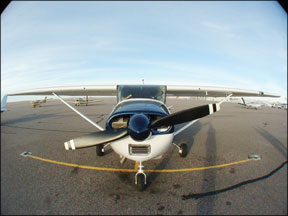
Insurance companies have pilot checkout provisions for a reason-the first hours in a new aircraft are higher-risk than routine operations. The week I made an offer on my very first airplane, a pilot crashed and died on his way home in his newly purchased Piper Comanche. I obviously wanted a different outcome for my trip to pick up a new plane. The next week, my co-owner Roger and I would be bringing our newly purchased 1960 Cessna 182-N225M-home to Idaho Falls, Idaho. Unfortunately, our new plane was located in Glenwood Springs, Colo. Picking it up would require a long VFR cross-country flight across the Continental Divide in the middle of winter. We also wanted to make the trip on a weekend, preferably in a single day at a time of year when the days are notoriously short and the weather consistently bad. Our plan was beginning to sound like the opening narrative of an NTSB accident report. Flying a newly purchased plane on a long cross-country trip is a non-routine, high-risk mission. Why? There are numerous factors that can line up the wrong way to complete the chain of events that lead to an accident.

Key Takeaways:
- Flying a newly acquired aircraft, particularly on its initial long-distance or non-routine flight, is an inherently high-risk operation, a fact underscored by insurance pilot checkout provisions.
- Key risk factors contributing to this danger include pilot unfamiliarity with the aircraft's specific systems and performance, potential issues arising from recent maintenance, the novelty of the flight situation, and the psychological pressure of "get-there-itis."
- Mitigation strategies involve meticulous planning, seeking advice from experienced pilots, thoroughly studying the aircraft's unique characteristics and emergency procedures, utilizing complete checklists, and prioritizing safety by patiently waiting for optimal flight conditions.
Key takeaways sponsored by Aviator Pro | Start Your Training ->
See a mistake? Contact us.

