Aviation Safety

February 3, 2010, Jackson, Tenn., Cessna 172

The airplane received substantial damage at 1348 Central time when it collided with a snow bank during the takeoff roll. The student pilot was not injured. Visual conditions prevailed. The airplane was registered to and operated by the Civil Air Patrol.
Read More »

February 5, 2010, El Paso, Texas, Aerospatiale AS350 B2 Ecureuil

The helicopter was destroyed at approximately 1920 Mountain time when it impacted terrain while maneuvering. A post-crash fire ensued. The commercial pilot and two paramedics aboard received fatal injuries. Night visual conditions prevailed for the Part 135 practice EMS flight operated for the U.S. Army as a simulation. The flight was to use night-vision goggles.

Read More »

NTSB: Glass Hasnt Made Us Safer

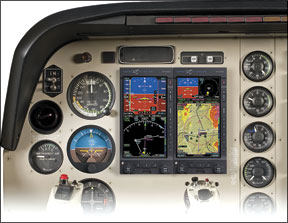
A year-long study by the National Transportation Safety Board (NTSB) concludes the last decades glass-cockpit revolution has not resulted in enhanced safety. In making its March 9, 2010, announcement, the Board said its results found single-engine airplanes manufactured between 2002 and 2006 and equipped with glass cockpits had a higher fatal accident rate than similar aircraft with conventional instruments. The NTSB blamed complexity and lack of standardization among different aircraft and their glass panels, which has resulted in pilots failing to “understand the unique operational and functional details of the primary flight instruments in their airplanes.”

Read More »

Last Go-Around

Its been a while, so Ive forgotten plenty of things I learned when earning my multi-engine rating several years ago. As one result, Id be dangerous until and unless I obtained some remedial instruction in a conventional twin. Meanwhile, I have enough experience with night operations, complex airplanes and flying into unfamiliar airports to know I would not approach such an undertaking lightly, and wouldnt even consider it in a twin without a competent-in-type pilot sitting beside me, preferably in the left seat.

Read More »

Checklist Discipline

The Aeronca Champs checklist was simple, befitting most small aircraft of the late 50s: “CIGAR” stood for Controls, Instruments, Gas, Attitude, Run-up and, sometimes, Runway. Time and experience brought along more-complicated airplanes and checklists, but it was still hard to mess up by using CIGAR. Following USAF pilot training, I became an instructor pilot in the T-37. Its checklist was a bit more complicated. When students asked about checklist sequencing, there was the standard answer: Checklist discipline. Not too much to question, but not too much to mess up, either.

Read More »

Missing And Disconnected

Transport Canada (TC) in late 2009 issued a Service Difficulty Alert detailing failure of a parked aircrafts control yoke that broke during high-wind conditions. A complete fracture occurred between the yoke pivot area and the elevator attachment point due to severe internal corrosion. A 2001 Cessna service bulletin provides instructions for creating an inspection hole, recommending annual inspection and corrosion treatment.

Read More »

Understanding Wing Flaps

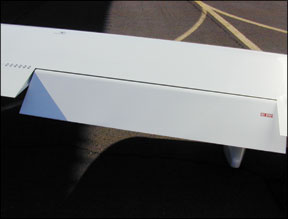
They seem to come in as many varieties as hotdogs-and with about as many interesting names. You know what I mean: Chicago Style, New York Style, Half-Smoke, Coneys, Hot Links and so forth. Ordering without confessing unfamiliarity with variations in flavors, spices and condiments can prove painful. Its the same with flaps, though the consequences of inadequate knowledge are different. For example, you need to know what kind of flaps youre flying and how theyre used. This knowledge, in turn, enables their management for takeoffs, landings and other operations. Knowledge of your flaps and their peculiarities can be particularly powerful should you find yourself in unusual circumstances, and need to maximize their benefits. Lets take a look.

Read More »

Mid-Air Collisions: The Myth And The Math

Few chapters in the great book of safe flying are as incomplete and misleading as guidance for avoiding mid-air collisions. In over 50 years of active flying, I have not yet seen any information accurately describing a workable method ensuring awareness and avoidance of mid-air collisions for the general aviation pilot. In fact, the FAAs well-meaning rules and guidance may be dysfunctional seeds of disaster, sown early in a pilots flying career, later leading to a mid-air collision. Its actually a familiar story: Concepts based on intuitive assumptions-instead of empirical knowledge-so often become concrete and immutable. The pilots ability to see and be seen is one of the most profound of all safety myths, and understanding why pilots are not always able to meet this obligation will help avoid complacency, motivating us all to compensate for deficiencies in the system. Lets get started.

Read More »

When Its Too Bad For IFR, Go VFR

Having the instrument rating opens up a wide range of options for planning and completing flights our VFR-only brethren cant make. But the instrument ticket usually is not a piece of paper allowing go-anywhere, anytime capability, especially when used with most personal aircraft. Often, however, the same flight can be completed safely by staying VFR. More planning may be required, and youll likely be busier than if you went IFR, but safety isnt likely to be compromised. Here are some reasons you might want to stay VFR, and ways to do it safely.

Read More »
Pilot in aircraft
Sign-up for newsletters & special offers!

Get the latest stories & special offers delivered directly to your inbox.

SUBSCRIBE