











Aviation Safety

Asymmetry In Action

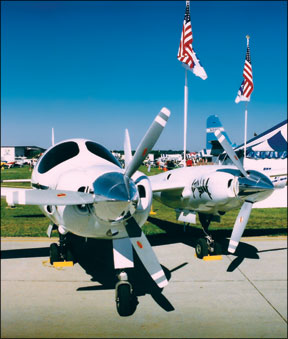
Symmetry. Balance. These concepts are universal to virtually all human philosophy and aesthetics. An aviation credo is that “if an airplane design looks good, it will fly good.” In most cases, “looking good” means having proportions-and symmetry-that please the eye. We strive for balance and symmetry in the way we fly as well. Pitch attitudes. Bank angles. Airspeeds. Rudder coordination. Almost everything we do is designed to make maneuvers steady and balanced. Some of the most challenging maneuvers on practical tests make us demonstrate symmetry, with airspeeds, altitudes and bank angles at one point of the maneuver equaling those at others, and balanced rudder input throughout. But there are times when we must violate the concept of symmetry to make the airplane perform. Most notably, this means something other than balanced rudder input.

Read More »

Take Your Kid To Work Day

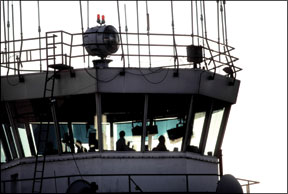
The latest “were all gonna die” coverage of aviation occurred in early March as the general media uncovered an audio recording of a youngster appearing to issue takeoff clearances to airliners at John F. Kennedy International Airport (JFK). On the February 16 recording, JFK tower controller Glenn Duffys nine-year-old son relays takeoff clearances to departing traffic. (Use this link to listen to the recording: http://bit.ly/ccblJD.)

Read More »

Experience Counts

I couldnt agree more with your Editors Log position in Marchs issue, “Blame the Pilots.” Im far from convinced the Buffalo accident is indicative of a systemic training and certification problem. I agree that when a perfectly good transport category airplane is allowed to slow to stick-shaker speed and the wrong control inputs are made, theres an issue in the cockpit. But the Colgan captain had an ATP and thousands of hours of experience, so what exactly would this proposal mandating a minimum number of hours have prevented?

Read More »

January 7, 2010, Palm Springs, Calif., Cessna 195B

The pilot was landing the tailwheel-equipped airplane on a dry, hard-surfaced runway. During the landing roll, as he was transitioning his feet from the bottom of the rudder pedals to the top, he applied too much brake pressure and the airplane nosed over. He further stated that he suffers from diabetic neuropathy and did not initially realize how much brake pressure he applied.

Read More »

January 8, 2010, Eagle, Colo., Dassault Falcon 20C

At 1225 Mountain time, the airplane was substantially damaged during a runway overrun. Visual conditions prevailed. The captain, first officer and five passengers were not injured. The Mexican-registered flight was taking off at the time of the accident, with a planned destination of Chihuahua, Mexico.

Read More »

January 9, 2010, Bayport, N.Y., Stinson 108

The airplane experienced a total loss of engine power at 1255 Eastern time while in cruise flight. The private pilot and passenger were not injured, but the airplane was substantially damaged during the subsequent forced landing. Visual conditions prevailed.The pilot later stated the engine began to run rough. He applied carburetor heat and the engine cleared up. He disengaged the carburetor heat but the engine again began to run rough and lost power. The pilot subsequently made a forced landing on a shoreline and nosed over inverted. Debris were discovered in the main fuel gascolator and the carburetor.

Read More »

January 9, 2010, Chico, Calif., Cessna 140

About an hour prior to the flight, the pilot checked nearby weather, which indicated an indefinite ceiling of 200 feet and visibility of three miles with fog. The pilot stated visibility on the ground was good and took off. As the airplane climbed, visibility went to zero. He turned around to return to the airport, and descended to get under the fog. There were trees on the east side of the airport, and he tried to stay above them while looking for the runway.

Read More »

January 10, 2010, Honolulu, Hawaii, Piper PA-32-300

At about 1345 Hawaiian standard time, the airplane impacted the southeast side of a ridge while approaching the Honolulu International Airport. The non-instrument rated private pilot and one passenger sustained fatal injuries; the airplane was destroyed. Instrument conditions prevailed in the area surrounding the accident site; the pilot was receiving VFR flight following. The pilot had an extensive history flying on the island and had performed thousands of flights in the area.

Read More »

January 14, 2010, Gulkana, Alaska, Piper PA-12

At about 1100 Alaska time, the ski-equipped airplane sustained substantial damage after landing on a snow-covered lake during a Part 135 VFR passenger flight. The commercial pilot and passenger were not injured. Visual conditions prevailed. The pilot later said he departed with the airplanes oil cooler cover in place, but engine temperature increased significantly, and he decided to land on a snow-covered lake to remove the cover.

Read More »
Pilot in aircraft
Sign-up for newsletters & special offers!

Get the latest stories & special offers delivered directly to your inbox.

SUBSCRIBE
