











Aviation Safety

Decisions, Decisions

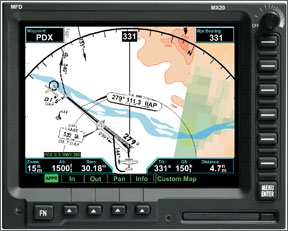
I am a longtime subscriber to Aviation Safety and recommend your publication to my clients as the best aviation magazine out there. However, in your August issue, the article on IFR GPS had what I believe were a few errors in an otherwise informative article. The author describes DH (decision height) as a height above sea level and DA (decision altitude) as “above runway.” This explanation is likely to confuse people trying to understand this concept because it is the opposite of the correct definition. Instead, DH is an agl altitude and DA based on msl. The FAA describes it similarly, using a few more words, as follows: “Decision Altitude/Height (DA/H): A specified altitude or height (A/H) in the precision approach at which a missed approach must be initiated if the required visual reference to continue the approach has not been established. Note 1: Decision altitude (DA) is referenced to mean sea level (MSL) and decision height (DH) is referenced to the threshold elevation.” The other statement with the potential to cause confusion was, “a WAAS box will automatically suspend when you pass the missed approach point,” which might lead one to think that a non-WAAS GPS will not. In fact both non-WAAS and WAAS GPS navigators suspend when passing the MAP.

Read More »

June 27, 2009, Shepherdsville, Ky., Cessna 172D

At 1010 Eastern time, the airplane lost engine power while in cruise flight, and was substantially damaged in a forced landing. Visual conditions prevailed. The private pilot reported no injuries. Engine power was set at 2400 rpm, and the airplane was between 1700 feet to 2200 feet msl when rpm decreased. The pilot was unable to remedy the problem and performed a forced landing. The nose landing gear and both wings were damaged.

Read More »

June 12, 2009, Nampa, Idaho, Cessna 150

The commercial pilot was practicing touch-and-go landings in the tailwheel-equipped airplane. He reported that the wind direction changed to a quartering tailwind after the airplane touched down. The pilot stated that he then lost directional control of the airplane. During the accident sequence, the left main landing gear failed and the airplane ground-looped, resulting in substantial damage to the left wing and horizontal stabilizer.

Read More »

June 13, 2009, Gilford, N.H., Cessna 177 RG

At about 1614 Eastern time, the airplane was substantially damaged during a forced landing in a hotel parking lot shortly after takeoff. Visual conditions prevailed. The airline transport pilot-the aircrafts new owner-was fatally injured. The previous owner flew the airplane to the maintenance facility for a pre-purchase/annual inspection. All discrepancies were complied with and the airplanes airframe, propeller and engine logbook were signed off to be in an airworthy condition.

Read More »

June 14, 2009, Glenville, N.Y, Piper PA-28R-180 Arrow

The airplane was substantially damaged at 1421 Eastern time when it collided with the Mohawk River shortly after takeoff. Visual conditions prevailed. The flight instructor, student pilot and one passenger were killed. A witness watched the pilot make two approaches and decided to pay attention to the takeoff. “As he did his takeoff roll, he kind of ran out of runway.

Read More »

June 25, 2009, Woodbine, N.J., Pitts S-2B

The airplane was substantially damaged during a forced landing at 1815 Eastern time; the private pilot received serious injuries. Visual conditions prevailed. The accident airplane and another airplane (an Extra 300L) were a flight of two flying to an aerobatic competition in Wildwood, N.J. The Extra 300L pilot and the Pitts pilot met near Stow, Mass., at 3000 feet, in “loose formation” for the flight to Wildwood. When approximately 40 miles north of Wildwood, the two aircraft initiated a descent from 8500 to 3000 feet.

Read More »

June 1, 2009, Greenville, S.C., Cirrus Design Corp. SR22

At about 1500 Eastern time, the airplane sustained a flight control malfunction. The airline transport pilot was not injured and the airplane was not damaged. Visual conditions prevailed for the post-maintenance test flight following a required inspection. No anomalies were noted during the preflight inspection, engine start, taxi, run-up, and takeoff roll.

Read More »
Pilot in aircraft
Sign-up for newsletters & special offers!

Get the latest stories & special offers delivered directly to your inbox.

SUBSCRIBE