Aviation Safety

October 8, 2009, Burlington, Wash., Piper PA-12

At about 1305 Pacific time, the airplane impacted terrain after shortly after takeoff. The private pilot was killed by the accident sequence and the airplane sustained substantial damage. The accident flight occurred in visual meteorological conditions. No flight plan had been filed.

Read More »

October 10, 2009, Nondalton, Alaska, Piper PA-31-350 Navajo

The solo airline transport pilot was landing on a gravel-covered airstrip. While on final approach, the airplane “encountered a sinker” and began to descend below his anticipated approach path. He added full engine power to stop the descent, but the airplane continued to descend, landing hard on the right side of the runway.

Read More »

October 13, 2009, Pryor, Mon., Cessna 182

The airplane collided with terrain at an elevation of about 4300 feet msl at about 1141 Mountain time, killing the private pilot and passenger. The airplane sustained substantial damage. The nearest aviation weather reporting facility was about 27 miles northwest of the accident site, an elevation of 3652 feet msl. At 1153, the station reported an overcast ceiling at 1000 feet, with good visibility underneath.

Read More »

October 15, 2009, Kaunakakai, Hawaii, Cessna 208B

At 0745 Hawaiian time, the airplane sustained substantial damage when its tail impacted the ground after a ramp agent opened the passenger door and boarded the airplane. The captain, first officer and eight passengers aboard the Part 135 passenger flight were not injured. Visual conditions prevailed.

Read More »

Counting Gallons of Fuel

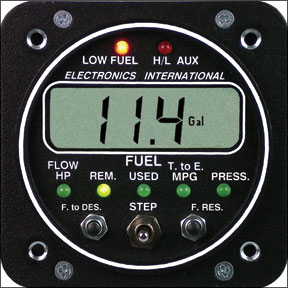
One reason fuel mismanagement mishaps still comprise a large share of annual accident data is pilots forgetting to manage their fuel or doing it poorly. Another could be the less-than-exact instrumentation found aboard most GA aircraft. The bad news is only you can fix the pilot problem. But there is good news: A fuel totalizer providing instantaneous fuel consumption data along with fuel remaining, endurance time and other useful information can eliminate shortcomings in the less-than-accurate fuel gauges installed in most personal aircraft. Even better news? When connected to a Loran or GPS, a totalizer and a navigator working together can supply distance-to-empty and reserve-at-destination information, along with your real-time mileage.

Read More »

Real-World Steep Turns

I spent a weekend recently helping prepare a pilot for his commercial pilot practical test. He is a long-time instrument pilot and highly experienced in his turbocharged Beech Bonanza. One of the hardest parts of his training was getting him to bank beyond a standard-rate turn-everything hed practiced for years involved making small control inputs, and he needed to regain comfort with the more dynamic maneuvering required for the test. As we practiced steep turns, getting closer and closer to halving the minimum practical test tolerances, the question came up: Besides demonstration of a “circus trick” in order to earn his commercial certificate, what is the purpose of performing steep turns? Its a good question many students and rated pilots ask, and one deserving a detailed response.

Read More »

Cockpit Fatigue During Long Flights

Editors Note: Last month in this space, we promised to bring you a podcast-based discussion of landing on roads in an emergency. Unfortunately, due to illness, travel and conflicting schedules, weve been unable to complete that project. As this issues deadline approaches, were redoubling our efforts to schedule and record that discussion, which should be available by the time you read this. If you looked for that podcast only to come up short, please accept our sincerest apologies, as well as our thanks for your patience.

Read More »

Proper Plane Maintenance after Snow Storms

By the time this magazine hits your mailbox, winter will be full-on in most parts of North America. Even if you spend most or all of your time in a warmer climate, your weather will change, with cooler temperatures, more wind and the occasional low-lying clouds, with rain. In other parts of North America, youll likely experience the full range of winters offerings sooner or later this season. Good luck. Of course, winters colder temperatures and denser air mean enhanced aircraft performance, at least when compared to summers typical heat and humidity. But the season brings its own set of aircraft performance challenges, especially when it comes to precipitation. This time of year, moisture from the sky can come in many different forms, not all of it liquid. And an airplane doesnt have to be airborne to be affected; merely parking one outside in winter precipitation can have a major impact on flight operations.


Read More »

Night Flying Lessons

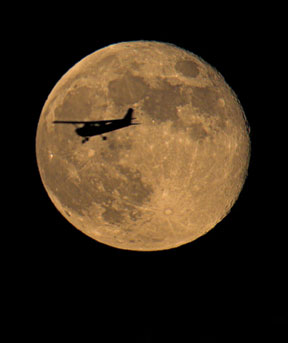
Night flying can be just as safe as flying in the daytime-but it isnt. Although accidents are more likely to occur during the daytime, according to the AOPA Air Safety Foundations 2007 Nall Report, accidents at night (and in IMC, for that matter) are more likely to be fatal. “Only 19.2 percent of daytime accidents resulted in fatalities, but over one-third (34.6 percent) of all night accidents were fatal.” Meanwhile, the same report states, “At night, nearly half of the accidents in VMC conditions were fatal (45.0 percent), compared to nearly three-fourths of night IMC accidents (74.1 percent). Night-flying accidents are generally thought of as being caused by inexperience-by students, or low-time pilots-but nighttime offers an equal opportunity for embarrassment, or worse. Experienced airmen are involved, too.

Read More »
Pilot in aircraft
Sign-up for newsletters & special offers!

Get the latest stories & special offers delivered directly to your inbox.

SUBSCRIBE