











Get-There-Itis

Most of us have likely experienced the flying version of get-there-itis. My return home from AirVenture this year had all the contributing ingredients at play. After hustling around the grounds to catch all the sights on a hot, muggy day, and then dodging lightning and rain during the ultimately aborted afternoon airshow, I pre-flighted for my long flight home to Bridgeport, Conn. (BDR), at 1830 local. I filed for 13,000 feet to catch favorable tailwinds at altitude, set up the oxygen and settled in for an uneventful four-hour flight in my Beech Travelair. Nearing my destination, NY Tracon did their part to keep me occupied by changing my direct routing to one of the circuitous STARs for BDR. The amendment required me to program the six waypoints in my older GPS. And of course, just after Id completed this task, ATC changed its mind again and assigned the other procedure.

Gemini Sparkle

Key Takeaways:

  • A fatigued pilot, influenced by "get-there-itis," accepted a late-night visual approach to an uncontrolled airport, only to unexpectedly encounter IMC conditions during descent.
  • Prioritizing safety, the pilot wisely executed a missed approach and successfully landed using an instrument procedure (ILS).
  • The experience underscored the unreliability of automated weather reports and highlighted the pilot's responsibility to always request an instrument approach when the tower is closed and VFR conditions are not absolutely certain, overcoming the urge to "get there."
See a mistake? Contact us.

Most of us have likely experienced the flying version of get-there-itis. My return home from AirVenture this year had all the contributing ingredients at play. After hustling around the grounds to catch all the sights on a hot, muggy day, and then dodging lightning and rain during the ultimately aborted afternoon airshow, I pre-flighted for my long flight home to Bridgeport, Conn. (BDR), at 1830 local.

288

I filed for 13,000 feet to catch favorable tailwinds at altitude, set up the oxygen and settled in for an uneventful four-hour flight in my Beech Travelair. Nearing my destination, NY Tracon did their part to keep me occupied by changing my direct routing to one of the circuitous STARs for BDR. The amendment required me to program the six waypoints in my older GPS. And of course, just after Id completed this task, ATC changed its mind again and assigned the other procedure.
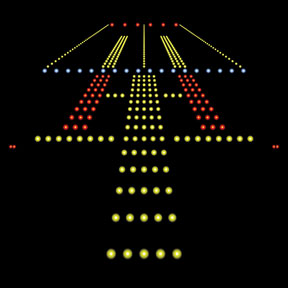

The tower was closed for my midnight arrival, so I couldnt radio for a second opinion on landing conditions. Twenty miles from my destination, I was in the clear, and thought I could see lights all the way to my coastal destination airport. Wherever the few clouds reported by ASOS were, they didnt appear to affect my arrival. Checking in with my final controller, I was asked if I wanted a visual approach. I requested the visual and canceled my IFR clearance eight miles out, still able to see the airport through what appeared to be a light haze.

As I continued my descent, visibility started deteriorating. I was in and out of low clouds at 1500 feet msl and then, unexpectedly in solid IMC at 1000 (MDA on my chosen runway was 500 feet). When I lost ground reference, all I could initially think of was, this wasnt supposed to happen. The controller gave me a visual approach. I want to get home. Where is that runway?! Get-there-it is was in full bloom.

Fortunately the sound advice of instructors past kicked in, and I executed the miss off the visual approach. I told ATC I wanted vectors for the opposite direction ILS. Winds were light and I now had no confidence in reported ceilings or visibility. The low cloud cover proved to be just as present in the opposite direction, and I broke out on the ILS at 600 feet for an uneventful landing.

My new SOP will be to request an instrument procedure any time my destination airport tower is closed, and I cant be bulletproof sure of VFR landing conditions. Automated weather reporting systems can be very unreliable, particularly at airports prone to localized fog and low clouds.

If Im flying as the PIC, I need to act like one. In this case, one might technically argue that ATC should have asked what approach I wanted, rather than planting the seed for me to accept the visual. But its my call, and I shouldnt have let get-there-itis make me so eager to accept a shortcut to end a long and tiring late night flight.

– Len Sherman

Ready to Sell Your Aircraft?

List your airplane on AircraftForSale.com and reach qualified buyers.

List Your Aircraft
AircraftForSale Logo | FLYING Logo
Pilot in aircraft
Sign-up for newsletters & special offers!

Get the latest stories & special offers delivered directly to your inbox.

SUBSCRIBE


