Aviation Safety

May 9, 2010, Pine Bluff, Ark., Cozy Experimental

The airplane was substantially damaged at 1545 Central time during an off-airport forced landing. The solo pilot sustained minor injuries and five persons on the ground sustained minor injuries. Visual conditions prevailed. The airplane was in cruise flight at 4500 feet msl when the right side cockpit canopy suddenly opened and remained open at approximately a 90-degree-up position.
Read More »

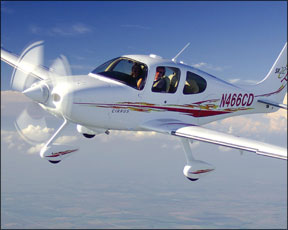
May 10, 2010, Tuscaloosa, Ala., Cirrus Design SR22

At 1930 Central time, the airplane collided with the ground while maneuvering on final approach. Visual conditions prevailed. The private pilot and one passenger were killed. The pilot contacted the tower at 1924, reporting he was 12 miles out for landing. At 1927, the pilot reported the airport in sight and stated he would have to make a 360-degree turn to lose altitude.

Read More »

May 21 2010, Bakersfield, Calif., Luscombe S-LSA-8C

At about 1615 Pacific time, the airplane lost engine power during takeoff and crashed in a field. The private pilot and one passenger sustained serious injuries. The airplane sustained substantial damage to the wings, fuselage and tail section. Visual conditions prevailed.

Read More »

May 23, 2010, Ontario, Calif., Bombardier CL-600-2B19

The regional jet was being operated by Skywest on a scheduled domestic passenger operation under FAR Part 121 when its crew was forced to make an emergency landing with the nosegear in the retracted position. There were no injuries among the three crewmembers or 24 passengers. Visual conditions prevailed.

Read More »

Telltale Flicker

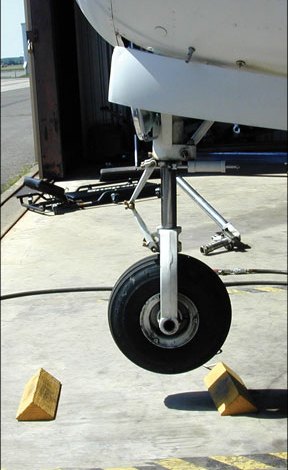
It was a beautiful fall morning, with clear skies. My five-year-old son and I wanted to get back in the air after annualing my Bellanca Super Viking a few weeks prior. We were feeling good about the airplane. Our adventure that morning: a simple sightseeing flight. As we established a positive climb rate, I cleaned up the airplane and adjusted power. But when I slid the gear lever to the “up” position, nothing happened.

Read More »

Crack Me Up

During a 100-hour inspection, several cracks were discovered on the inboard elevator hinge bracket (p/n A730258N). Additional cracks were found on the seven aircraft after a fleet-wide, one-time inspection was completed. Aircraft times varied from a low of 2507.7 hours to the group high of 2740.3 hours. The difference is a mere 232.6 hours, with 2671.4 the average of the seven records. Everything is cracking right on schedule-you could plan a vacation period around these numbers.

Read More »

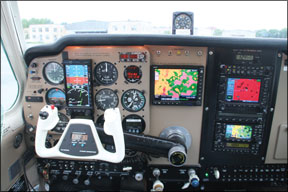
Learning Your Retrofit Panel

Weve been doing this long enough to remember when the extent of new avionics upgrades included a couple of flip-flop nav/coms and an audio panel. Even back then, some owners stumbled with otherwise simple switchology. Worse case was missing a radio call. Things have changed. Todays avionics upgrades, however, usually involve tightly integrated glass and advanced automation. Just learning how to power up all those neat toys usually requires more thought and planning than the nav/coms of 20 years ago. The safety implications are obvious; the operational ones perhaps somewhat less.

Read More »

Five Reasons To Uncouple Your Approach

We admit it: The modern autopilot is a marvelous technological innovation, capable of smoothly flying even antique airplanes better than most of us on our best days. Especially when operating in the en route environment, its usually on, and doing its thing so we can concentrate on the scenery. Its also useful in other flight modes, of course, especially in the clag. Letting George do it frees our mental bandwidth for chart folding, communicating with ATC and planning the upcoming approach to minimums.

Read More »

TAA Training

Its no great secret that nearly all new-production aircraft now have glass cockpits and advanced devices such as weather data link. Even technologies such as synthetic vision have become the new norm. In a way, the term technically advanced aircraft (TAA) has become a misnomer but it is still widely recognized as a tag line for a variety of related issues-including TAA training.

Read More »

Lighten Up Your Landings

I once counted as many as 10 pitch pumps between a jet transport arriving at 50 feet above the runway and touchdown. As the power came to idle (a bit further down the runway than necessary), the copilot planked it down with a predictable, rather heavy kerplunk. All survived. And they could use the airplane again. But theres got to be a better way. Its the last couple hundred feet where many pilots lose the finesse, presuming they had any to begin with. Its the case whether operating VFR or IFR, since most operations this close to a runway are visual.

Read More »
Pilot in aircraft
Sign-up for newsletters & special offers!

Get the latest stories & special offers delivered directly to your inbox.

SUBSCRIBE